
Horse Lameness: Causes, Signs and How to Act Fast
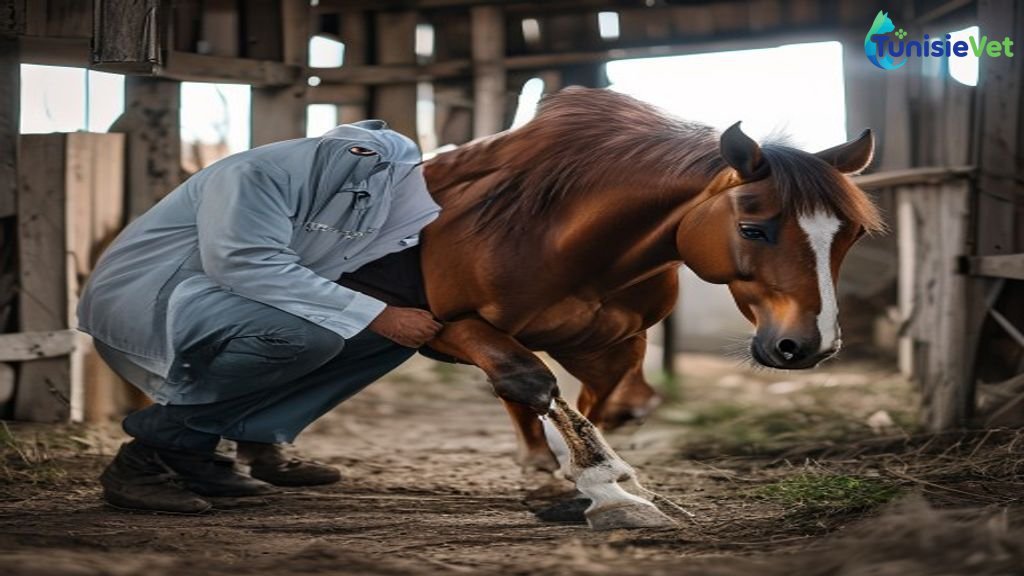
Horse lameness is one of the most common concerns for owners and breeders alike. A horse that is limping is never something to brush off: it means the animal is in pain and compensating, often due to an issue in the foot, a joint or a tendon. Learning to spot early signs, understand the possible causes and know which first steps to take can help preserve the horse's mobility and prevent the problem from getting worse.
Spotting the first signs of a lame horse
Lameness shows up as an uneven gait: the horse avoids putting full weight on one limb, shortens its stride or nods its head at the trot to compensate for the pain. It can be subtle and only visible at the trot, or quite obvious even at the walk.
- Reluctance to bear full weight on a hoof while standing still
- Stiffness or hesitation when setting off, which may ease after a few strides
- Heat, swelling or localized sensitivity to the touch
- Behavioural changes: irritability, reluctance to move or to be ridden
- Uneven wear on hooves or shoes
Regular observation, at both the walk and the trot, on hard and soft ground, helps catch emerging lameness before it becomes chronic.
Common causes of lameness in horses
Hoof problems
The hoof is by far the most frequent source of movement trouble. A hoof abscess, bruised sole, sand crack or poorly done trim can cause sudden, sometimes severe lameness. Regular hoof care and trimming adapted to the horse's conformation remain the best form of prevention.
Trauma and mechanical strain
Sprains, bruises, tendon inflammation or muscle tears often occur after intense exertion, a misstep or uneven terrain. Sport horses, and those whose training load increases too quickly, are especially prone to these injuries.
Infections and joint inflammation
A poorly treated wound, arthritis or a joint infection can lead to lameness accompanied by heat and swelling. These situations call for prompt treatment to avoid lasting damage to mobility.
Metabolic disorders: laminitis
Laminitis (sometimes called founder) is a painful inflammation of the internal structures of the hoof, often linked to a diet too rich in sugars or starch, excess weight, a metabolic disorder or significant physiological stress. A horse with laminitis adopts a characteristic stance, shifting its weight backward to relieve the front feet, and often refuses to move at all. This is an emergency requiring rapid intervention.
Diagnosing lameness: how it's done
Diagnosing lameness relies on methodical observation:
- Observe the horse at rest: posture, heat, swelling, sensitivity to palpation
- Walk then trot the horse in a straight line on hard ground to identify the affected gait
- Check the digital pulse and local hoof temperature
- Examine the sole and frog for signs of an abscess or a foreign object
- Test joint flexion to pinpoint the painful area
If the cause isn't obvious, or if the lameness persists beyond a few days, a thorough veterinary examination (sometimes including nerve blocks or imaging) is needed to reach an accurate diagnosis.
First steps and prevention to protect mobility
- Put the horse to rest in a calm, dry space as soon as lameness appears
- Remove the shoes if a hoof abscess is suspected, to help drainage
- Cool the affected area (cold hosing) if there is inflammation or heat
- Keep bedding clean to prevent any wound from becoming infected
- Adjust the diet: avoid excess grain and lush grass, especially for horses prone to laminitis
- Ensure regular trimming and shoeing by a qualified professional
- Introduce any new exercise or working surface gradually to limit the risk of injury
These simple measures are no substitute for professional advice: they simply help limit further damage while waiting for a specialist to step in.
When should you call a vet?
It's essential to seek help quickly if the lameness is severe, if the horse completely refuses to put weight on the foot, if a deep wound or significant swelling appears, or if signs of laminitis show up. Early treatment greatly improves the chances of a full recovery of mobility. For any suspected persistent lameness or locomotor emergency, it's best to turn to veterinarians specialized in horses who can make an accurate diagnosis and tailor the treatment.
Can a lame horse recover on its own after rest?
Some mild cases of lameness, caused by a simple bruise, may ease with rest alone. However, without a proper diagnosis, there's no way to know whether the cause is minor or more serious, such as an abscess, tendon injury or infection. A veterinary assessment remains the only reliable way to confirm a true recovery and prevent a relapse.
Need a professional opinion? If in doubt or in an emergency, find a veterinarian near you on TunisieVet.
Leave a comment
Be the first to comment on this article.