
Car Accident With an Injured Animal: Life-Saving First Aid
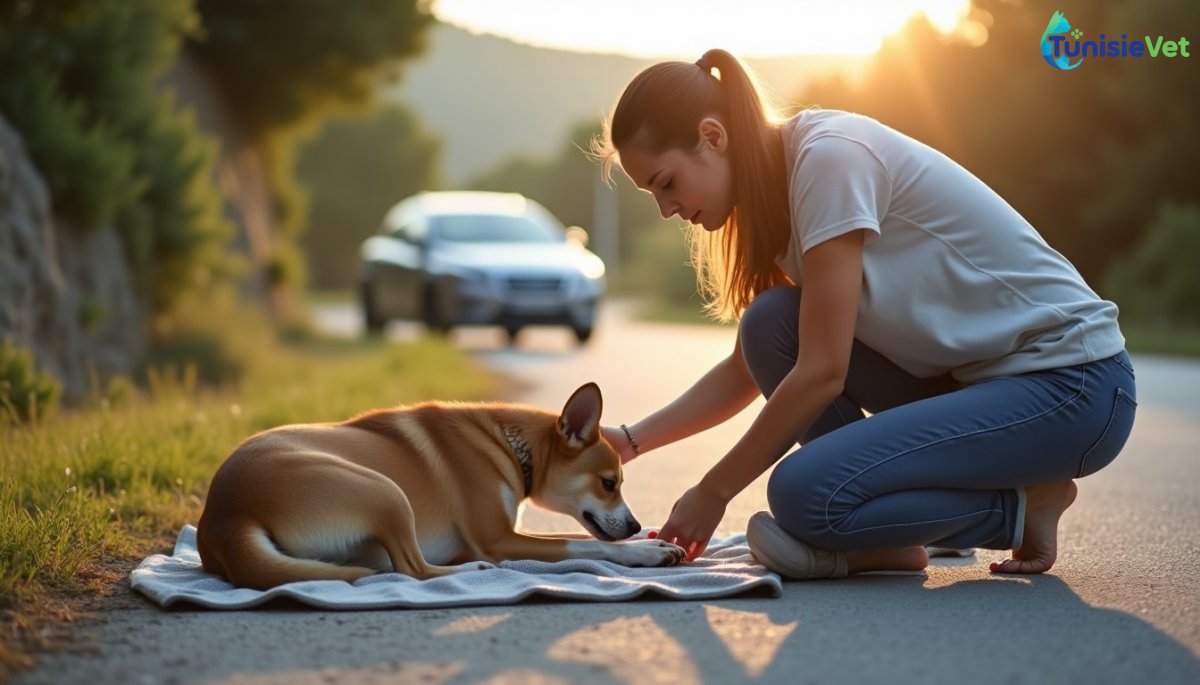
A car accident involving an animal is a moment of panic where every action counts. Whether it's a dog, a cat, or even farm livestock that has strayed onto the road, knowing how to recognize serious injuries and apply the right first aid before the vet arrives can make the difference between life and death. This practical guide explains how to react effectively and safely when faced with an injured animal.
Secure the Scene Before Approaching the Animal
Before any rescue action, your own safety and that of other road users must come first.
- Pull over onto the shoulder, turn on your hazard lights, and signal the accident if traffic is heavy.
- Approach calmly: an injured animal, even one that's normally gentle, may bite or scratch out of fear and pain.
- If possible, cover its eyes with a light cloth to help calm it, and speak in a soft, steady voice.
- For a dog or cat, a makeshift muzzle (a strip of cloth or a soft tie) may be needed before handling it, unless the animal is clearly struggling to breathe.
Recognizing Signs of Shock and Serious Injury
After a road accident, an animal may have serious injuries that aren't visible to the naked eye. Certain signs of shock should raise immediate concern:
- Gums or tongue that are very pale, grayish, or bluish.
- Rapid, shallow breathing, or conversely, very slow and irregular breathing.
- A weak, rapid pulse that's hard to detect.
- Cold extremities (paws, ears), trembling, and extreme weakness.
- Partial or total loss of consciousness, with a fixed, absent stare.
These signs often point to internal bleeding or serious chest or abdominal trauma. Even if the animal appears to move normally right after the impact, a prompt veterinary check-up is still essential: some internal injuries only become apparent several hours later.
Spotting a Fracture
A fracture in a dog or cat after an accident is usually indicated by:
- A limb hanging abnormally or bent at an unusual angle.
- A complete refusal to put weight on the affected leg.
- Rapid swelling, sharp pain when touched, and sometimes visible bone in the case of an open fracture.
Never try to reposition the bone yourself. The role of first aid is solely to immobilize the injury and prevent it from worsening until professional care is available.
Managing Severe Bleeding in an Emergency
When dealing with severe bleeding, acting quickly is essential:
- Apply a clean cloth (towel, bandage, piece of clothing) directly to the wound and press down firmly and steadily.
- If blood soaks through the cloth, don't remove the first layer: simply add another layer on top.
- Maintain continuous pressure for several minutes, giving clotting time to begin.
- For a wound on a limb, a compression bandage (not too tight, so as not to cut off circulation) can be kept in place until the vet visit.
Uncontrolled, heavy bleeding rapidly worsens shock: it's a life-threatening emergency that takes priority over any other visible injury.
Immobilizing and Transporting the Animal Safely
Improper handling during transport can worsen a fracture or spinal injury. Here's how to safely handle the transport of an injured animal:
- Use a rigid surface (a board, thick cardboard, or a stretched-out blanket) to move the animal without bending or twisting its body.
- Slide it gently onto this support, supporting the head, torso, and hindquarters at the same time, ideally with several people helping.
- For a cat or small dog, a rigid carrier or even a simple box can be enough to limit movement.
- Never carry the animal by a single limb or drag it by the scruff of the neck if you suspect a fracture or spinal injury.
- Cover the animal with a light blanket to help prevent heat loss, which is common in cases of shock.
- Drive calmly to the nearest clinic: sudden jolts and acceleration increase both pain and stress.
After First Aid: See a Vet Without Delay
Even if the animal seems to be recovering, a veterinary check-up is always necessary after a car accident. Internal injuries, non-displaced fractures, or early signs of shock can develop further over the following hours. Don't wait for more severe symptoms to appear: a full examination will help rule out serious complications and allow treatment to begin quickly. You can find a professional near you through this veterinary directory, a useful resource for responding without delay in an emergency.
What Should I Do if the Injured Animal Is a Stray Dog or Cat?
Approach it carefully and speak softly, since fear can make even a normally friendly animal act aggressively. If possible, quickly contact a vet for dogs or a vet for cats for proper care, while also trying to spot a tattoo or microchip that could help identify the owner.
Leave a comment
Be the first to comment on this article.