Laying Hen Feed in Tunisia: The Ration That Boosts Egg Production

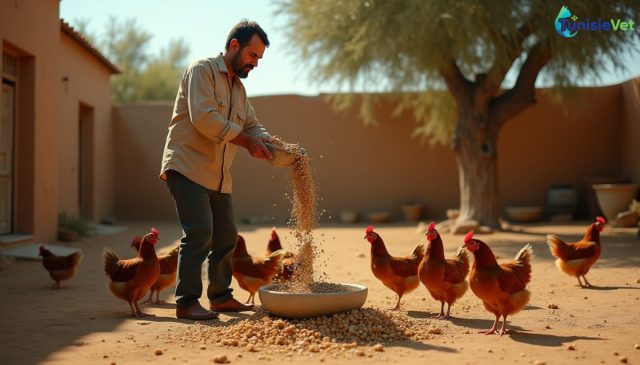
Laying hen feed in Tunisia is the cornerstone of a productive backyard flock. Many small-scale poultry keepers notice a drop or complete stop in egg-laying without understanding why, when the answer often lies right in the hens' feed trough. A poorly balanced diet, too low in protein or minerals, drains the hen's body and slows down egg production. Here are the fundamentals for feeding your hens with local, affordable ingredients suited to the Tunisian climate, without relying on costly imports.
The essential nutritional needs of a laying hen
To produce nearly an egg a day, a laying hen has much higher nutritional requirements than an ornamental hen or a chick. A balanced hen ration must combine several complementary food groups.
- Grains (corn, barley, wheat): they provide the energy needed for daily activity and for maintaining body temperature.
- Protein sources (soybean or sunflower meal, legume flours, cooked legume leftovers): essential for forming egg white and maintaining muscle.
- Calcium (crushed oyster shells, dried and crushed eggshells, limestone): the number one element for building a strong eggshell.
- Vitamins and trace elements from green vegetables, leafy tops, fresh grass and seasonal fruit.
- Clean, fresh water, available at all times, since a hen that drinks little also eats less and lays less.
An imbalance in any one of these categories quickly shows up in both the quantity and quality of the eggs.
Local feed options to round out the ration
There's no need to rely solely on imported industrial feed. Many local feed ingredients for hens can be used to put together an economical and effective ration:
- Wheat bran and milling by-products, rich in fibre and energy.
- Vegetable peelings (courgettes, carrots, cooked potatoes) given fresh and in moderate amounts.
- Fresh or dried alfalfa (lucerne), an excellent source of plant protein and vitamins.
- Kitchen scraps, free of excess salt or spoiled food, which enrich the ration at low cost.
- Your own household eggshells, dried and crushed, to recycle calcium.
The trick is to vary the sources to avoid deficiencies while keeping production costs reasonable, a key concern for small Tunisian family farms.
Adjusting the ration by season
Feeding hens in summer heat
Managing hens during summer heat requires special attention. As temperatures rise, hens naturally eat less, which can reduce their energy and mineral intake. To limit the impact of the heat:
- Feed hens early in the morning and in the late afternoon, during the coolest hours of the day.
- Slightly increase the calcium share, since egg-laying stays active even as feed intake drops.
- Set up several fresh water points and refresh the water a few times a day.
- Offer fresh, juicy vegetables to help with hydration alongside drinking water.
Adjusting the ration in winter
In cold weather, energy needs increase to help hens maintain their body heat. It's helpful to slightly boost the share of energy-rich grains and make sure the drinker never freezes over or becomes inaccessible.
Spotting the signs of a nutritional deficiency
A nutritional deficiency in hens often shows up well before egg-laying stops entirely. Watch out for the following signs:
- Thin, soft or misshapen eggshells, a sign of calcium deficiency.
- Dull, brittle feathers or feather loss outside the moulting period.
- A gradual drop in the number of eggs laid per week.
- Lethargy, a hen that is less active and less curious around the feeder.
- A pale comb, less vivid than usual.
When these signs appear, the priority is to review the intake of minerals for laying hens and protein before looking into any other cause.
Why has my hen stopped laying eggs?
When a hen that has stopped laying worries its owner, the cause isn't always health-related: diet, stress, day-length exposure or a natural moult can all explain the pause. Before getting alarmed, first check that the ration properly covers calcium and protein needs, and that water is available at all times. If the laying stoppage continues despite a proper diet, it's best to consult a veterinarian to rule out an underlying health issue.
A well-thought-out diet, based on local resources and adapted to Tunisia's seasons, remains the best investment for healthy hens and regular egg-laying. If you have lingering doubts about your flock's nutritional status, the advice of a veterinarian or a poultry technician remains the safest option.
Need a professional opinion? If in doubt or in an emergency, find a veterinarian near you on TunisieVet.
Leave a comment
Be the first to comment on this article.