
Livestock Fertility in Tunisia: Boosting Conception Naturally

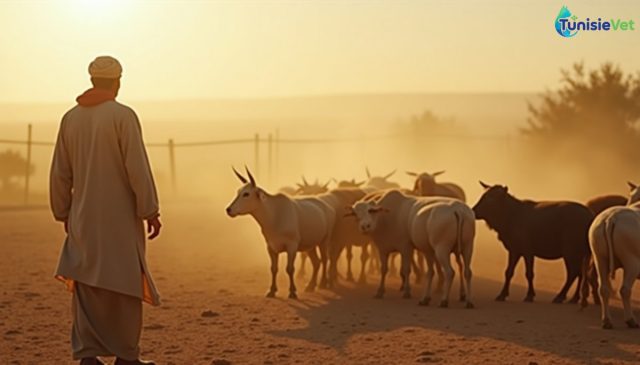
Livestock fertility in Tunisia is a major concern for every farmer: each missed breeding cycle means lost time, wasted feed, and reduced income. The good news is that improving conception rates doesn't always require costly treatments. By focusing on nutrition, body condition, heat detection, and hygiene, you can significantly boost your chances of success, whether you're raising cattle, sheep, or goats in Tunisia's climate.
Balanced nutrition: the foundation of successful breeding
Nutrition directly affects hormone production and the quality of ovulation. A poorly balanced ration, whether too scarce or too rich, disrupts the cycle and delays breeding readiness.
- Provide adequate energy, protein, minerals, and vitamins suited to the animal's physiological stage (pre-breeding, pregnancy, lactation).
- Never overlook essential minerals like calcium, phosphorus, and zinc, which are often lacking in dry forage.
- In summer, ensure constant access to fresh, clean water, since water stress sharply reduces fertility.
- Avoid sudden ration changes, which can destabilize the digestive flora and hormonal balance.
Body condition: neither too thin nor too fat
Body condition scoring in livestock is one of the best visual indicators of an animal's fertility. A female that's too thin lacks the reserves to sustain pregnancy, while an overly fat animal often shows irregular cycles.
- Regularly assess body condition through simple observation and palpation (back, ribs, pelvis).
- Adjust the ration several weeks before the breeding period to reach a moderate body condition, neither thin nor obese.
- Pay particular attention to females coming out of lactation, a period when energy deficits are common.
Special case: sheep and goats
For sheep and goat breeding management, the "flushing" technique (improving nutrition in the weeks before mating) is widely recognized for stimulating ovulation and increasing the number of lambs or kids born. It simply involves slightly enriching the ration ahead of the desired breeding period.
Heat detection: the key to perfect timing
Good heat detection in livestock allows you to intervene or breed at the most favorable moment, which directly increases the natural conception rate.
- Watch for classic signs: restlessness, mounting behavior, vaginal discharge, reduced appetite.
- Observe animals both morning and evening, since heat signs can be subtle in some females.
- Keep a breeding calendar for each female to anticipate the next cycle in case of a failed attempt.
- Avoid breeding too early or too late in the cycle: timing is crucial for successful fertilization.
Sanitary hygiene: prevention over cure
Many fertility problems stem from untreated uterine infections or parasites. Good farm hygiene reduces these risks.
- Keep pens, calving areas, and bedding clean and dry.
- Isolate females showing abnormal discharge or signs of illness.
- Follow a regular deworming schedule suited to the Tunisian climate.
- Allow sufficient rest after giving birth before the next breeding.
How to improve cattle reproduction on a daily basis?
To improve cattle reproduction, you need to combine proper nutrition, careful monitoring of body condition, and accurate heat detection. A well-fed animal, kept in a clean environment and observed daily, naturally has better chances of conceiving, without systematically resorting to hormonal treatments.
Common question: why isn't my cow or ewe getting pregnant despite several breedings?
The most common causes are poor body condition, incorrect breeding timing, or an unnoticed uterine infection. Before considering any treatment, it's advisable to review the animal's nutrition and hygiene, then consult a professional if the problem persists beyond two or three cycles.
If results don't improve despite these adjustments, it's recommended to consult a veterinarian specialized in cattle or reach out to the veterinarian directory for a diagnosis tailored to your farm, whether you raise cattle, sheep, or goats.
Leave a comment
Be the first to comment on this article.

📱 عندك صفحة على فايسبوك؟ باهي… أما وين موقعك؟ الصفحة وحدها ما تكفيش. موقعك يخلي الناس تلقاك، يعرفوك أكثر ويثقو في خدمتك. 🌐 موقع باسم مشروعك 📲 يخدم أربعة وعشرين ساعة 🤝 يعطي ثقة واحترافية .📈 يعاونك تكبّر خدمتك خلّيه موجود وين الناس تلوّج عليه 🚀نعملولك موقع يشرّف مشروعك
WhatsApp