
Weaning Calves, Lambs and Kids: The Ideal Schedule

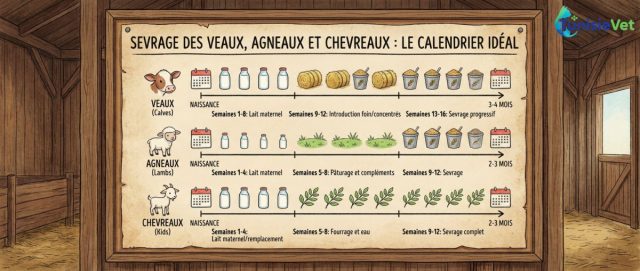
Weaning calves, weaning lambs and weaning kids rank among the most delicate stages in raising young ruminants. If poorly managed, this transition can trigger diarrhea, growth delays and a lasting drop in immunity. Done well, it instead ensures healthy rumen development and solid resilience for the rest of the animal's life. This practical guide details the optimal timeline and the keys to a successful feed transition, applicable across all Mediterranean farming contexts.
Understanding digestive maturity before weaning
In newborn calves, lambs and kids, the rumen is still barely developed: milk passes directly into the abomasum through the esophageal groove reflex, bypassing the rumen entirely. The decision to wean should never be based on age alone, but rather on the animal's digestive maturity — in other words, its ability to efficiently digest solid forage and concentrates.
- The young animal starts nibbling and chewing hay or pellets within the first few weeks, first out of curiosity, then out of necessity.
- These early intakes stimulate the rumen wall, gradually developing the papillae needed to absorb volatile fatty acids.
- A functional rumen shows itself through steady, increasing consumption of solid feed, paired with visible rumination.
Weaning an animal whose rumen isn't yet ready means abruptly cutting off its only source of digestible energy — which is why it's essential to observe each individual animal rather than apply a rigid rule across the whole herd or flock.
Weaning schedule by species
Weaning calves
In calves, weaning is generally gradual and spread over several weeks, once the calf is eating a satisfactory daily amount of starter feed and forage. Milk or milk replacer intake should be reduced step by step, never overnight.
Weaning lambs
Lambs can be weaned earlier than calves, provided they have access to quality hay and a suitable concentrate feed from the very first days. The pace of weaning depends heavily on the ewe's milk production and the lamb's body condition.
Weaning kids
A kid's rumen develops quickly when stimulated early with fibrous forage. As with lambs, weaning should remain gradual and be guided by observed solid feed intake rather than a fixed date.
Steps for a successful feed transition
The feed transition is at the heart of a successful weaning process. It aims to gradually accustom the digestive system to doing without milk, while still meeting the young animal's energy and protein needs.
- Introduce forage and concentrate very early, from the first weeks of life, even in small amounts, to stimulate rumen development.
- Reduce milk gradually rather than abruptly, by spacing out feedings or diluting the milk replacer over several days.
- Keep clean, fresh water available at all times, essential for proper rumen function and fiber digestion.
- Avoid stacking changes together: don't wean, move to new housing and vaccinate on the same day, to limit cumulative stress.
- Monitor the growth curve and overall condition (coat, behavior, appetite) throughout the transition period.
Preventing post-weaning diarrhea
Post-weaning diarrhea is one of the most common and feared complications. It's often caused by too abrupt a feed change, excessive stress, or inadequate hygiene in the environment.
- Favor consistently high-quality feed, without sudden changes in composition.
- Keep water troughs and feeders clean to limit germ buildup.
- Group young animals by similar age and weight to avoid feed competition.
- Check droppings, appetite and behavior daily for two to three weeks after weaning.
At the first worrying sign — lethargy, refusal to eat, persistent diarrhea or dehydration — it's essential to seek professional advice quickly. Cattle, sheep and goat farmers can check the directory of veterinarians specialized in livestock to find the right support for their herd or flock.
The special case of artificial rearing
With artificial rearing, weaning calls for extra vigilance: consistent ration sizes, the temperature of reconstituted milk, and equipment cleanliness all play a major role in a successful transition. Moving from milk replacer to solid feed should follow the same gradual principles as with naturally nursed animals, always based on the young animal's actual observed intake of forage and concentrate.
What's the best sign that a young ruminant is ready to be weaned?
The most reliable sign is steady, increasing consumption of forage and concentrate feed, paired with visible rumination. Age alone isn't enough — it's the digestive maturity observed day to day that should guide the weaning decision.
Leave a comment
Be the first to comment on this article.

📱 عندك صفحة على فايسبوك؟ باهي… أما وين موقعك؟ الصفحة وحدها ما تكفيش. موقعك يخلي الناس تلقاك، يعرفوك أكثر ويثقو في خدمتك. 🌐 موقع باسم مشروعك 📲 يخدم أربعة وعشرين ساعة 🤝 يعطي ثقة واحترافية .📈 يعاونك تكبّر خدمتك خلّيه موجود وين الناس تلوّج عليه 🚀نعملولك موقع يشرّف مشروعك
WhatsApp