StoryDesertSavannaForestTropical forestMountainSteppeWetlandsCoastlineFarmland & grasslandsUrban environmentStories of the prophets
The Spider and the House Mentioned in the Qur'an
In the Qur'an, a discreet yet striking image compares the foundations of disbelief to a spider's web. This account returns to that verse and to the wisdom it holds for anyone who observes nature.
3 min read · Published 2 days ago · 4 views
Among the images the Qur'an employs to invite reflection, the spider holds a singular place. It does not appear in a narrative story like that of the ant mentioned by the Prophet Solomon, but rather in a parable addressed to all believers concerning those who place their trust in something other than Allah.
The Parable of Surah Al-'Ankabout
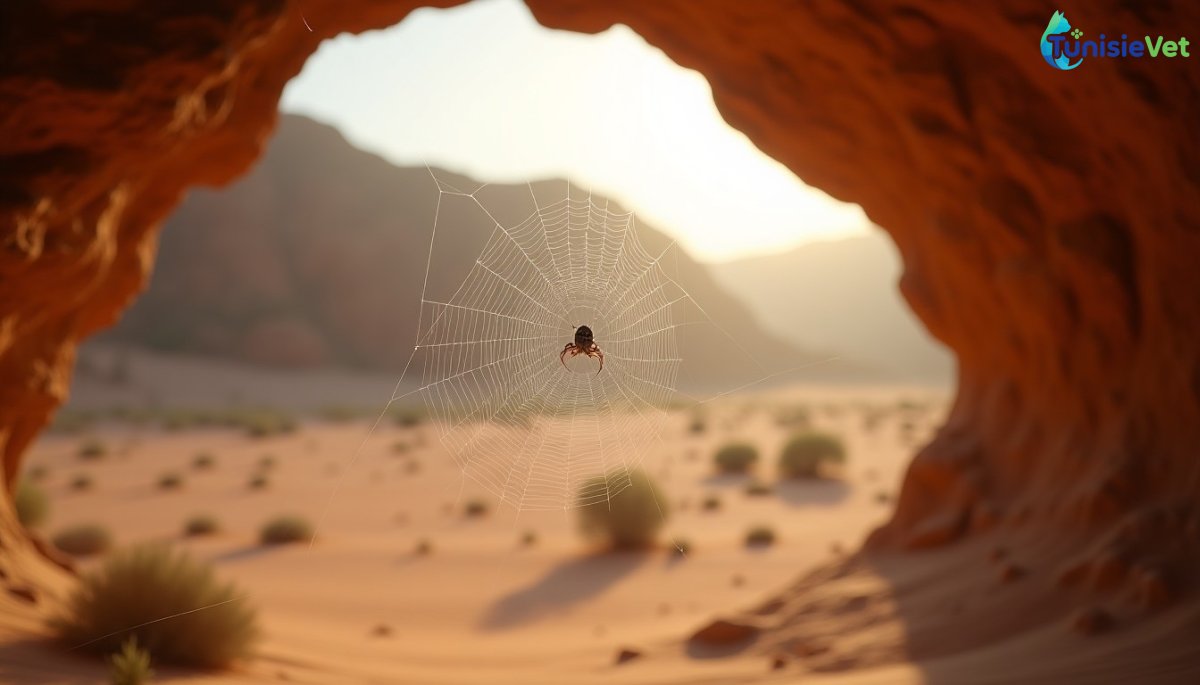
The surah itself is named after this creature: Al-'Ankabout, "The Spider." In verse 41, Allah describes those who take protectors other than Him by comparing them to the spider that builds itself a home.
"The likeness of those who take protectors other than Allah is as the likeness of the spider that taketh unto herself a house; and lo! the frailest of all houses is the spider's house, if they but knew it."
(Surah Al-'Ankabout, verse 41)
An Image for Meditation
The spider's web impresses through its delicacy and the skill with which it is woven, strand by strand, in a regular pattern that is resistant at the insect's scale. And yet, this same web cannot withstand a strong gust of wind, a sweeping hand, or heavy rain falling upon it. It gives the illusion of a solid shelter, when in reality it is one of the most precarious constructions one could imagine.
According to the commentators of the Qur'an, this image does not target the spider itself, which remains a creature of Allah fulfilling perfectly the function for which it was created. What the verse brings to light is rather the fragility of any protection sought elsewhere than from Allah: however elaborate and reassuring it may appear, such protection crumbles at the slightest trial, just as the web tears at the slightest contact.
An Animal Mentioned with Respect
It is noteworthy that the Qur'an chooses this discreet creature, which many neglect or fear, to convey a teaching of such significance. This reminds us that no creature, however small or unfamiliar, escapes the watchful gaze of the Creator, and it may even become the vehicle of a universal lesson. It is reported in certain narratives transmitted by the commentators that the spider also protected the Prophet ﷺ during the Hijra by weaving its web at the entrance of the Cave of Thawr; this point, however, being neither explicitly mentioned in the Qur'an nor established in the most rigorous authentic hadith collections, it ought to be reported with the caution that is fitting, as many exegetes do.
What the verse teaches with certainty is the vanity of any foundation that does not rest on a solid basis, and the humility that observing the animal world should inspire, even in its most modest forms.
To watch a spider patiently weave its web is also to remind oneself that every living being, even the smallest, deserves respect and gentleness. Not to destroy without reason what a creature builds with such care, and to regard each animal as a sign to ponder rather than a nuisance to avoid, is a simple way to practice kindness toward animals in daily life.
Be among the first to use the TunisieVet app on Android: sign up and get early Google Play access.
You're signed up!
Thanks for joining! We'll activate your access within 24–48 business hours. Once done, the two buttons below will work from your Android phone — keep this email.
You're on Android: as soon as your invitation email arrives, these two links will work.