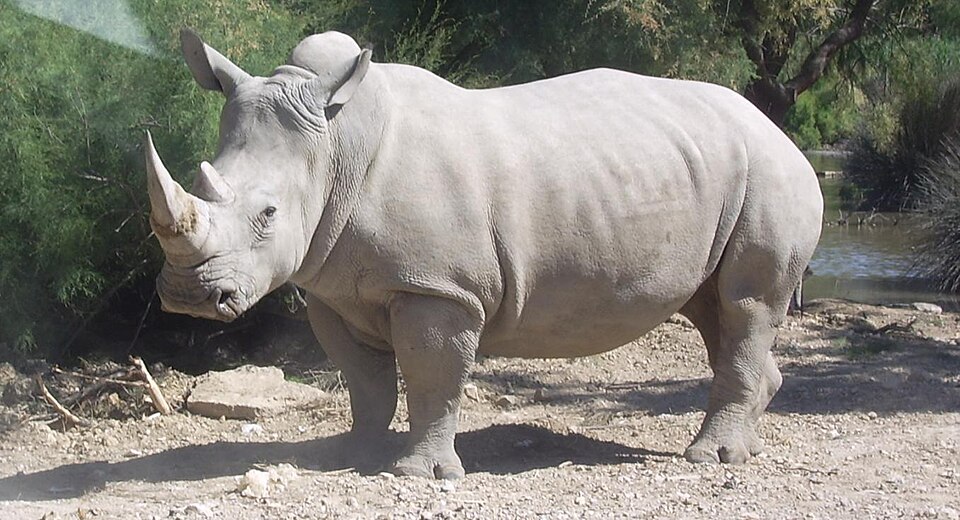
The horn of the white rhino is not a bone but a compact mass of keratin, the same fibrous protein that makes up our nails and hair. Without roots or bone anchors, it grows continuously from the skin and serves as a tool for defense, social dominance and clearance of vegetation.
A structure with no bone equivalent
Unlike the horns of bovids or the antlers of deer, the horn of the rhinoceros has no bony core: it rests directly on the nasal bone, separated by the skin, and is made up of very tightly packed keratin filaments, a bit like hairs compressed into a bundle. This structure explains why it can grow back after an accidental cut or breakage, at a rate of several centimeters per year depending on the individual.
In the white rhino (Ceratotherium simum), the anterior horn can exceed 90 cm in certain individuals and constitutes the most visible organ used during confrontations to establish the hierarchy between males, during defense against predators, and to push aside thorny branches or dig the ground in search of water or minerals.
A belief without scientific basis
The massive poaching that threatens the species is based on a belief, particularly in traditional Asian medicine, that the horn has therapeutic virtues. However, its composition is identical to that of human nail keratin: no biochemical analysis has ever demonstrated an active ingredient justifying these uses. This illegal demand has nevertheless led to a dramatic decline in populations, making the white rhino a species of conservation concern and under strict international trade regulation.