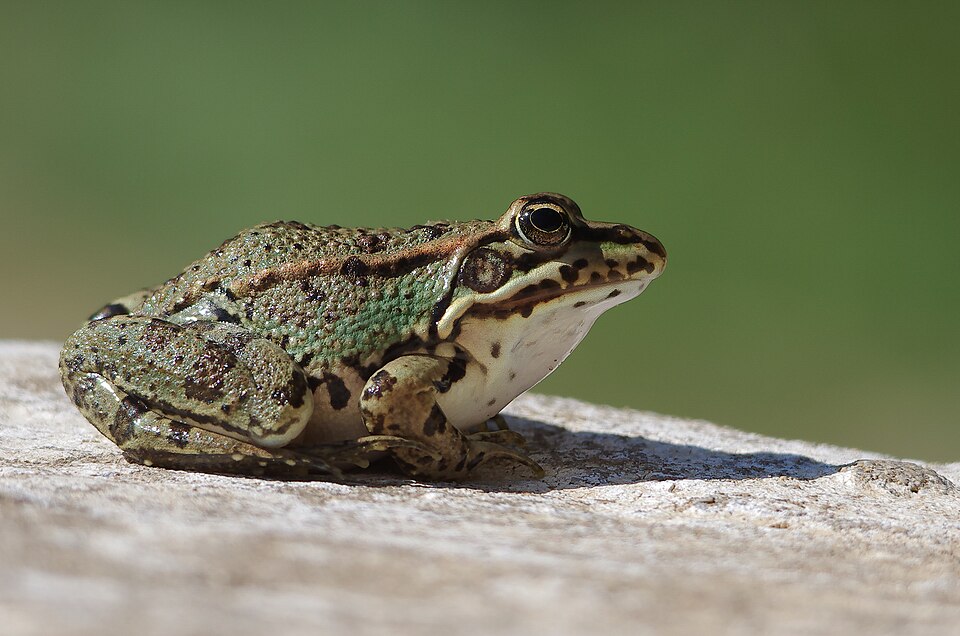
The North African green frog is not toxic: it only produces skin secretions with an unpleasant smell and taste which deter certain predators, unlike the powerful poisons of tropical families such as the Dendrobatidae.
Defensive glands rather than venom
Like most amphibians, Pelophylax saharicus has granular glands in its epidermis which release a irritating mucus when the animal is seized or stressed. This mucus contains antimicrobial peptides and bitter-tasting compounds, useful especially against skin infections and small invertebrate predators, but its effect remains local and not dangerous for humans.
In truly toxic species, such as certain South American poison frogs, the situation is different: the powerful alkaloids that they store in their skin are not produced by their own organism. They come from their diet, in particular from ants and mites rich in toxic compounds that the frog sequesters without metabolizing them. This is why these same species raised in captivity, fed on crickets or fruit flies, gradually lose all toxicity over the generations.
The role of aposematism
The bright colors (red, yellow, electric blue) of these toxic frogs function as a warning signal, called aposematism: they announce to potential predators that ingestion will be unpleasant, even fatal, which reduces repeated attacks after a first contact unhappy. Pelophylax saharicus, with its cryptic green and brown livery adapted to reeds and Mediterranean banks, on the contrary relies on camouflage rather than visual warning: its main strategy remains rapid escape into the water rather than chemical deterrence.