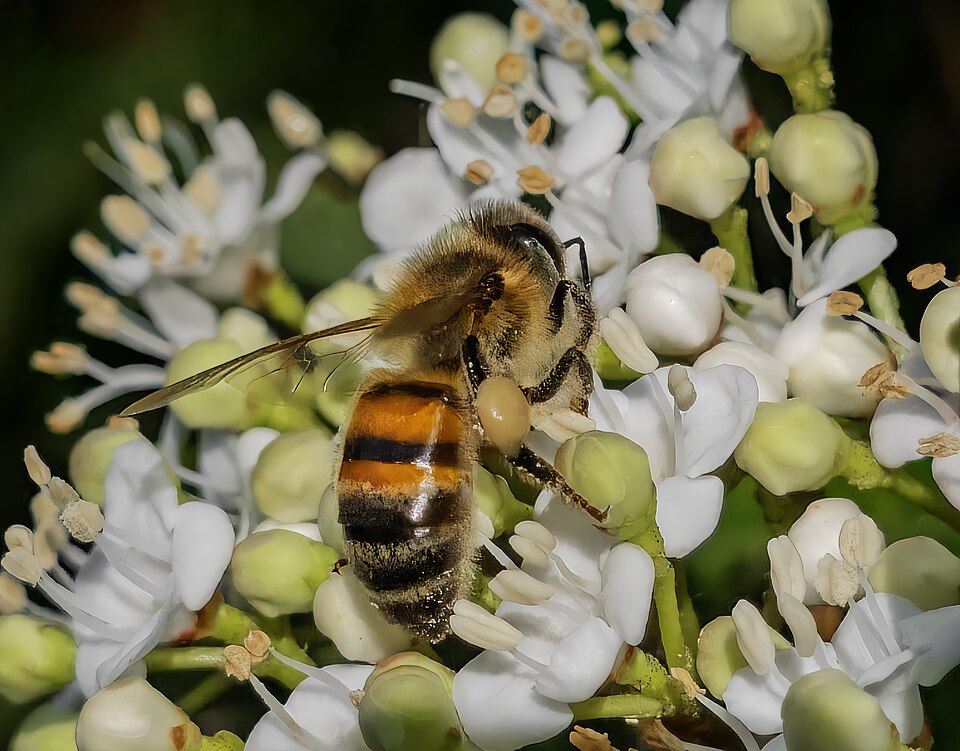
The lifespan of a honey bee varies greatly depending on its caste and the season: a worker born in spring or summer only lives 4 to 6 weeks, a winter worker can reach 4 to 6 months, the queen lives 2 to 5 years, and the drone dies shortly after mating.
A body worn by work, not by age
In summer workers, death is not linked to biological aging but to physical wear and tear. After carrying out several internal tasks in the hive (cleaning, feeding the larvae, producing wax), the worker becomes a forager around 3 weeks old. Flight, pesticide thermoregulation and intense muscular effort quickly exhaust its body: the wings fray, body fat reserves are exhausted, and death often occurs in mid-flight, far from the hive.
In winter, the colony stops raising brood and the workers born in the fall no longer have to forage or feed larvae. Saving their energy and forming a compact cluster to maintain the temperature of the hive around 20 to 30°C at its heart, they can live for several months, sometimes until the following spring.
Publicité
Publicité
The queen escapes this wear and tear: fed exclusively on royal jelly all her life, she neither forages nor builds combs. Its only function is to lay up to 2,000 eggs per day in peak season, and its different metabolism allows it to live for several years, compared to a few weeks for its worker daughters from the same fertilized eggs.
The special fate of the drone
The male, or drone, only has a reproductive role. If he manages to mate with a virgin queen during the nuptial flight, the act is fatal: the genitals detach during copulation, leading to his almost immediate death. If it is not chosen, it can survive a few weeks, but the workers expel it from the hive in the fall, for lack of resources to share during the winter.