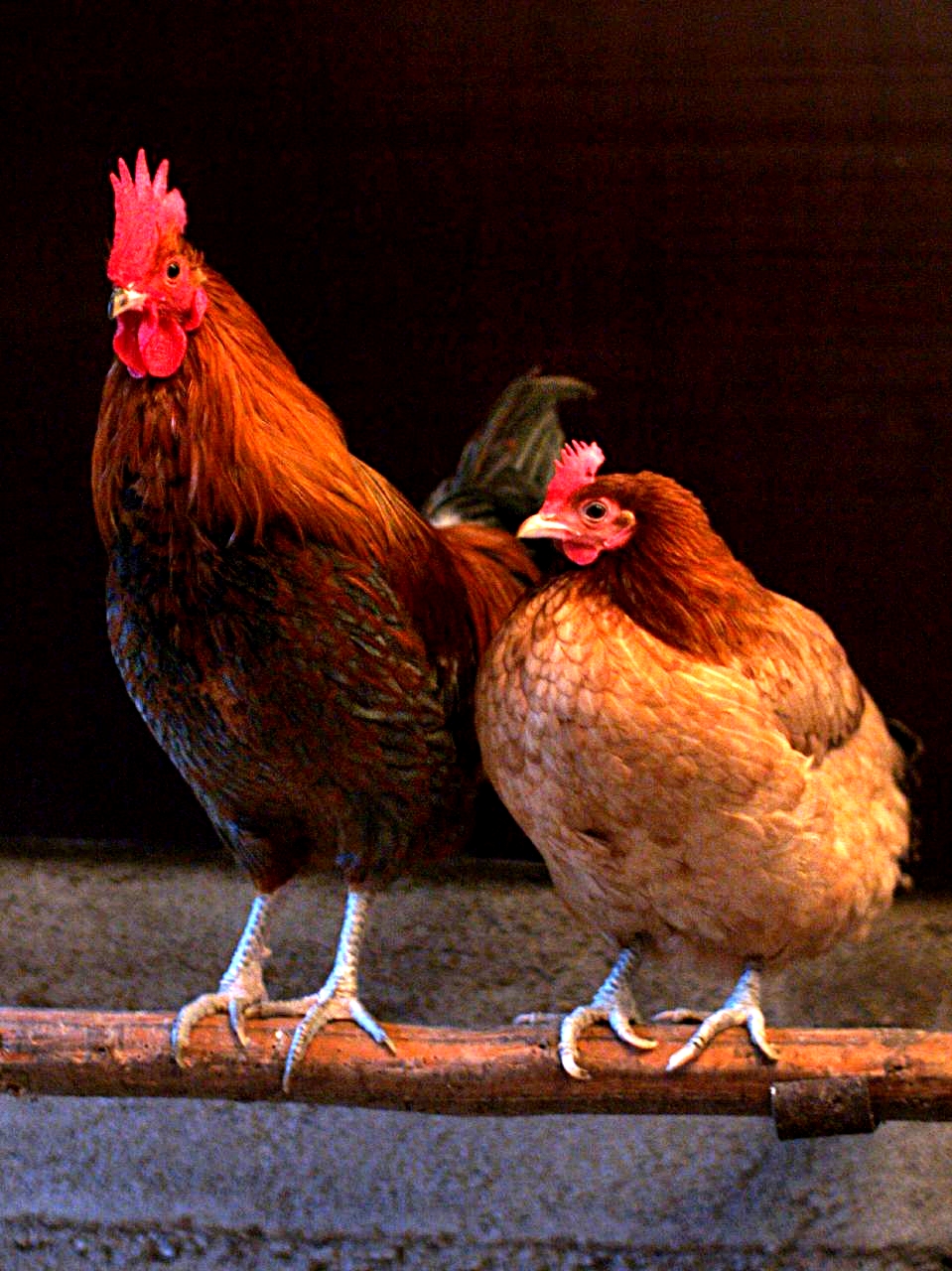
No, the hen does not have teeth: its horny beak, made of keratin, is only used to grasp and cut food. The grinding of the food then takes place in the gizzard, a powerful muscular organ which takes over thanks to small stones (gastroliths) which the bird swallows voluntarily.
Why did birds lose their teeth?
The ancestors of birds had teeth, as evidenced by some fossils of theropods and primitive birds such as Archeopteryx. During evolution, modern bird lines lost them, probably to make the skull lighter and easier to fly: a horny beak weighs much less than a jaw filled with teeth and bone roots. This loss was accompanied by the development of a compensatory digestive system.
In the hen, the digestive system includes the crop, which temporarily stores food, then the proventriculus, which secretes digestive juices, and finally the gizzard. The latter, lined with a thick and muscular wall, contracts to crush the grains against the ingested gastroliths, thus replacing chewing. This mechanism allows the animal to efficiently digest hard seeds without energy expenditure linked to wearing teeth.
The chick’s “diamond” is not a tooth
When the chick hatches, it has a small whitish, pointed growth at the end of its beak, sometimes called a “diamond” or hatching callus. It is not a tooth but a temporary keratinized structure that helps the chick break through the shell from the inside. This callus falls off or wears away spontaneously a few days after birth, unrelated to teeth.