Records & extremesOcean & seaAfricaEuropeAsiaAmericasOceaniaPolar regions
What is the largest animal in the world?
54 views · 1 month ago
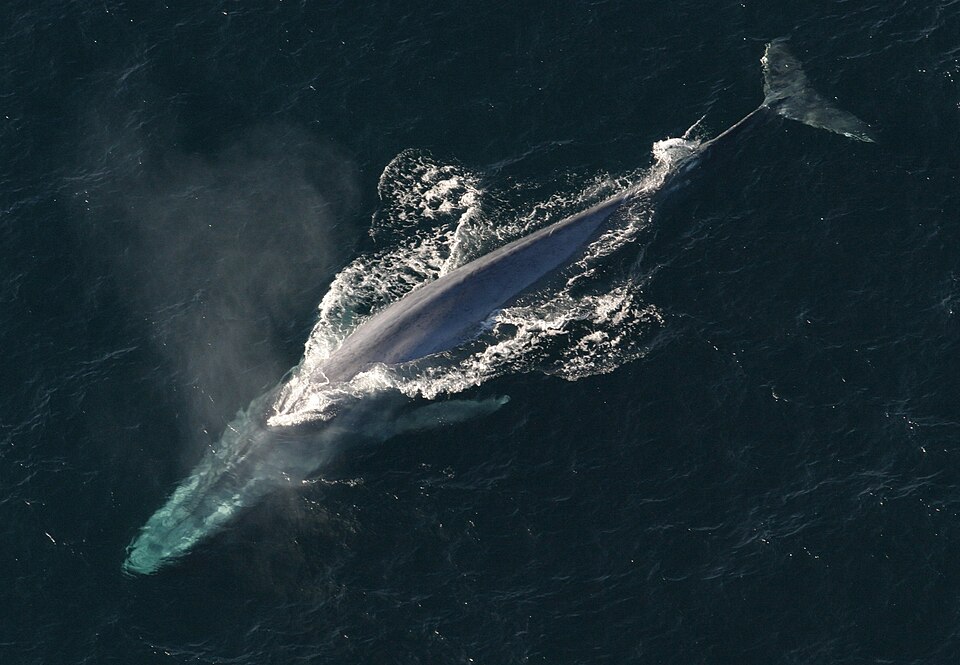
The blue whale (Balaenoptera musculus) is the largest animal to have ever existed on Earth, surpassing all known dinosaurs, including the heaviest sauropods. The largest individuals measured reach around 30 meters in length and weigh around 150 to 180 tonnes.
Outstanding dimensions
For comparison, a sauropod like Argentinosaurus, often cited among the heaviest dinosaurs, probably weighed around 70 to 100 tons according to estimates, or about half as much as the blue whale. The latter's heart can weigh nearly 180 kg, and its aorta is large enough for a child to pass through.
Why water allows such size
On land, an animal must support its entire weight through its skeleton and muscles, which strongly limits the maximum size achievable: beyond a certain threshold, the bones would break under the load. In water, Archimedes' thrust almost completely counteracts gravity, because the density of a whale's body is close to that of sea water. The skeleton therefore no longer has to carry most of the weight: it mainly serves as a framework, while the aquatic environment provides mechanical support.
Publicité
Publicité
This almost neutral buoyancy explains why the largest marine animals far exceed in mass the largest land animals, whether current or fossil. It also explains why a blue whale stranded on a beach can literally collapse under its own weight, its internal organs no longer being supported by the water.
A size that remains debated in detail
If the order of magnitude of 30 meters and 150-180 tonnes is widely accepted, the precise measurements vary according to the methods (measurement at death, estimation by photogrammetry) and the populations, certain subspecies of the southern hemisphere being on average larger than those of the North Atlantic. These variations remain a subject of active research for marine biologists.