
How to Identify Your Cat Breed: A Morphological and Behavioral Guide

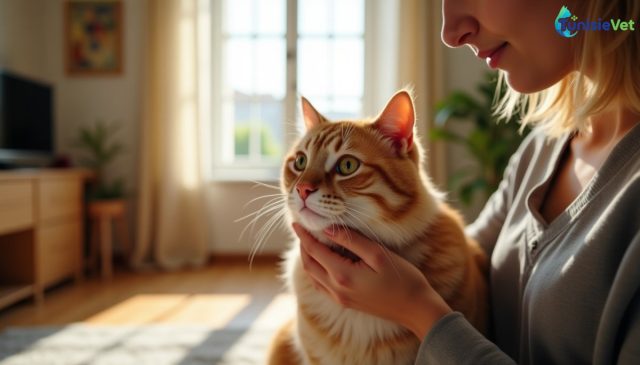
To identify your cat's breed, you need to observe three elements in order: overall morphology, coat type, and then typical behavior. Most cats without papers are common domestic cats, but many display traits inherited from a specific breed. This guide provides a simple, visual, and reliable method to better understand your cat's breed, whether or not it has a pedigree.
1. Why recognizing your cat's breed type matters
Understanding your cat's basic morphological features helps you anticipate its needs: heat sensitivity, tendency toward weight gain, energy level, and coat maintenance requirements. A cat without pedigree papers doesn't have an official certificate of origin, but it almost always belongs to a recognizable "type": short-haired domestic cat, oriental-type cat, stocky semi-long-haired cat, and so on. This visual recognition remains useful even without official documentation, as it guides nutrition, grooming, and daily health monitoring.
This is never meant to replace professional diagnosis: only a veterinarian can confirm certain genetic traits or health characteristics linked to a morphological type.
2. Observing general morphology: the first key to identification
Morphology is the starting point of all visual recognition. It includes body shape, head, ears, eyes, and tail.
Body frame and skeletal structure
- Oriental (elongated) type: slender body, lean musculature, long fine legs, elegant silhouette.
- Semi-cobby type: intermediate build, the most common in cats without pedigree, neither too thin nor too stocky.
- Cobby (stocky) type: compact body, short legs, broad chest, compact appearance.
- Muscular type (semi-foreign with developed musculature): strong bone structure, imposing frame, often associated with larger cats.
Head shape and ears
A triangular head with large pointed ears suggests an oriental type. A round head with rounded ears positioned close together suggests a cobby type. Very wide-set ears, broad at the base, are found in certain rustic semi-long-haired cats.
Eyes and tail
Eye shape (almond, round) and color (copper, green, blue) provide additional clues, as do tail length and carriage: straight and tapered, or short and plumed.
3. Coat: length, texture, and patterns
The coat is often the most visible clue, but it is never sufficient on its own to draw conclusions: it must always be cross-referenced with morphology.
Hair length
- Short hair: the most common, easy to maintain, suited to warm climates.
- Semi-long hair: more developed undercoat, ruff around the neck, requires more regular brushing.
- Long hair: abundant coat, requires frequent grooming to prevent matting, less suitable for high heat without proper care.
Coat patterns and colors
Tabby pattern (stripes, markings), tortoiseshell pattern, colorpoint coat (light body, dark extremities), or solid coat are useful clues, though they are never sufficient alone to determine a specific breed.
| Observed feature | Morphological type suggested | Grooming needs |
|---|---|---|
| Slender body, triangular head | Oriental type | Minimal, short hair |
| Compact body, round head | Cobby type | Moderate to high depending on coat |
| Semi-long hair, ruff | Rustic semi-elongated type | Weekly brushing |
| Abundant long hair | Long-haired type | Frequent brushing, heat monitoring |
| Common intermediate build | Common domestic cat | Minimal, highly adaptable |
4. Typical behavioral traits by cat type
Behavior completes physical observation. Certain traits frequently appear according to morphological type, even though they always vary from one individual to another.
- Oriental types: lively, highly communicative (frequent meowing), curious, attached to their home, require mental stimulation.
- Cobby types: calm, robust, often placid, appreciating contact but less vocal.
- Rustic semi-long-haired types: independent, good hunters, hardy, suited to outdoor living.
- Common domestic type cats: highly variable behavior, often balanced due to significant genetic diversity.
These tendencies remain general guidelines: upbringing, experience, and environment influence character just as much as a presumed morphological origin.
5. Simple five-step method to identify your cat
- Observe the overall silhouette: slender, intermediate, or stocky.
- Look at the shape of the head, ears, and eyes.
- Evaluate the length and texture of the coat.
- Note the pattern and color of the coat.
- Compare these observations with your cat's daily behavior.
This method never provides absolute certainty without a pedigree, but it allows you to better understand your cat's breed type and adapt care accordingly.
6. Common mistakes to avoid when identifying your cat
- Basing identification solely on coat color, which is never a breed criterion in itself.
- Confusing a single isolated trait (pointed ears, long hair) with an entire breed.
- Ignoring behavior in favor of physical appearance alone.
- Expecting scientific certainty without genetic testing or official pedigree documentation.
In case of doubt, especially if unusual physical characteristics appear (persistent weight gain, breathing difficulties, skin problems), it is recommended to consult veterinarians for cats to obtain professional advice tailored to your animal.
In summary
- First observe general morphology: silhouette, head, ears.
- Then analyze coat length and pattern.
- Cross these clues with typical behavioral traits.
- Adapt grooming (brushing, heat monitoring) based on the identified type.
- Consult a professional in case of doubt or unusual physical characteristics.
Frequently asked questions
Can you identify a cat's breed without papers?
You can identify a probable morphological type through silhouette, coat, and behavior, but without papers or genetic testing, this is an estimate rather than official confirmation.
How do you recognize a pedigree cat by appearance alone?
You should observe consistency across multiple criteria: head shape, body build, coat length, and typical behavior, rather than a single isolated trait like color.
Is behavior alone enough to determine a cat's breed?
No, behavior alone is never sufficient: it must always be combined with morphological observations and coat type to refine identification.
Understanding your cat's breed, or at least its morphological type, ultimately remains a practical tool serving your animal's wellbeing. For any specific questions about health or care tailored to your cat, professional guidance remains the most reliable solution.
Need a professional opinion? If in doubt or in an emergency, find a veterinarian near you on TunisieVet.
Leave a comment
Be the first to comment on this article.

TunisieVet in your pocket 📱🐾 Access your veterinary services wherever you are. [ Download the app ]
Learn more