
Preparing Livestock for a Veterinary Checkup: A Complete Guide

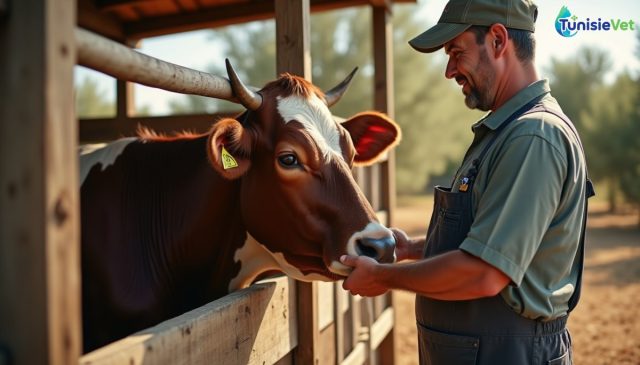
How do you prepare a farm animal for a veterinary visit without triggering panic or risking injury? The answer comes down to three key points: anticipation, habituation, and calm. This guide walks you through the practical steps to minimize stress in your cattle, sheep, goats, or horses before an examination, ensuring safer and more effective care.
1. Why stress complicates the veterinary examination
A frightened animal releases adrenaline, which accelerates its heart rate and alters certain clinical parameters observed by the veterinarian. An agitated animal is also more difficult to properly auscultate, inject, or palpate. Repeated stress eventually creates a lasting negative association with human contact and the veterinarian in particular.
A calm animal, by contrast, allows for more reliable diagnosis, faster examination, and reduces the risk of accidents for both the animal and the practitioner. This is why preparing your animal before a veterinary visit is just as important as the medical procedure itself.
2. Familiarize the animal with handling before the day of the visit
Restraint should never be a new experience on the day of the visit. An animal regularly handled from a young age accepts being touched, tied, or moved far more willingly.
- Handle sensitive areas regularly: ears, mouth, legs, udder, and back.
- Introduce the animal to halters, leads, or harnesses from an early age.
- Move the animal through the restraint chute or sorting area outside of treatment days, so it doesn't associate it only with discomfort.
- Reward calm behavior with treats, gentle stroking, or a soothing voice to reinforce positive associations.
This gradual habituation forms the foundation of all animal training for a successful veterinary visit, far more effective than forced restraint on the day itself.
Special considerations for equines
Horses and donkeys are particularly sensitive to sudden movements around the head and legs. It is recommended to familiarize them with being touched on the ears, mouth, and legs, as well as accepting a halter without attempting to escape.
Special considerations for sheep and goats
These animals react strongly to separation from the group. Handling them individually away from the flock, in a calm manner, helps reduce their anxiety when they need to be isolated for an examination.
3. Organize the examination space and restraint equipment
The examination location directly influences the animal's behavior. A poorly prepared space creates noise, slipping hazards, and confusion—all contributing to additional stress.
- Ensure a non-slip, dry floor free from obstacles.
- Check that the restraint chute, squeeze gate, or ropes are in good condition before the veterinarian arrives.
- Minimize noise: avoid shouting, running engines, or unnecessary movement.
- Separate the animal from the group only at the last moment, to limit the duration of separation.
- Provide adequate lighting if the examination takes place late in the day or indoors.
Good preparation of the physical space makes restraint easier and prevents hasty movements that increase the risk of injury.
4. On the day of the visit: handling techniques and attitudes to adopt
Human behavior directly influences that of the animal. An anxious or hurried handler transmits agitation to the herd.
- Arrive early to calmly gather the animals without rushing or shouting.
- Allow the animal to observe its surroundings for a few moments before any handling.
- Approach from the side rather than head-on, speaking in a calm voice.
- Assign restraint to someone familiar with the animal, rather than a stranger.
- Avoid heavy feeding just before the examination if anesthesia or sedation is planned by the veterinarian.
- Keep other group members at visual distance if this calms them, or move them away if they create agitation.
These simple practices significantly reduce stress during the veterinary examination, without requiring special equipment or advanced technical skills.
5. Adapt preparation according to species
Each species reacts differently to restraint and the presence of an unfamiliar person. The following table summarizes the main points of attention.
| Species | Particular sensitivity | Preparation advice |
|---|---|---|
| Cattle | Reactivity to noise and sudden movements | Use a familiar restraint chute, avoid shouting |
| Sheep | Stress from isolation from the group | Handle in small groups rather than one animal completely alone |
| Goats | Keen curiosity but quick to flee | Familiarize with human contact from a young age |
| Equines | Sensitivity around the head and limbs | Gradual habituation to halters and leg palpation |
6. Common mistakes to avoid
- Tying the animal too tightly, which increases panic instead of reducing it.
- Having multiple unfamiliar people handle the animal at the same time.
- Rushing the handling to "save time," which usually produces the opposite effect.
- Neglecting the emotional state of the entire group when examining just one animal.
- Improvising restraint on the day itself without checking equipment beforehand.
For complex cases, animals unaccustomed to handling, or examinations requiring prolonged immobilization, it is better to seek professional advice rather than improvise. You can consult the directory of farm animal veterinarians to arrange a visit suited to your herd's needs.
Summary
- Familiarize the animal with handling well before the veterinary visit.
- Prepare a safe, calm, and uncluttered space to minimize external stress factors.
- Use slow movements, a calm voice, and assign restraint to someone the animal knows.
- Tailor your preparation to the species: cattle, sheep, goats, and horses have different sensitivities.
- Avoid common pitfalls such as rushing or using unverified equipment.
Frequently asked questions
Should I separate the animal from the herd before the vet visit?
It's best to separate the animal as late as possible, just before the examination, because prolonged separation increases anxiety. For sheep and goats, keeping one or two companions nearby can help reassure them.
How do I calm a very nervous animal on examination day?
Speak in a low, steady voice, avoid sudden movements, and let the animal observe its surroundings before any handling. Having someone the animal knows well perform the restraint also significantly reduces agitation.
Can I train a young animal to accept future veterinary exams?
Yes, early habituation to touch, halters, or restraint chutes greatly facilitates future veterinary visits. The earlier this familiarization begins, the more cooperative an adult animal remains during examinations.
By applying these preparation principles, the veterinary visit becomes a better experience for both the animal and the farmer. Don't hesitate to discuss your herd's specific needs with your veterinarian in advance to ensure each examination is tailored appropriately.
Leave a comment
Be the first to comment on this article.

TunisieVet in your pocket 📱🐾 Access your veterinary services wherever you are. [ Download the app ]
Learn more