
Presentation
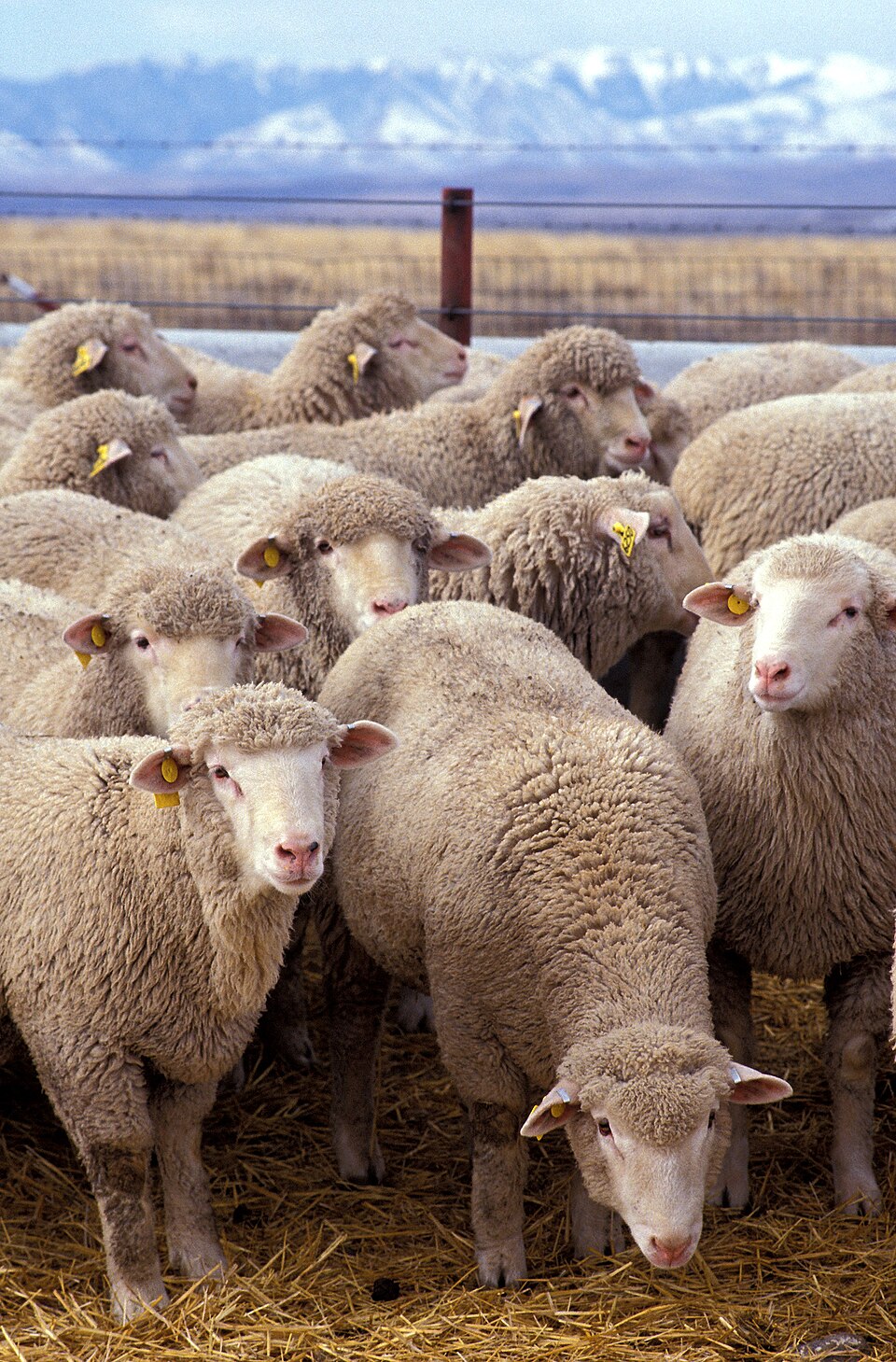
The Sheep is a domestic herbivorous mammal belonging to the Bovidae family. Bred by humans for more than 10,000 years, it is one of the most important animal species for global agriculture, providing wool, meat and milk.
The Sheep is distinguished by its thick, woolly fleece, generally white but can be black or brown depending on the breed. It has curved horns (especially in males), a compact and robust body, and a short tail. Its laterally placed eyes give it excellent panoramic vision.
Did you know?
Do sheep recognize faces?
Characteristics
BREEDS
Indicative values: they vary by subspecies, sex and region.
Habitat and distribution
The Sheep adapts to a wide range of environments, from wet grasslands to semi-arid steppes. It thrives in well-drained pasture areas and can withstand varied climatic conditions. Livestock farming on farms constitutes its main current habitat, supplemented by extensive outdoor rangelands.
CURRENT RANGE
Sheep is present on all continents except Antarctica, the result of its domestication and intensive breeding. The largest populations are found in Asia, North Africa and Oceania. There are hundreds of breeds selected for specific regional uses and contexts.
Behaviour
The Sheep is a gregarious and social animal that naturally lives in herds, providing protection and security to individuals. It is generally docile and obedient, which makes it easier for the breeder to manage. Sheeps communicate with distinctive bleats and maintain hierarchical relationships within the group.
Reproduction
The female Sheep (ewe) reaches sexual maturity around 6-8 months. Gestation lasts about 145 days, usually giving birth to one or two lambs. Breastfeeding lasts 8-12 weeks. The Sheep can breed all year round, although the rutting period is usually in autumn-winter.
Peculiarities
The Sheep has a remarkable learning and memory ability, capable of recognizing and remembering human and animal faces. Its fleece is renewed annually and can weigh 2 to 7 kg depending on the breed. Some breeds produce rich milk used to make fine cheeses like Roquefort.
Threats and conservation
As a domestic species, the Sheep is not threatened with extinction. However, certain old and regional breeds face a risk of genetic erosion due to the industrialization of breeding and the concentration on a few commercial breeds.
Numbers and trends vary across sources and regions. See the IUCN assessment for the latest reference data.
Gallery
1 documented photographs.
References
Profile updated 11 August 2026 · Reviewed by the TunisieVet editorial team.
Comments (0)
No comments yet.
CONSERVATION STATUS
Not evaluated (NE)
IUCN source, latest published assessment.
Species health
Documented diseases for this species.
See the 136 diseases of this species Find a veterinarianThis information is provided for educational purposes only and is not a substitute for a veterinary consultation. If you have any concerns about your animal's health, consult a veterinarian.
Related species
To discover around: Sheep
Videos, facts, stories and records linked to this species.
Similar animals
Other species documented in Animalpedia.

TunisieVet in your pocket 📱🐾 Access your veterinary services wherever you are. [ Download the app ]
Learn more