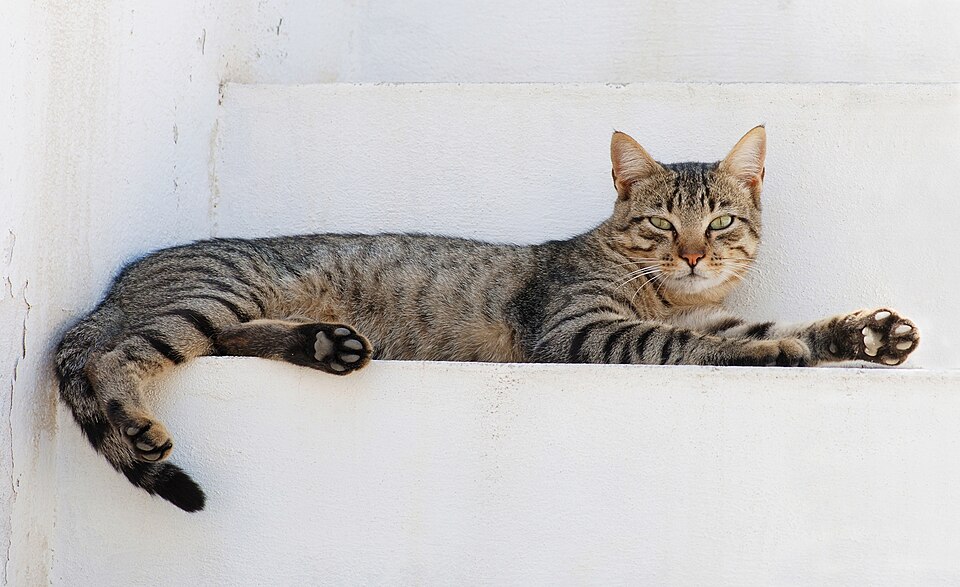
Cats knead with their front paws by instinct inherited from sucking: as a kitten, this movement stimulated the mother's milk production. Adult, this gesture persists as a sign of appeasement, olfactory marking via the pads and preparation for bed — it does not indicate hunger.
A reflex imprinted from birth
In the newborn kitten, the rhythmic kneading of the front legs against the mother's breasts promotes the ejection of milk by mechanical stimulation of the mammary gland. This behavior, present from the first days of life and practiced alternating with feeding, is part of the innate motor repertoire of the young feline, even before the eyes fully open.
In adulthood, this motor pattern remains active but changes function. The cat reproduces it especially in contexts of comfort: on the lap of its owner, on a blanket or a cushion, often accompanied by purrs and sometimes salivation. The foot pads carry odorous sweat glands; by kneading, the cat deposits pheromones which mark the support as familiar and reassuring, reinforcing its own feeling of territorial security.
Publicité
Publicité
This gesture can also prepare a bed, reminiscent of the ancestral behavior consisting of packing down vegetation before settling down, a behavioral vestige also observed in other felids in the wild.
A behavior not to be confused with hunger
Kneading is not associated with any food demand signal: it occurs outside of meals, often during rest or close contact with humans. A cat that demands food tends to vocalize, rub against the legs or wait near the bowl. If kneading is accompanied by excessively extended claws or unusual compulsive behaviors, veterinary advice may be helpful to rule out an underlying cause.