⚠️ This information is provided for awareness only and does not replace an examination by a veterinarian.
🤖 Summary produced automatically from the scientific publication cited at the bottom of the page.
A dog kept developing cysts in his groin even after surgery — here is how his vet finally got them under control.
What happened?
This dog had already been operated on at another hospital for a cystic mass in the left groin and near the penis, but the lesion came back shortly after surgery. Despite long-term cortisone treatment, the mass kept growing, and the dog had difficulty walking and was less active. He was then brought to a new clinic for further care.
🔎 What did the vet find?
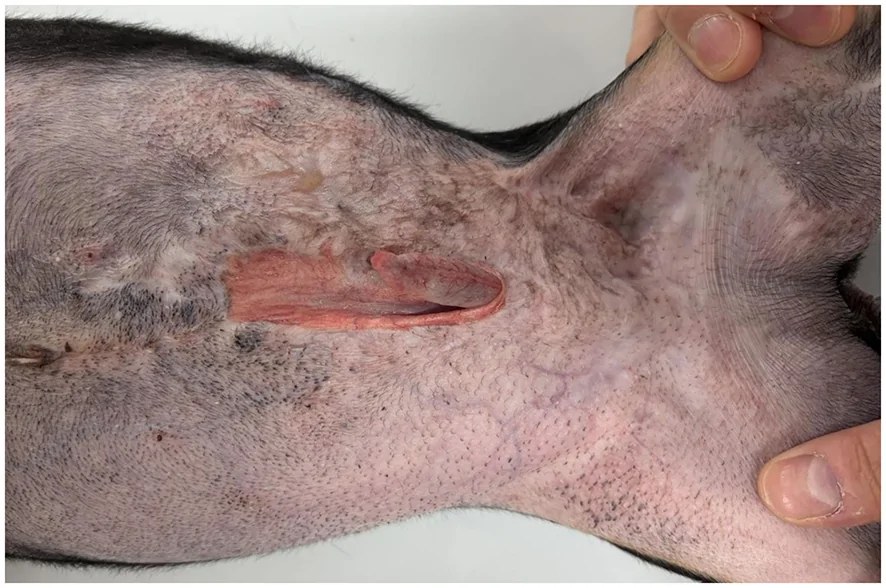
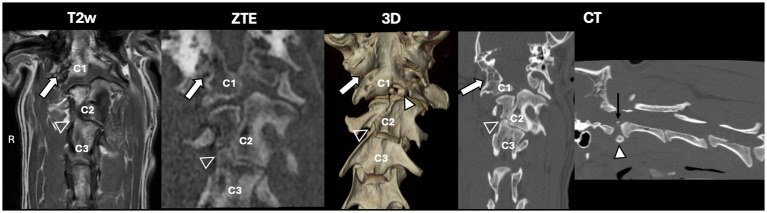
Ultrasound and CT scans showed a multi-pocketed cystic mass, like a cluster of small fluid-filled sacs, extending under the skin from around the penis to the left groin. Fluid and blood tests showed no signs of infection. After a first surgery to remove the mass, new cysts reappeared just two weeks later. The diagnosis was a lymphatic malformation, a congenital abnormality of the vessels that carry lymph fluid, causing fluid-filled pockets to form.
Publicité
Publicité
🩺 What did the vet do?
ℹ️ Treatment given to THIS animal, decided by its veterinarian. It is not a prescription: never apply it without veterinary advice.
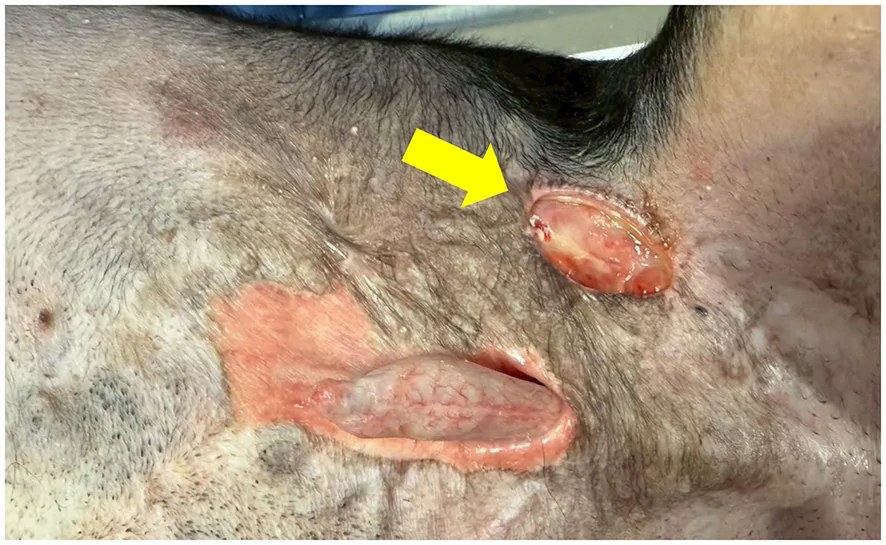
After surgery and recurrence, the vet chose to treat the cysts with injections of an antibiotic called minocycline directly into each fluid pocket after draining it: this irritates the cyst wall so it scars over and stops refilling. This treatment was repeated several times over several months, mainly targeting the largest cysts seen on ultrasound. A second surgery was also needed to repair a urine leak from the suture line.
🖼️ The case in pictures
①Treatment
②After treatment
✅ What happened next?
The large cysts eventually disappeared or stayed stable, and the dog regained good activity and a normal gait. Small cysts and a few nodules under the skin remained, but without worsening, and the dog was doing well about 18 months after the first surgery. The treatment caused small areas of skin loss at the injection site on three occasions, but these always healed on their own.
⚠️ Advice for the farmer
This kind of malformation is present from birth and is very hard to remove completely with surgery alone: if cysts come back after an operation, owners shouldn't lose hope, as other options exist to control them long-term.
Publicité
📚 Source
Source
PubMed Central
Title
Case report: Long-term local control of recurrent lymphatic malformations using minocycline sclerotherapy following surgical resection in a dog.
Authors
Taki H, Sakai T, Kondo T, Yokoyama D, Fujiki J, Yamamoto S, Torisu S.