Veterinary case
Two mares poisoned by a tree in their paddock
⚠️ This information is provided for awareness only and does not replace an examination by a veterinarian.
🤖 Summary produced automatically from the scientific publication cited at the bottom of the page.
Two mares chewed bark from a tree in their paddock: one died, the other barely survived.
What happened?
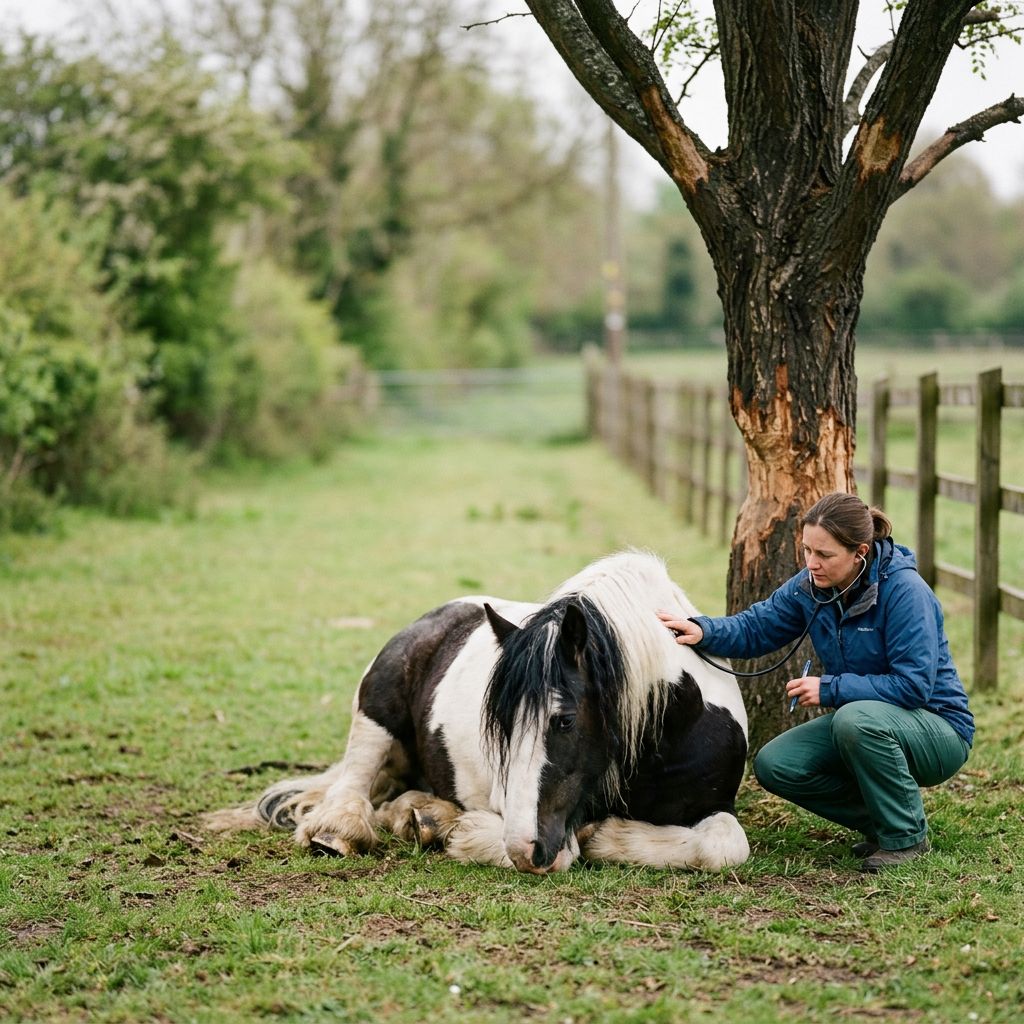
Two Irish Cob mares were found lying in their paddock in the afternoon, feverish and weak. A third horse in the same paddock showed no symptoms. A field veterinarian gave them anti-inflammatory drugs and fluids, and they seemed to improve slightly. But the next morning, one mare was found dead while the other developed fever, weakness and mild colic again.
What did the vet find?
Blood tests on the surviving mare showed a drop in white blood cells. Despite treatment, she became unsteady on her feet and started pressing her head against objects, signs of severe brain impairment. The vet found a black locust tree (Robinia pseudoacacia) in the paddock with freshly bitten bark. At the clinic, she was lying on her side, unable to stand, with a fast heart rate and extremely high blood ammonia, showing her gut and liver could no longer filter toxins properly. The necropsy of the dead mare revealed fluid-swollen brain and lungs, bleeding and inflammation of the stomach lining, confirming poisoning by this tree.
What did the vet do?
ℹ️ Treatment given to THIS animal, decided by its veterinarian. It is not a prescription: never apply it without veterinary advice.
At the clinic, the mare received intravenous fluids to correct dehydration and blood imbalances, along with activated charcoal and lactulose given through a stomach tube to trap toxins and lower ammonia. Because she was pressing her head violently and struggling to breathe, she was sedated repeatedly and kept lying on her chest. In the following days she was also given a bicarbonate drink to correct her blood acidity.
What happened next?
By the second day, the mare's condition improved markedly: she could stand and move around freely, with no colic or lameness. Her blood ammonia level had returned to near normal. She left the clinic in good health after four days, fully recovered.
Advice for the farmer
Always check that paddocks are free of toxic trees like black locust, especially since bored horses may start chewing the bark.
Source
- Source
- PubMed Central
- Title
- Robinia pseudoacacia poisoning in two horses: A case report.
- Authors
- Novotna T, Samonilova E, Klan J, Frgelecova L, Mala A, Svobodova Z, Drabkova Z.
- Year
- 2024
- DOI
- 10.17221/55/2024-vetmed
- Licence
- CC BY