Veterinary case
A paralyzed buck reveals a rare fungal meningitis
⚠️ This information is provided for awareness only and does not replace an examination by a veterinarian.
🤖 Summary produced automatically from the scientific publication cited at the bottom of the page.
A buck paralyzed in the hind legs was hiding a rare fungal brain infection never before described in goats.
What happened?
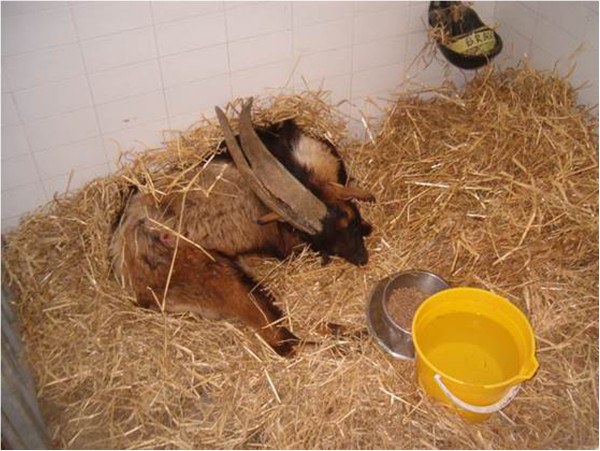
This 5 year old buck, from a precious herd of the endangered Portuguese Bravia breed, started showing lethargy, reduced appetite and trouble walking on his hind legs. Trauma was first suspected and he was given an anti-inflammatory for three days, with no improvement. Pigeons had access to the stable and pastures used by the herd, but no other animal was showing any illness.
What did the vet find?
The vet found complete, flaccid paralysis of the hind legs with no reflexes, and pain so severe that just touching the legs made the animal cry out loudly. The buck was scratching and injuring himself with his long horns, causing a wound on his flank. Blood tests showed infection, and fluid taken from around the spinal cord confirmed severe inflammation, though the cause was not yet identified. It was only after death that the Cryptococcus fungus was found in the lungs and meninges (the membrane protecting the spinal cord and brain).
What did the vet do?
ℹ️ Treatment given to THIS animal, decided by its veterinarian. It is not a prescription: never apply it without veterinary advice.
While waiting for test results, the vet treated the buck with an antibiotic and one injection of a strong anti-inflammatory, suspecting a bacterial infection of the meninges. But after three days, the pain remained unbearable with no improvement at all.
What happened next?
After three days of antibiotics with no improvement, the pain and paralysis remained extremely severe, so the buck was euthanized for humane reasons. The post-mortem exam revealed meningitis, lung nodules and lymph node infection, with the Cryptococcus fungus found in both the lungs and the meninges.
Advice for the farmer
When hind limb paralysis with severe pain does not respond to antibiotics, a rare fungal cause should be considered, and herd contact with pigeon droppings, which can carry this fungus, should be limited.
Source
- Source
- PubMed Central
- Title
- Cryptococcal meningitis in a goat--a case report.
- Authors
- Stilwell G, Pissarra H.
- Year
- 2014
- DOI
- 10.1186/1746-6148-10-84
- Licence
- CC BY