Veterinary case
A cat with repeated urinary infections and bladder stones
⚠️ This information is provided for awareness only and does not replace an examination by a veterinarian.
🤖 Summary produced automatically from the scientific publication cited at the bottom of the page.
A cat straining to urinate and passing blood for three weeks had a rare bacterium and bladder stones.
What happened?
A 4-year-old neutered male cat was brought in straining to urinate, urinating often and passing blood for about three weeks. At 5 months old he had urethral surgery after an accidental rupture. Since then he had several urinary infections, all cured with antibiotics chosen by lab tests.
What did the vet find?
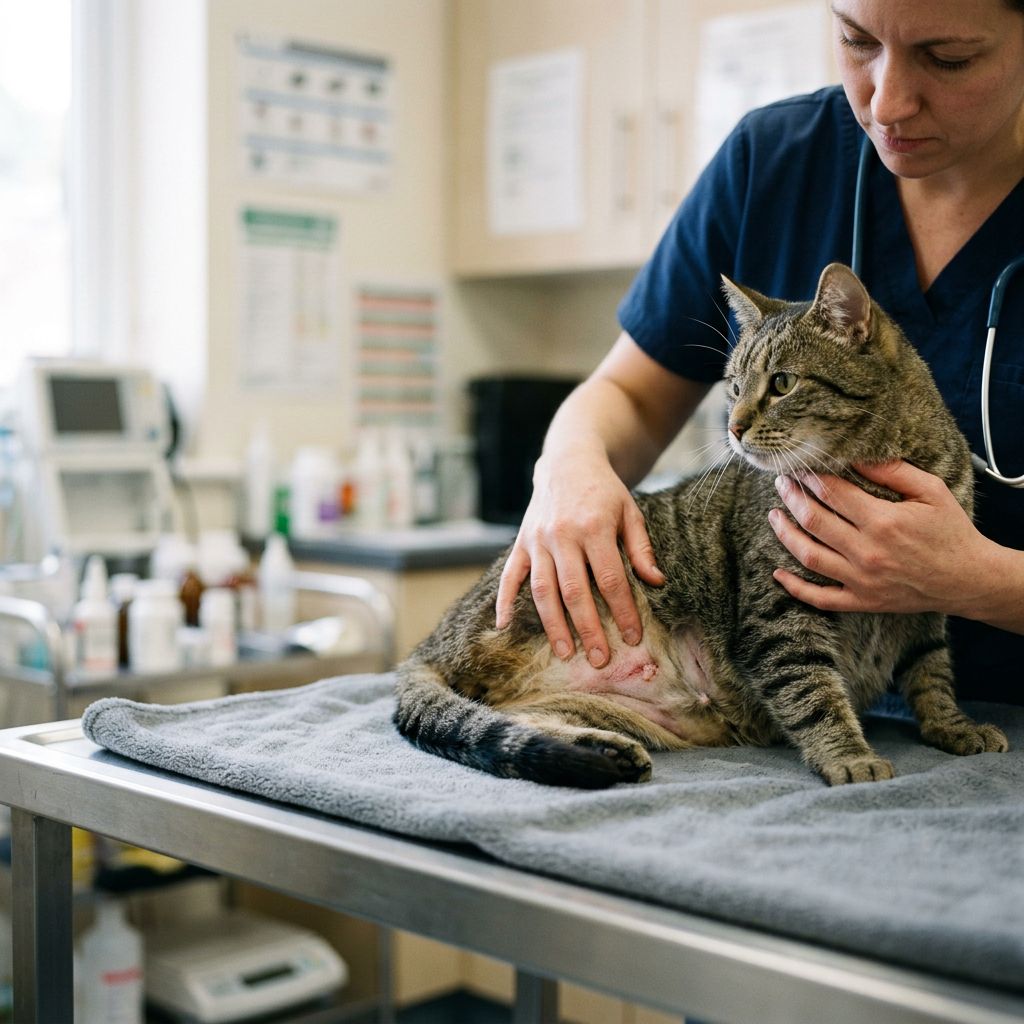
The skin around the surgical site was badly irritated by urine, and the cat was painful in the belly. Ultrasound and X-ray showed two stones in the bladder. Urine contained blood, pus and many bacteria. Culture grew a rare bacterium, Aerococcus mictus, confirmed by genome sequencing. Diagnosis: urinary infection with stones, probably struvite.
What did the vet do?
ℹ️ Treatment given to THIS animal, decided by its veterinarian. It is not a prescription: never apply it without veterinary advice.
The vet gave a suitable antibiotic for four weeks, because stones can harbour bacteria. He also advised wet food and more water to help dissolve the stones.
What happened next?
After four weeks the infection was cured and the stones were smaller, but blood and crystals remained in the urine. The owner had not followed the diet well, so a stricter diet was advised. Follow-up ended there.
Advice for the farmer
Follow the prescribed diet and make sure your cat drinks plenty of water; it is essential to dissolve stones.
Source
- Source
- PubMed Central
- Title
- Aerococcus mictus as a cause of feline urinary tract infection: a case report.
- Authors
- Uva A, Pirolo M, Cavalera MA, Tanas G, Guardabassi L, Zatelli A, Gernone F.
- Year
- 2026
- DOI
- 10.1186/s12917-026-05462-3
- Licence
- CC BY