Veterinary case
A horse's heart stalls under anaesthesia: the rescue
⚠️ This information is provided for awareness only and does not replace an examination by a veterinarian.
🤖 Summary produced automatically from the scientific publication cited at the bottom of the page.
During a cardiac study under anaesthesia, a mare's potassium levels soared to life-threatening heights, until an unusual treatment turned things around.
What happened?
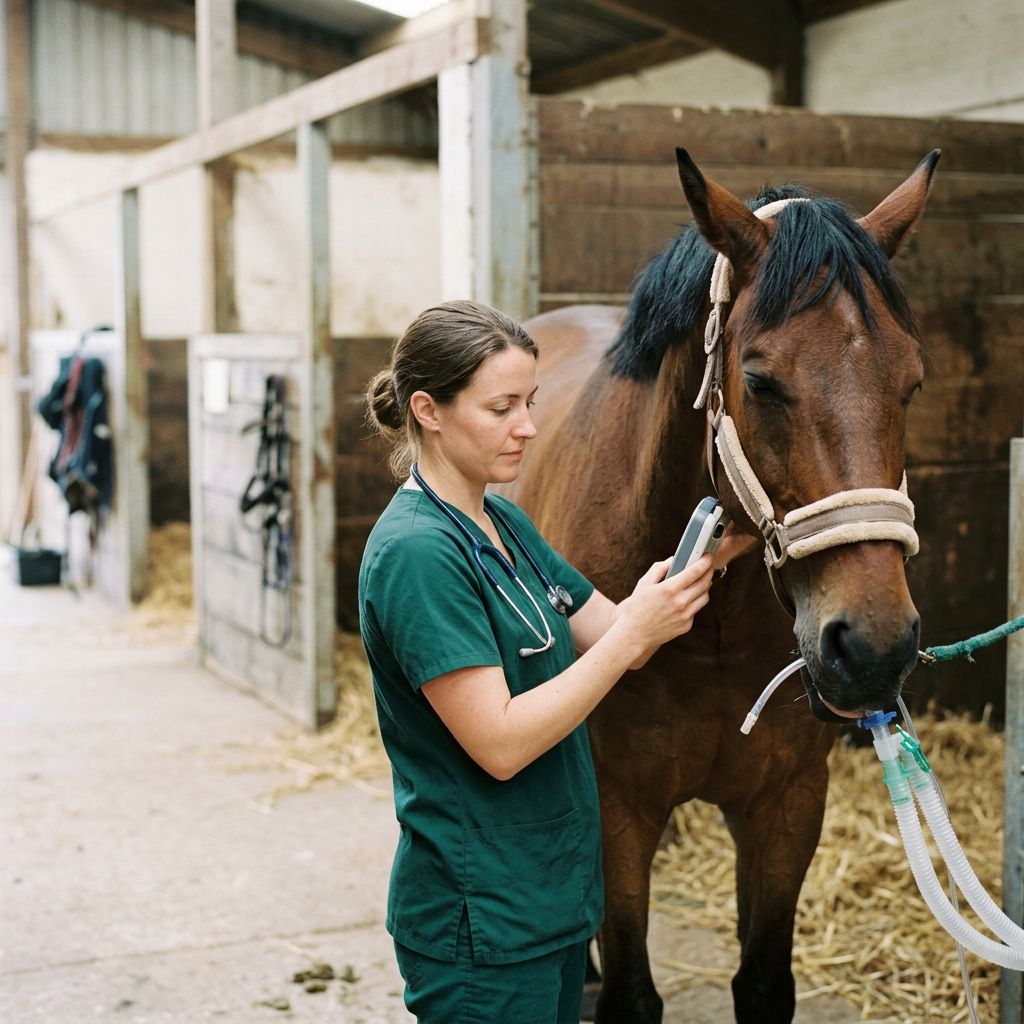
A healthy 13-year-old French Trotter mare was anaesthetised for an experimental heart study mapping the electrical activity of the atria using catheters. During the procedure, her heart rhythm began to go wrong: first atrial fibrillation, then severe slowing of the heart. The vets discovered her blood potassium level was rising dangerously high.
What did the vet find?
The ECG showed a gradual loss of electrical activity in the atria, with the heart beating slower and slower until this activity almost stopped completely. Blood tests confirmed a very high potassium level, well above normal, which is dangerous because it directly disrupts heart function. The vets checked there was no urinary problem or infusion error that could explain the rise.
What did the vet do?
ℹ️ Treatment given to THIS animal, decided by its veterinarian. It is not a prescription: never apply it without veterinary advice.
A temporary pacemaker was placed to keep the heart beating while the vets treated the problem. They first gave insulin and glucose to lower the potassium, but the level kept rising. They then added an inhaled medicine usually used for asthma, along with an intravenous diuretic.
What happened next?
Eight minutes after this treatment, the heart began contracting spontaneously again in the atria, and the potassium level dropped rapidly. Normal heart rhythm returned about 28 minutes later, and the pacemaker could be removed. The mare recovered from anaesthesia without complications and her potassium returned to normal over the following hours.
Advice for the farmer
This case is a reminder that even in a perfectly healthy animal, prolonged anaesthesia requires constant heart monitoring and repeated blood tests, because serious complications can arise suddenly.
Source
- Source
- PubMed Central
- Title
- Case Report: Inhaled salbutamol in the successful treatment of life-threatening acute hyperkalaemia in an anaesthetised horse.
- Authors
- Rollet M, Flyps J, Vernemmen I, van Loon G, Schauvliege S.
- Year
- 2025
- DOI
- 10.3389/fvets.2025.1663681
- Licence
- CC BY