Veterinary case
A young cat with seizures and a rare fatal disease
⚠️ This information is provided for awareness only and does not replace an examination by a veterinarian.
🤖 Summary produced automatically from the scientific publication cited at the bottom of the page.
A cat cured of esophageal strictures suddenly falls ill nearly two years later, and nothing could save him.
What happened?
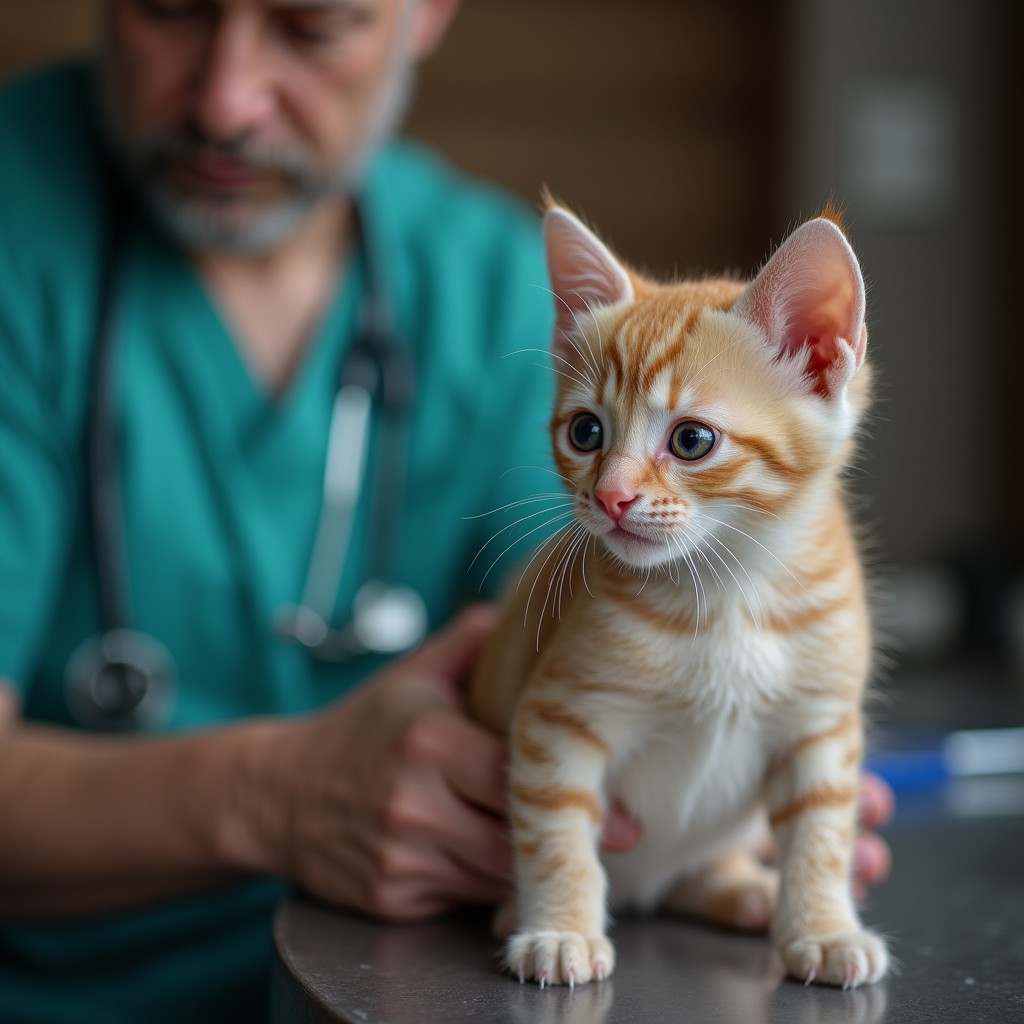
This neutered male cat, about 3 years old, lived on a boat. Earlier he had been treated for esophageal strictures with several balloon dilations and recovered well. Twenty-three months later his owner found him lying down, disoriented and crying out, after two days without eating.
What did the vet find?
The cat had pale gums, anemia and very low platelets, meaning a high bleeding risk. Tests found no infection. He then had repeated seizures, bruising on his belly and blood in his urine. After death, examination showed small vessels in many organs blocked by excess cells, a rare disease called feline systemic reactive angioendotheliomatosis.
What did the vet do?
ℹ️ Treatment given to THIS animal, decided by its veterinarian. It is not a prescription: never apply it without veterinary advice.
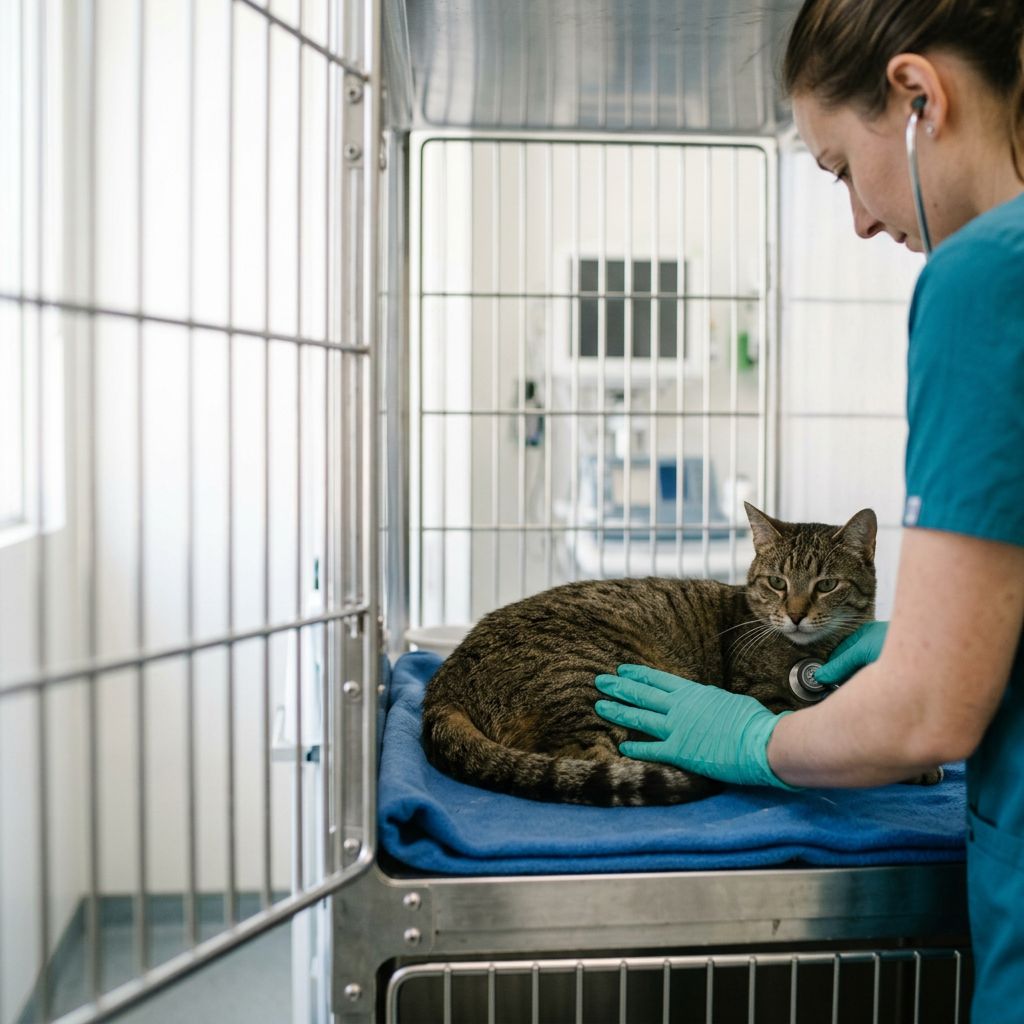
The cat was hospitalized on a drip, given anti-seizure drugs, antibiotics and cortisone in case the disease was immune-related. A blood transfusion helped for a while, and another drug lowered pressure in the brain. No known treatment cures this disease.
What happened next?
The seizures returned, and the cat's heart stopped a few hours later. Resuscitation was stopped with the owner's agreement.
Advice for the farmer
If a cat changes behavior or stops eating, see a vet quickly, because this disease progresses within days.
Source
- Source
- PubMed Central
- Title
- Case Report: Systemic reactive angioendotheliomatosis in a young cat with a history of esophageal strictures and balloon dilations.
- Authors
- Hammond T, Savidge C, Martinez-Romero G.
- Year
- 2026
- DOI
- 10.3389/fvets.2026.1778392
- Licence
- CC BY