Veterinary case
A rabbit that always walked oddly
⚠️ This information is provided for awareness only and does not replace an examination by a veterinarian.
🤖 Summary produced automatically from the scientific publication cited at the bottom of the page.
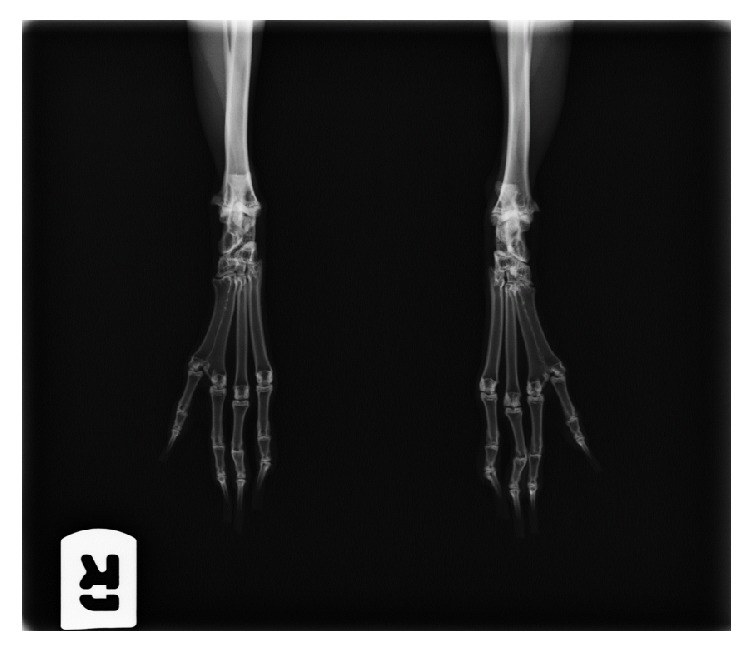
A rabbit had been walking oddly since it was young: an X-ray revealed a rare malformation never before reported in this species.
What happened?
A three-year-old male rabbit was brought to the vet for routine sterilization. During the consultation, the owner mentioned that the animal had walked unusually ever since he bought it from a store at 6 weeks of age. The general clinical exam showed no visible abnormality, but the vet suggested an X-ray of the hind legs, which the owner accepted.
What did the vet find?
The X-ray showed that the 3rd and 4th foot bones were fused together along their entire length, on both hind legs, while the joints remained normal. This is a birth defect called syndactyly, where bones or digits that should have separated during embryo growth stay joined. This defect simply explained the rabbit's unusual gait, without causing pain or any other visible problem. Blood and urine tests done before surgery also showed mild inflammation and a possible sign of kidney strain, likely linked to a parasite common in rabbits.
What did the vet do?
ℹ️ Treatment given to THIS animal, decided by its veterinarian. It is not a prescription: never apply it without veterinary advice.
Since this malformation did not bother the rabbit or cause pain, no treatment was needed for the fused bones. The vet simply carried out the planned sterilization and, with the owner's consent, took the opportunity under anesthesia to do a full X-ray check, which revealed no other abnormality.
What happened next?
The surgery and recovery went well without complications. The vet suggested monitoring kidney function at follow-up visits, but the owner chose not to pursue further testing.
Advice for the farmer
An unusual gait in a young animal, even without obvious pain, is worth showing to a vet: sometimes it's just a harmless anatomical quirk, but a check-up helps confirm that.
Source
- Source
- PubMed Central
- Title
- Case Report of Bilateral 3-4 Metatarsal Syndactyly in a Pet Rabbit.
- Authors
- Gallego M, Avedillo L.
- Year
- 2016
- DOI
- 10.1155/2016/6957101
- Licence
- CC BY