Veterinary case
A foal dies from a rare pneumonia in Bulgaria
⚠️ This information is provided for awareness only and does not replace an examination by a veterinarian.
🤖 Summary produced automatically from the scientific publication cited at the bottom of the page.
A 56-day-old filly developed severe respiratory distress that resisted every treatment, revealing a bacterium never before detected in the country.
What happened?
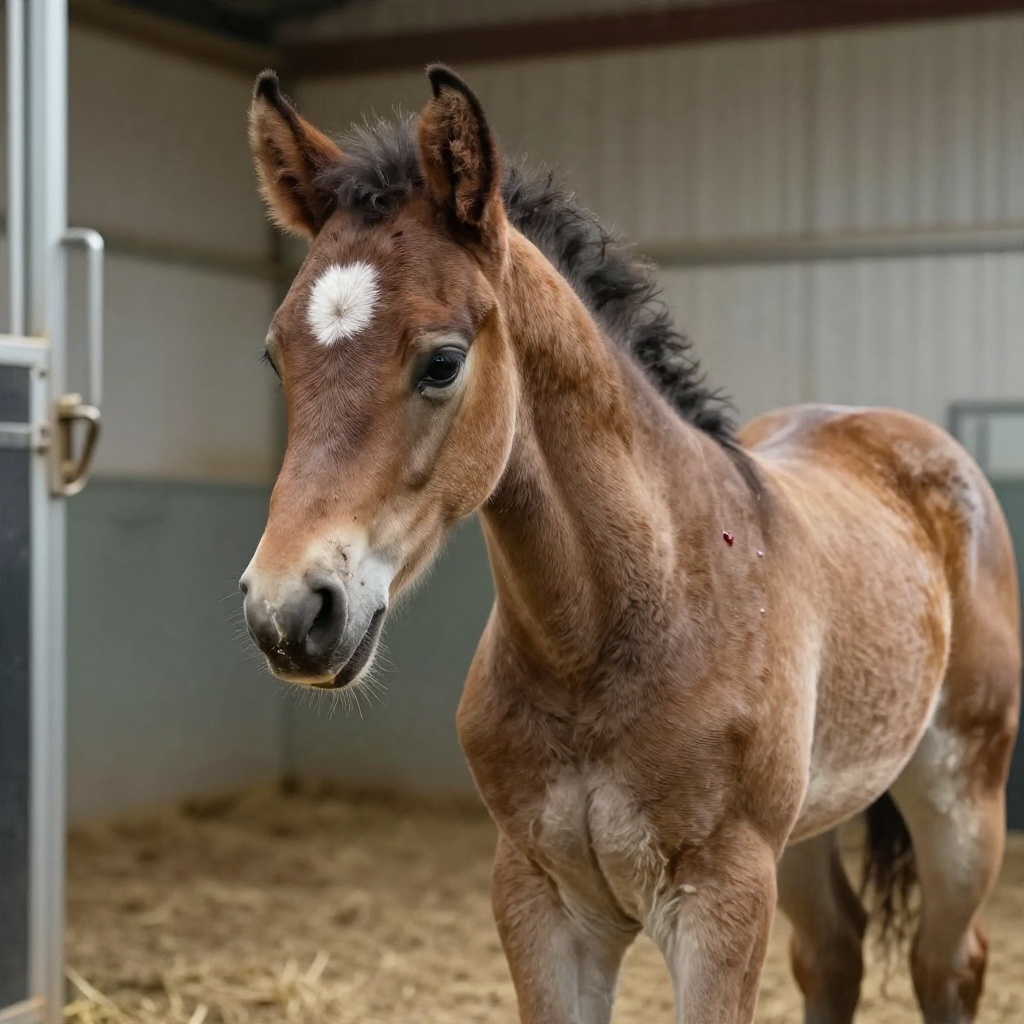
A 56-day-old Arabian filly, born healthy on a private stud farm, suddenly developed fever, lethargy and breathing difficulties. The owner noticed she was breathing fast, coughing, and nursing less and less. The farm veterinarian first suspected a simple cold with bronchitis.
What did the vet find?
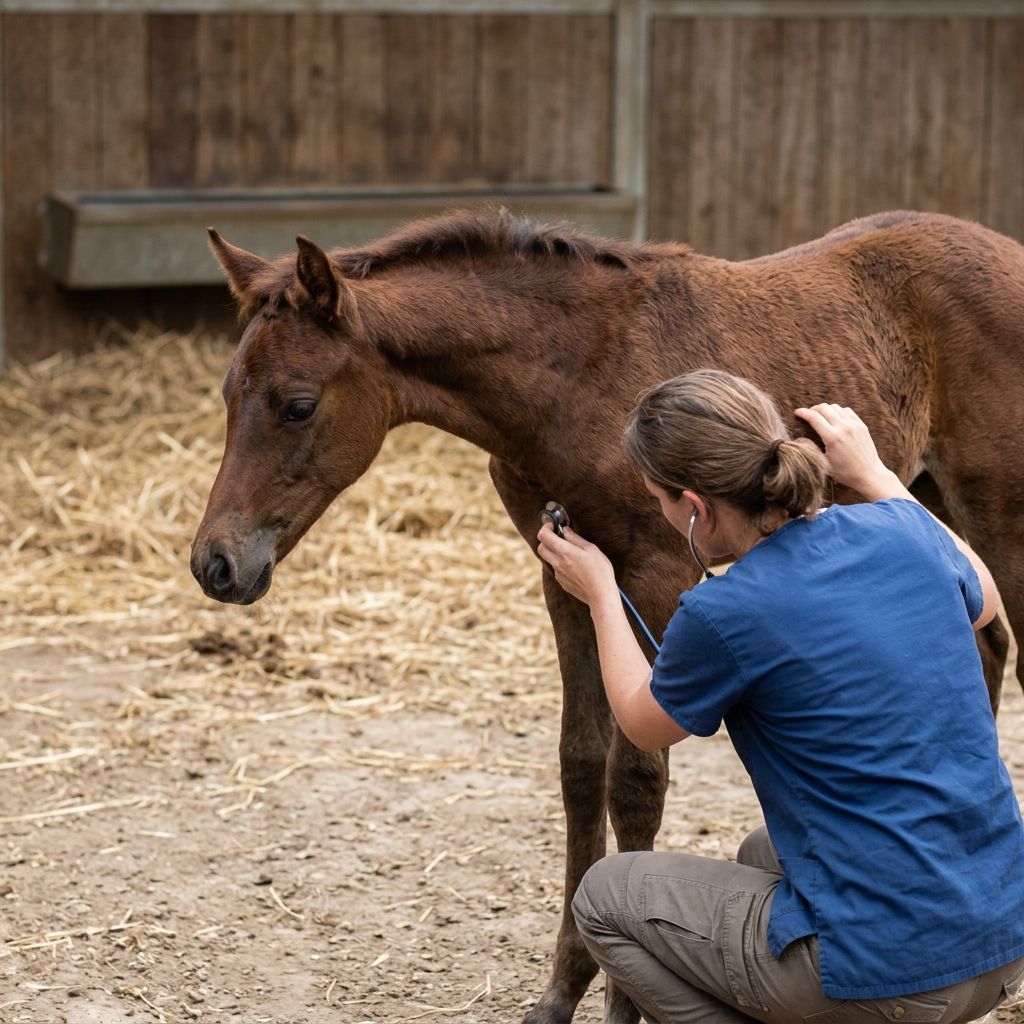
On examination, the filly had high fever, fast and labored breathing, flared nostrils, a marked cough and slight purulent nasal discharge. Her mucous membranes turned bluish, a sign of low oxygen, and lung auscultation revealed abnormal sounds on both sides. No bloodwork, ultrasound or X-rays were performed at that time. After death, the post-mortem exam showed lungs filled with pus-containing nodules, some several centimeters wide, along with fluid around the lungs and swollen lymph nodes. Laboratory tests identified the bacterium Rhodococcus equi, a strain capable of causing severe disease in young foals.
What did the vet do?
ℹ️ Treatment given to THIS animal, decided by its veterinarian. It is not a prescription: never apply it without veterinary advice.
From the first signs, the veterinarian started intensive antibiotic treatment by injection. Since her condition did not improve after three days, another antibiotic was added, along with fluids, vitamins and anti-inflammatory drugs to support her.
What happened next?
Despite all the care, the filly's condition kept worsening over five days, with increasingly labored breathing. She died at 61 days of age. The owner reported that a foal of similar age had died of a similar illness three years earlier, without a precise diagnosis being made at the time.
Advice for the farmer
On horse farms, it is important to closely monitor foals from the first respiratory signs and quickly isolate any sick animal to prevent the disease from contaminating the farm environment.
Source
- Source
- PubMed Central
- Title
- First Detection of Rhodococcus equi in a Foal in Bulgaria-A Case Report.
- Authors
- Boneva-Marutsova B, Marutsov P, Kerner K, Zhelev G.
- Year
- 2025
- DOI
- 10.3390/ani15142058
- Licence
- CC BY