Veterinary case
A cat with recurring fluid buildup around the lungs
⚠️ This information is provided for awareness only and does not replace an examination by a veterinarian.
🤖 Summary produced automatically from the scientific publication cited at the bottom of the page.
An elderly cat with severe heart disease kept accumulating fluid around her lungs, until a new treatment changed everything.
What happened?
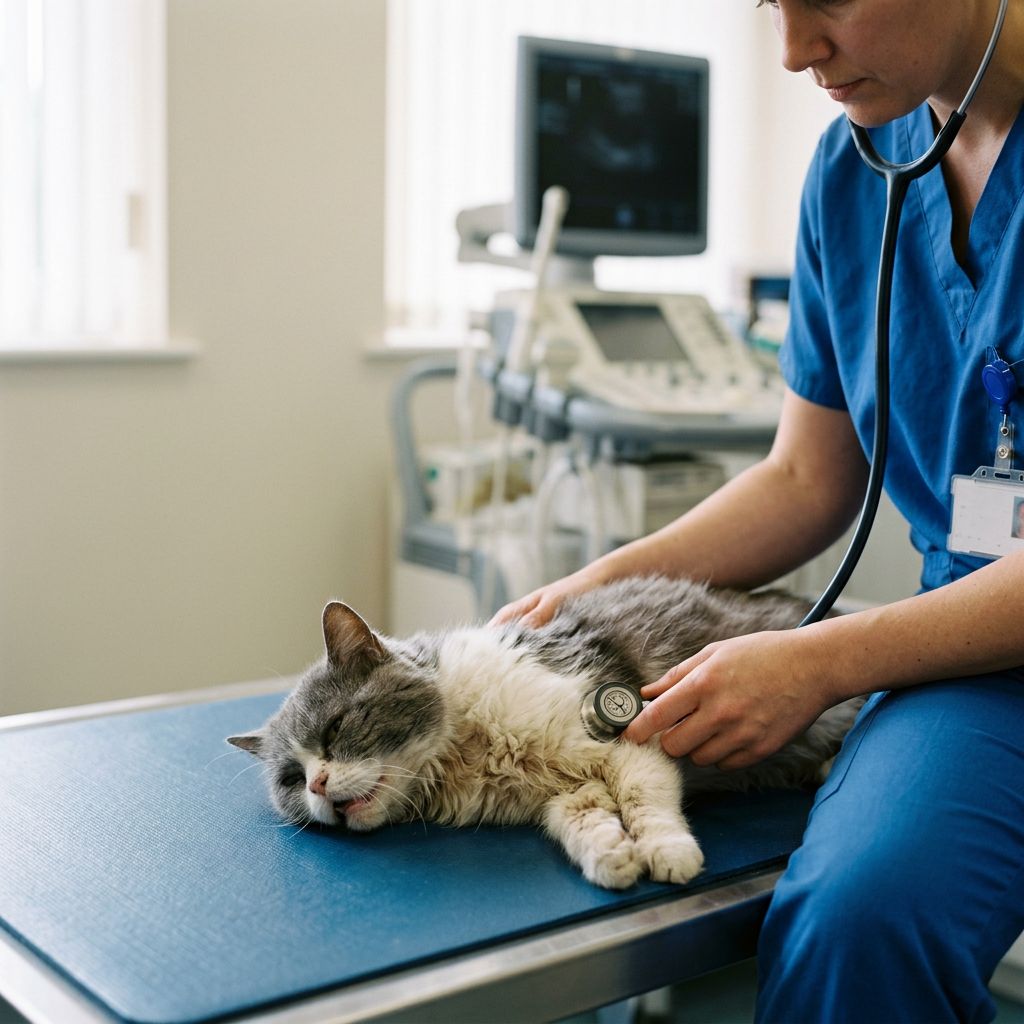
This 14-year-old cat was brought in as an emergency because she was breathing with great difficulty. Earlier that same day, another clinic had already drained fluid from her chest, but the problem quickly came back. On arrival she was lying on her side, breathing very fast and with visible effort. An ultrasound showed a large amount of fluid around the lungs, and emergency drainage was performed again.
What did the vet find?
The vet found a very fast and irregular heartbeat, a rhythm disturbance called atrial fibrillation. Heart ultrasound revealed advanced heart disease with severe enlargement of the heart, especially both upper chambers, and an abnormal thickening of part of the heart muscle. The fluid drained from the chest was a fatty type of fluid, confirming the cardiac origin of the problem. Despite standard treatment, the cat kept having repeated episodes with fluid returning to the chest.
What did the vet do?
ℹ️ Treatment given to THIS animal, decided by its veterinarian. It is not a prescription: never apply it without veterinary advice.
The cat first received standard heart treatment including a drug to strengthen the heart, a diuretic to remove excess fluid, and medications to prevent blood clots. Because the episodes kept coming back, the vet added two new drugs, one that helps the heart and kidneys work better together, and a second type of diuretic acting differently to boost fluid removal. The owners later stopped, on their own and without consulting the vet, all the other medications, keeping only these two new treatments.
What happened next?
Over the following two years, the cat had no further breathing crises and needed no more fluid drainage, remaining stable at home. A follow-up ultrasound two years later showed the heart was still severely diseased, but its pumping strength had improved. This is an encouraging result, but it remains a single case and does not yet prove this treatment works for every cat.
Advice for the farmer
In a cat with heart disease, never change the treatment on your own: always talk to your vet before changing or stopping a medication, even if the animal seems to be doing better.
Source
- Source
- PubMed Central
- Title
- Long-Term Control of Refractory Cardiogenic Pleural Effusion in a Cat Treated with Sacubitril/Valsartan and Hydrochlorothiazide: A Case Report.
- Authors
- Maftei MC, Scîntei LM, Beschea Chiriac SI, Vulpe V, Baisan RA.
- Year
- 2026
- DOI
- 10.3390/ani16172701
- Licence
- CC BY