Veterinary case
A healthy-looking goat was contaminating the herd's milk
⚠️ This information is provided for awareness only and does not replace an examination by a veterinarian.
🤖 Summary produced automatically from the scientific publication cited at the bottom of the page.
A perfectly healthy-looking goat was silently contaminating the whole herd's milk.
What happened?
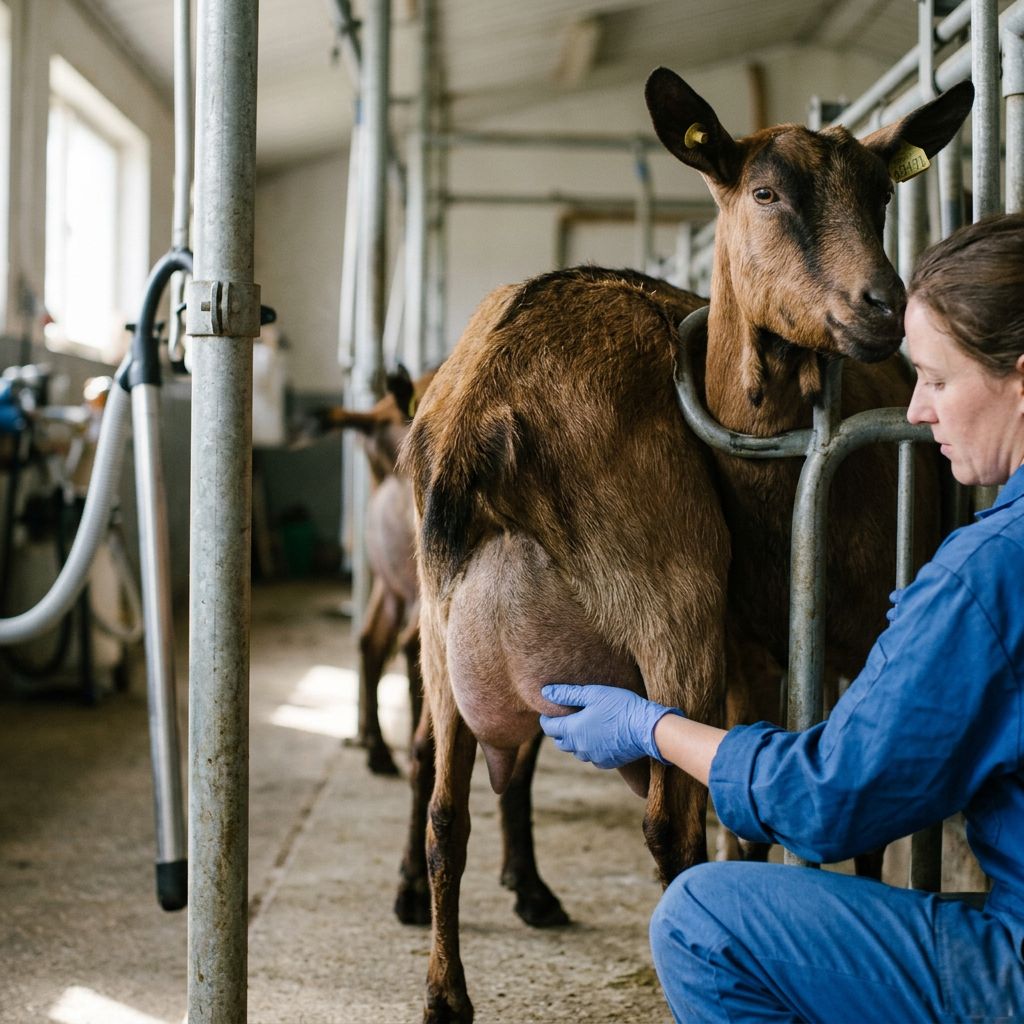
In a herd of 200 Alpine goats in Italy, routine testing found Listeria bacteria in the cheese and in the bulk milk tank, yet no goat showed any sign of illness. The farm team tested milk from groups of goats, then from individual animals, to trace the source. One goat, appearing perfectly healthy and with no history of mastitis, was found to be shedding the bacteria from her right udder half.
What did the vet find?
The veterinarian found no visible clinical signs; the goat appeared completely healthy. However, lab tests showed a very high cell count in the milk from the right udder half, indicating hidden inflammation. Bacterial cultures confirmed Listeria in the milk, and after culling, also in the udder tissue. Microscopic examination revealed chronic inflammation of the udder with old damage, typical of a long-standing infection that never caused visible symptoms.
What did the vet do?
ℹ️ Treatment given to THIS animal, decided by its veterinarian. It is not a prescription: never apply it without veterinary advice.
No treatment was attempted, since the infection was chronic and hidden inside the udder, and the goat showed no signs of illness to treat. The only action taken was to remove the goat from the herd to protect the other animals and the quality of the milk sold.
What happened next?
The goat was culled the following week, following the standard procedure to control herd contamination. After her removal, the bulk tank milk tested negative for the bacteria in all subsequent checks, confirming she had been the source.
Advice for the farmer
It is important to regularly test the milk of herds that sell milk or cheese directly from the farm, because an apparently healthy goat can carry and spread dangerous bacteria without showing any symptoms.
Source
- Source
- PubMed Central
- Title
- Chronic intramammary infection by Listeria monocytogenes in a clinically healthy goat - a case report.
- Authors
- Addis MF, Cubeddu T, Pilicchi Y, Rocca S, Piccinini R.
- Year
- 2019
- DOI
- 10.1186/s12917-019-1989-3
- Licence
- CC BY