Veterinary case
A dog with multiple bone lesions: what was really going on?
⚠️ This information is provided for awareness only and does not replace an examination by a veterinarian.
🤖 Summary produced automatically from the scientific publication cited at the bottom of the page.
An old dog could no longer stand, and behind this lameness was hiding a cancer whose origin could not be found.
What happened?
A 15-year-old spayed female Jindo-mix dog had been lame in a front leg for two weeks. The problem worsened quickly until all four legs were affected, and the dog became unable to stand at all. She was then brought to the veterinary hospital for a thorough evaluation.
What did the vet find?
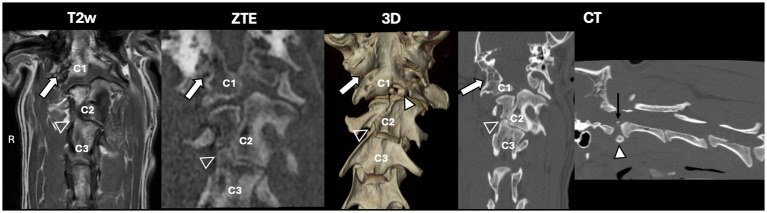
X-rays and CT scans showed several areas of damaged bone and abnormal bone growth, mainly in the pelvis but also in the thigh bone and a lower back vertebra. The lymph nodes in the chest and abdomen were swollen. The vets first suspected a primary bone tumor or lymphoma, but the findings were hard to interpret with certainty.
What did the vet do?
ℹ️ Treatment given to THIS animal, decided by its veterinarian. It is not a prescription: never apply it without veterinary advice.
Because the pelvic lesion was progressing fast and risked causing a fracture, the vets decided to surgically remove part of the affected bone to reach a definite diagnosis. Lab analysis showed cancer cells that were hard to classify, and special advanced tests eventually revealed it was a cancer of glandular origin (a carcinoma) rather than a bone tumor or lymphoma. After surgery, the dog received pain medication and blood-thinning treatment because tests showed her blood was clotting too easily.
What happened next?
In the days after surgery, the dog seemed to improve and was walking on her own again. But her condition then suddenly worsened: blood clots formed in the spleen, kidneys, a major vein, and the lungs, causing serious damage to several organs. Despite intensive care, the dog died ten days after surgery, and only after her death did tests confirm that no original tumor could be found anywhere else in the body.
Advice for the farmer
When an older animal develops lameness that worsens quickly and spreads to more than one leg, it is important to seek veterinary care fast, because the cause may be advanced cancer rather than a simple joint problem.
Source
- Source
- PubMed Central
- Title
- Carcinoma of Unknown Primary Origin Presenting as Rapidly Progressive Multifocal Skeletal Lesions and Fatal Systemic Thrombosis in a Dog: A Case Report.
- Authors
- Shin B, Park D, Lee S, Kim J, Lee SH, Won M, Kim HY.
- Year
- 2026
- DOI
- 10.3390/vetsci13090918
- Licence
- CC BY