Veterinary case
A young cat had seizures: the hidden cause was in her blood
⚠️ This information is provided for awareness only and does not replace an examination by a veterinarian.
🤖 Summary produced automatically from the scientific publication cited at the bottom of the page.
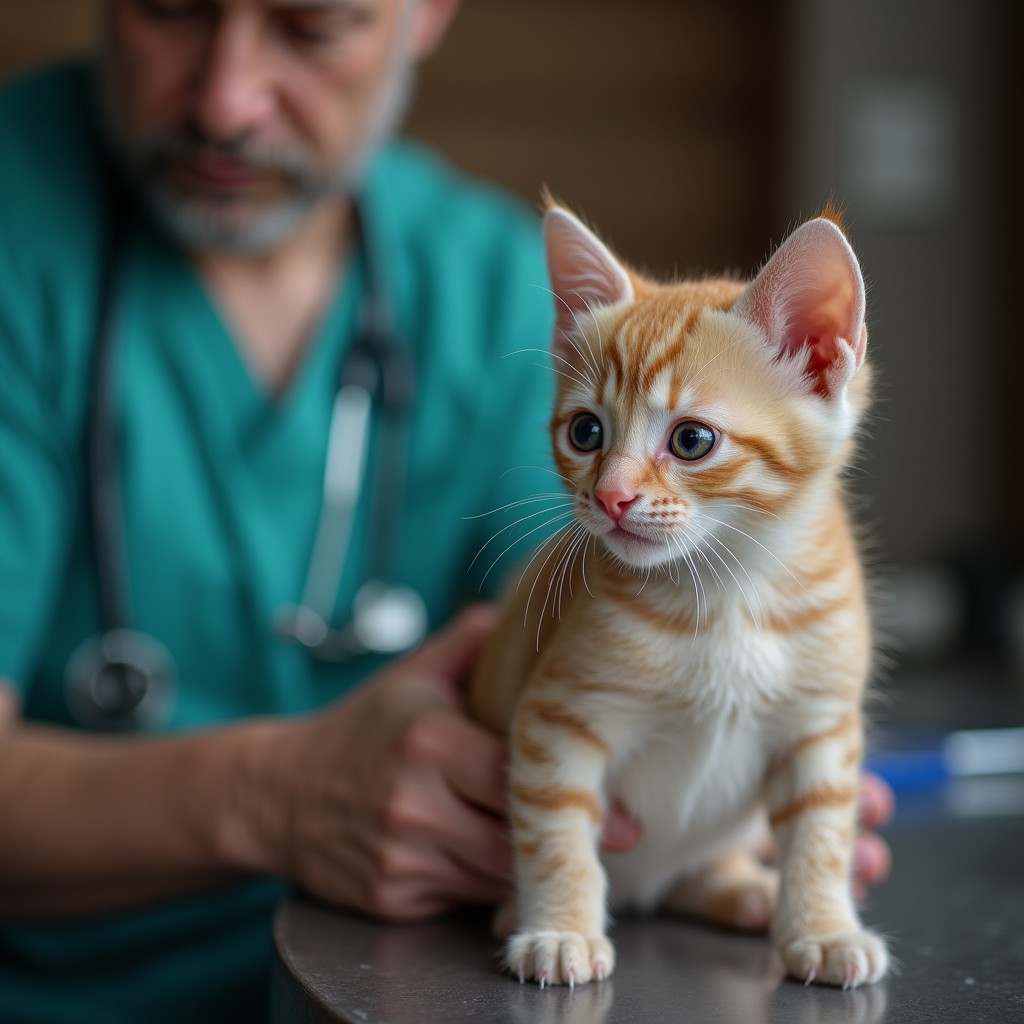
A stray kitten had seizures since 6 weeks of age, and vets found an antibody never before seen in a cat.
What happened?
This young cat had been rescued as a stray just a few days old. At around 6 weeks of age, she began having repeated epileptic seizures. She also showed strange behaviors: suckling for no reason, eating cat litter, and chewing inedible objects. Despite being given antiseizure medication for two months before the consultation, she did not improve much.
What did the vet find?
The general physical exam was normal, but the neurological exam showed mild instability in the hind legs. Blood tests showed minor abnormalities without major concern. Brain imaging and analysis of the fluid around the brain and spinal cord were normal, and infectious disease tests were negative. Digging further, the vets tested the blood for antibodies attacking the nervous system, and found a high level of a rare antibody called mGluR1, never before reported in a cat.
What did the vet do?
ℹ️ Treatment given to THIS animal, decided by its veterinarian. It is not a prescription: never apply it without veterinary advice.
Since the first antiseizure drug was not enough, the vets lowered its dose and added a second antiseizure medication. No immune-suppressing treatment was given, as the owner declined it given the improvement already seen and concerns about side effects.
What happened next?
Four weeks later, seizures had become much rarer, dropping from one every two days to just one in a month. The litter-eating behavior had disappeared, though some restlessness remained. The antibody level in the blood had also dropped noticeably, and the owner was satisfied with the progress, but the cat could not be followed up after that.
Advice for the farmer
When a young cat's seizures do not respond well to standard treatment, especially with accompanying behavioral changes, it can be useful to look further than the usual tests for a cause.
Source
- Source
- PubMed Central
- Title
- Seizures in a cat with metabotropic glutamate receptor 1 (mGluR1) antibodies: a case report.
- Authors
- Putzer M, Hörmann A, Stegfellner V, Volk HA, Neßler JN.
- Year
- 2026
- DOI
- 10.3389/fvets.2026.1894456
- Licence
- CC BY