Veterinary case
A mare unable to foal: what went wrong?
⚠️ This information is provided for awareness only and does not replace an examination by a veterinarian.
🤖 Summary produced automatically from the scientific publication cited at the bottom of the page.
A mare near term showed colic signs, but the real cause of the blockage was hidden inside her.
What happened?
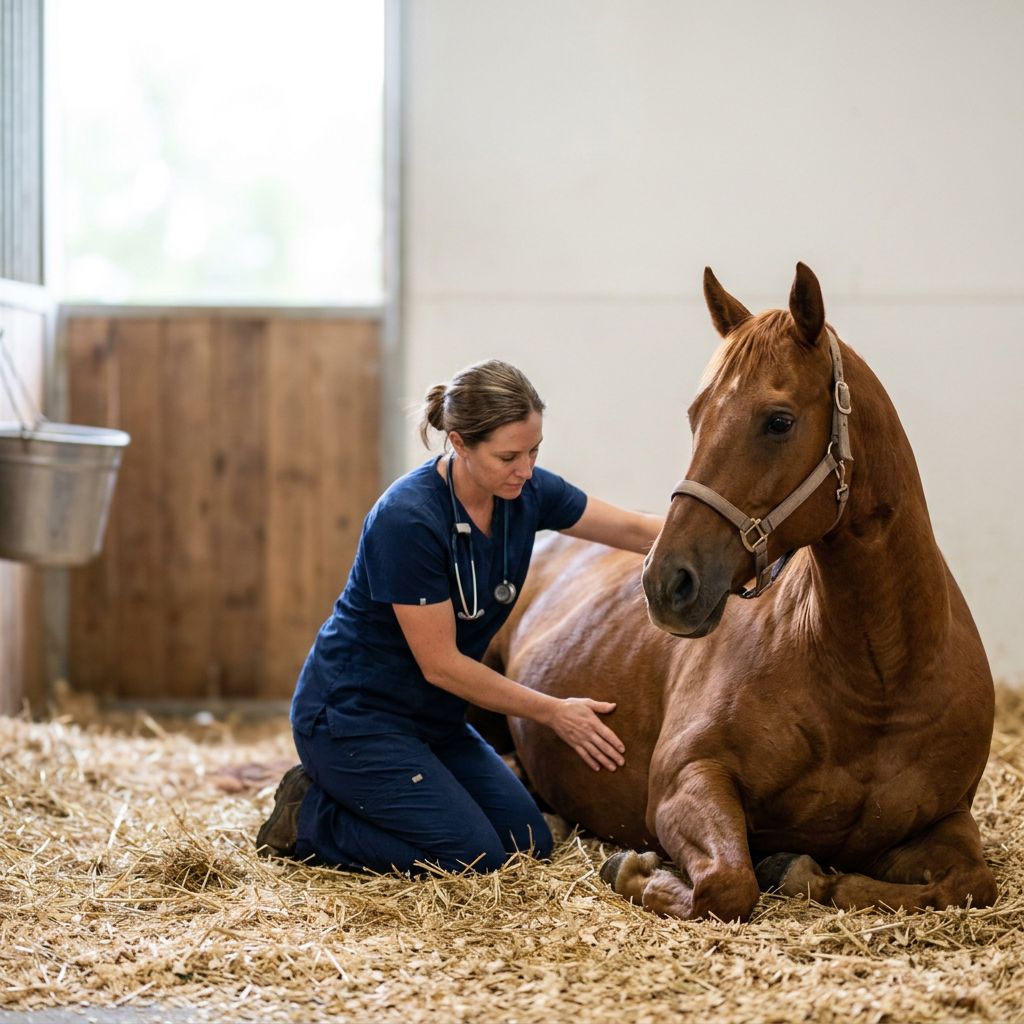
This 13-year-old mare was expecting her seventh foal, at day 332 of pregnancy. Staff noticed she often lay down in the pasture, mildly uncomfortable. The next morning she was lying on her side and would not get up. The vet referred her to a clinic, fearing a twisted uterus.
What did the vet find?
At the clinic the mare was anxious, with moderate colic and a fast heart rate. Rectal examination showed the uterus was not twisted. Ultrasound showed no heartbeat in the foal. The cervix was only partly open, and the dead foal lay crosswise with its head bent back. Natural delivery was impossible.
What did the vet do?
ℹ️ Treatment given to THIS animal, decided by its veterinarian. It is not a prescription: never apply it without veterinary advice.
The vet recommended a cesarean section. The owners chose humane euthanasia because of the cost and because of problems with the mare's limbs.
What happened next?
The post-mortem showed a thick band of fibrous tissue squeezing the base of the uterus, attached to both ovaries. It likely came from a tear in the ligament that holds the uterus, through which the uterus grew. The fetus was a filly.
Advice for the farmer
If a mare's cervix is only slightly open and labor is not progressing, call the vet quickly: every hour matters for the foal.
Source
- Source
- PubMed Central
- Title
- A Case Report of Uterine Body Constriction Precluding Normal Parturition Leading to Dystocia in a Mare.
- Authors
- Willette J, Gerras A, Sledge D, Koch D.
- Year
- 2023
- DOI
- 10.3390/vetsci10020139
- Licence
- CC BY