Veterinary case
A mare bleeds from the vulva: how the foal was saved
⚠️ This information is provided for awareness only and does not replace an examination by a veterinarian.
🤖 Summary produced automatically from the scientific publication cited at the bottom of the page.
A 15-year-old mare lost a foal the previous year due to bloody discharge; this time, prolonged treatment saved the pregnancy.
What happened?
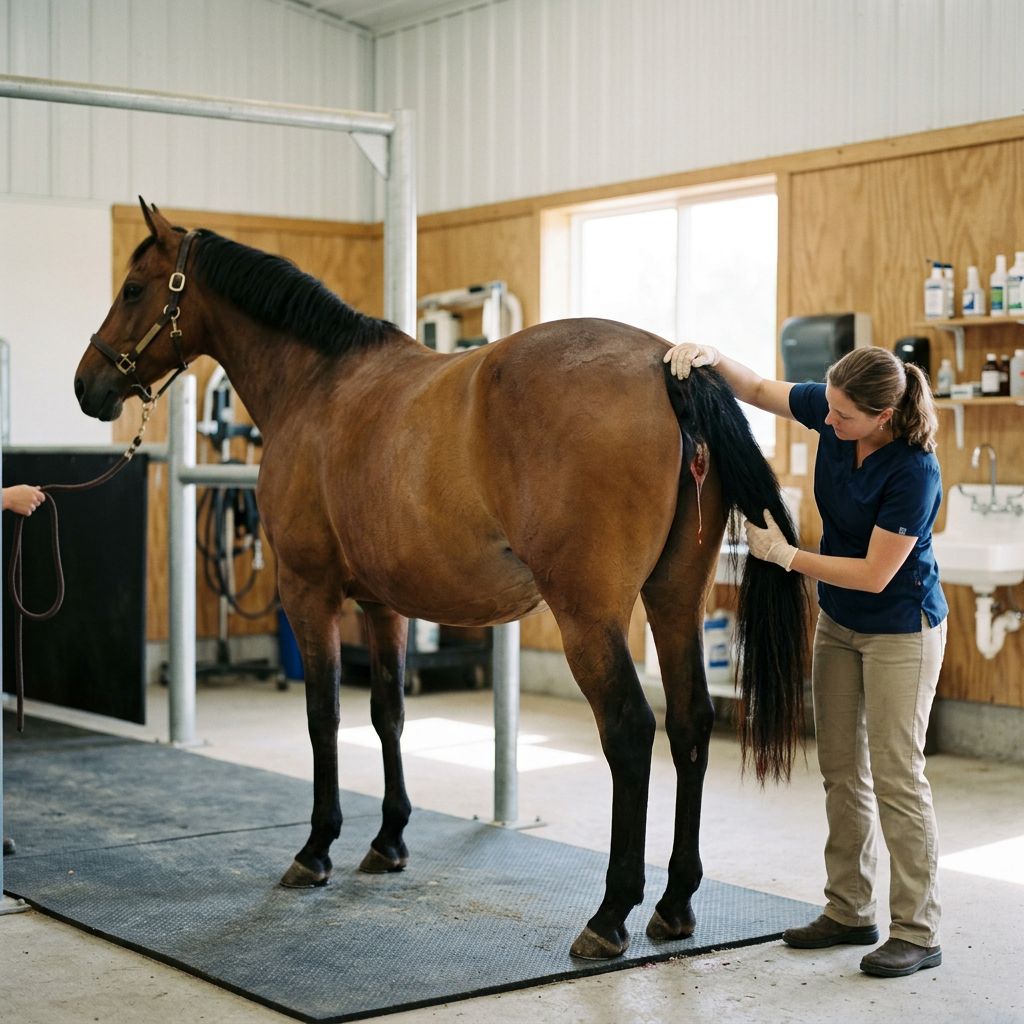
The previous year, this 15-year-old mare had bloody discharge from the vulva during pregnancy and ended up losing the foal. This time she was brought to the clinic at 265 days of gestation because bloody fluid was coming from her vagina. The vet suspected the same problem was happening again.
What did the vet find?
Examination with a speculum showed an inflamed cervix oozing reddish fluid. The udder was active but cold and floppy. Ultrasound revealed a large area of placental detachment, about 20 cm, but the foal inside was still lively and active. The vet diagnosed ascending placentitis, meaning an infection climbing from the vagina toward the placenta.
What did the vet do?
ℹ️ Treatment given to THIS animal, decided by its veterinarian. It is not a prescription: never apply it without veterinary advice.
The mare received an antibiotic twice daily intravenously for 31 days, along with antibiotic infusions directly into the vagina and an anti-inflammatory drug. The signs improved then returned several times, requiring the treatment to be adjusted, including another injectable antibiotic for 12 days when pus reappeared. A drug to improve blood circulation was also added near the end of pregnancy.
What happened next?
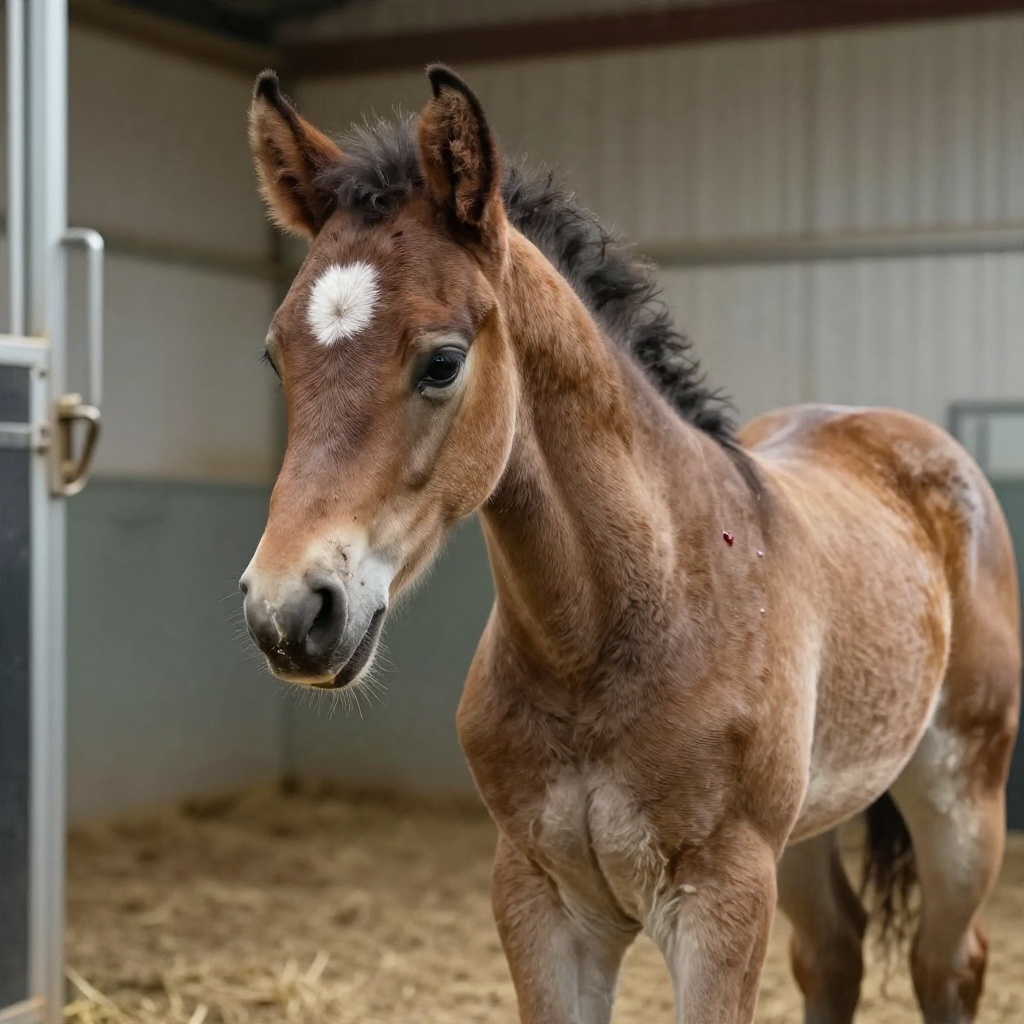
The mare eventually foaled at 305 days of gestation. The foal was very weak at birth, with violet mucous membranes and seizures, and developed an umbilical infection. Thanks to intensive care (plasma, antibiotics, assisted feeding every 20 minutes), it regained strength quickly and was judged healthy after 19 days.
Advice for the farmer
In a pregnant mare, bloody vulvar discharge or early udder activity should alert the owner immediately: the earlier treatment starts, the better the chances of saving the foal.
Source
- Source
- PubMed Central
- Title
- Case Report: Diagnosis and treatment of equine ascending placentitis: compilation of 17 case reports.
- Authors
- Hemberg E, Morrell JM.
- Year
- 2025
- DOI
- 10.3389/fvets.2025.1591452
- Licence
- CC BY