Veterinary case
A mare that cannot get pregnant: why?
⚠️ This information is provided for awareness only and does not replace an examination by a veterinarian.
🤖 Summary produced automatically from the scientific publication cited at the bottom of the page.
After years of failures, a Friesian mare finally became pregnant thanks to a regenerative treatment.
What happened?
This 11-year-old mare had regular, obvious heats. Yet every insemination since age 9 had failed. In a last try with a stallion of proven fertility, an 8-day-old embryo was collected, suggesting the embryo could not implant because of uterine inflammation.
What did the vet find?
The mare was healthy overall; infertility was the only problem. A uterine biopsy showed chronic endometritis (category IIB), with inflammatory cells and scarring around the glands.
What did the vet do?
ℹ️ Treatment given to THIS animal, decided by its veterinarian. It is not a prescription: never apply it without veterinary advice.
The veterinarians placed tiny vesicles from foetal membrane cells of other mares into the uterus, twice per cycle. The treatment was repeated in a second cycle, with a control biopsy after each cycle.
What happened next?
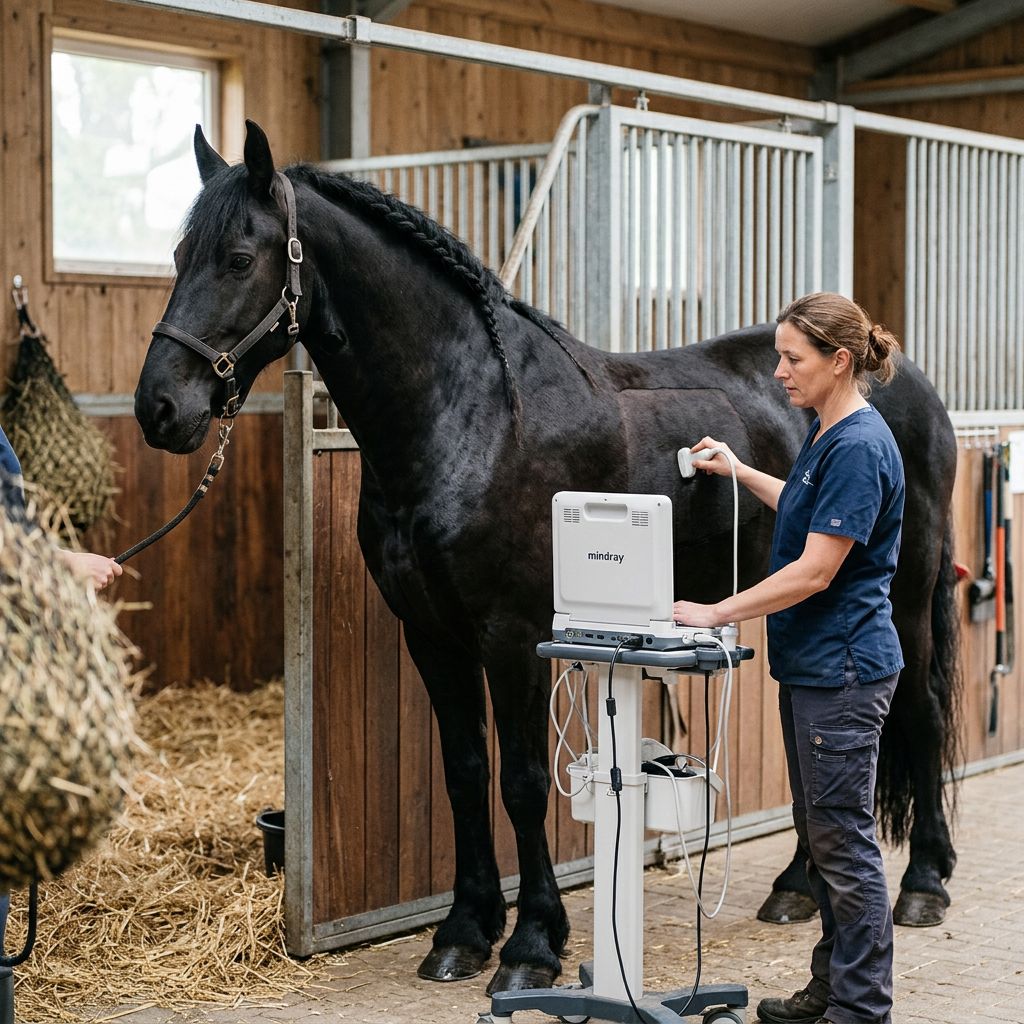
Inflammation clearly improved after each cycle. The mare was then inseminated, and at 14 days ultrasound showed an embryo; the pregnancy was ongoing at the time of the report.
Advice for the farmer
If a healthy mare repeatedly fails to conceive despite good inseminations, ask your vet to check the uterus with a biopsy.
Source
- Source
- PubMed Central
- Title
- Case Report: Use of Amniotic Microvesicles for Regenerative Medicine Treatment of a Mare With Chronic Endometritis.
- Authors
- Lange-Consiglio A, Funghi F, Cantile C, Idda A, Cremonesi F, Riccaboni P.
- Year
- 2020
- DOI
- 10.3389/fvets.2020.00347
- Licence
- CC BY