Veterinary case
A mare collapses after grazing a toxic plant
⚠️ This information is provided for awareness only and does not replace an examination by a veterinarian.
🤖 Summary produced automatically from the scientific publication cited at the bottom of the page.
A mare found exhausted in the pasture was hiding a fatal poisoning by a liver-toxic wild plant.
What happened?
A six-year-old mare, completely normal three days earlier, was found in the pasture gasping for breath and refusing to move. She lived with the whole herd on a pasture connected for six months to a small forest, with no supplementary feed. Other horses in the herd showed signs of sun sensitivity or abnormal liver blood tests. A later inspection of the forest revealed abundant growth of a plant called Senecio ovatus.
What did the vet find?
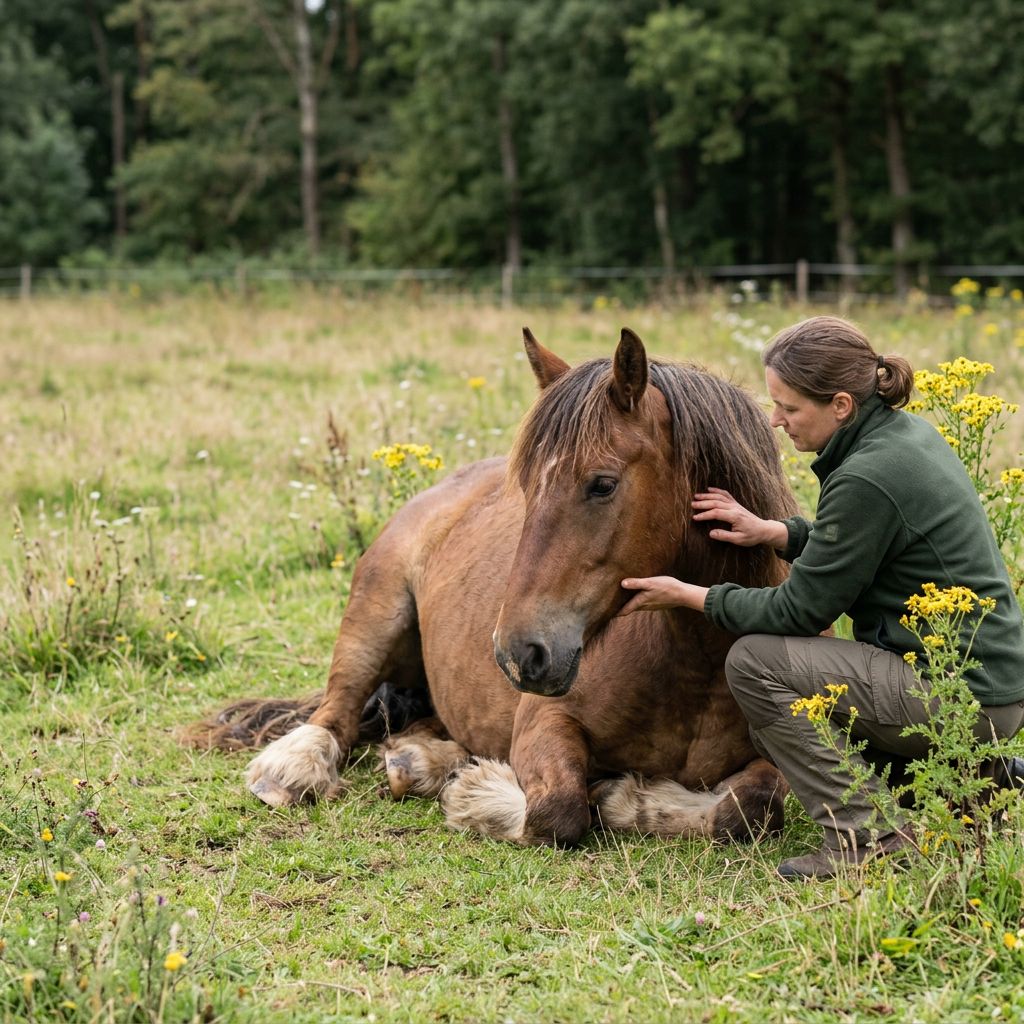
On arrival at the clinic, the mare was lying on her side, breathing and with her heart racing, with a high fever. Her mucous membranes were yellow (a sign of liver damage) and her bladder was distended. Tests showed severe blood acidosis, high ammonia levels, and clear signs of severe liver failure, which explained the nervous system problems seen.
What did the vet do?
ℹ️ Treatment given to THIS animal, decided by its veterinarian. It is not a prescription: never apply it without veterinary advice.
The veterinarians first stabilized her breathing with an emergency tracheostomy and oxygen, then gave fluids to correct the blood acidity and low calcium. Medications were also used to control seizures and allow safe transport of the mare. Anti-inflammatory drugs and a diuretic were given as additional treatment.
What happened next?
Despite intensive treatment, the mare showed no improvement over six hours and her blood values remained severely abnormal. The owner agreed to euthanasia. The post-mortem confirmed severe liver damage, and laboratory tests proved poisoning by the plant.
Advice for the farmer
Before letting a herd roam freely into a forest or new grazing area, it should be inspected and cleared of toxic plants like ragwort, especially if no other forage is available to the animals.
Source
- Source
- PubMed Central
- Title
- Senecio ovatus poisoning in a horse - A case report.
- Authors
- Kopecka A, Novotna T, Svobodova Z, Drabkova Z.
- Year
- 2024
- DOI
- 10.17221/37/2024-vetmed
- Licence
- CC BY