Veterinary case
A tiny Chihuahua stung by a centipede
⚠️ This information is provided for awareness only and does not replace an examination by a veterinarian.
🤖 Summary produced automatically from the scientific publication cited at the bottom of the page.
After a centipede sting, a tiny 2-kg Chihuahua developed red urine and serious whole-body illness, treated with plasma exchange.
What happened?
An 8-year-old neutered male Chihuahua weighing just 2 kg stepped on a centipede during an evening walk. He was stung between the toes of his right front paw and began limping. About an hour later, his owner noticed he was passing red urine and took him to a local clinic where the wound was cleaned and fluids were given. Because the red urine continued, the dog was referred to a veterinary hospital about 7 hours after the sting.
What did the vet find?
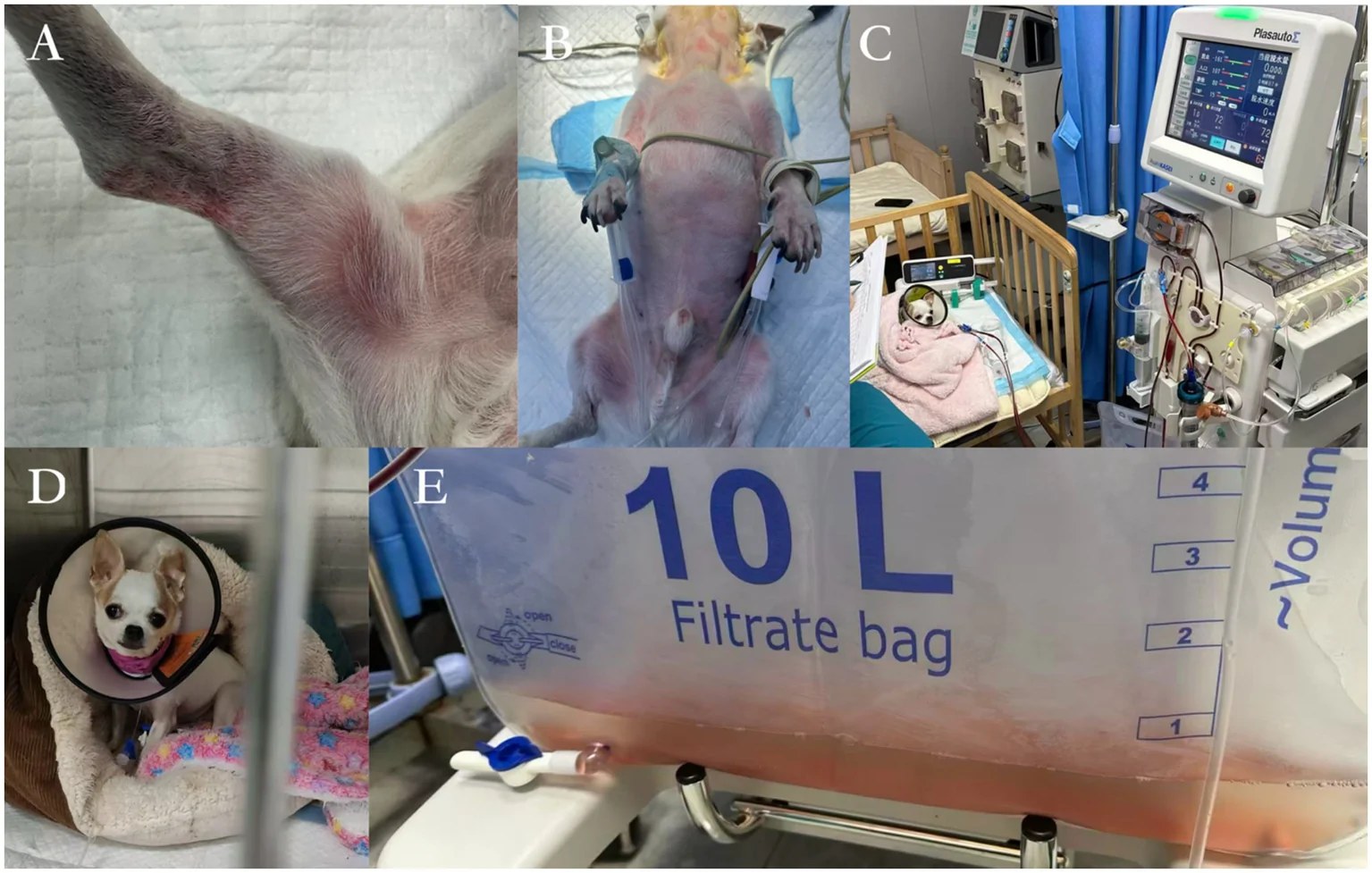
On arrival, the dog was lethargic, eating poorly, and had slightly yellow gums suggesting liver trouble. He had mild dehydration, redness in the groin area, and a visible wound between the toes of the stung paw. Tests showed body-wide inflammation, signs of muscle and liver damage, possible red blood cell breakdown, and abnormally slow blood clotting. Tests for tick-borne diseases and blood parasites were negative, confirming everything stemmed from the sting.
What did the vet do?
ℹ️ Treatment given to THIS animal, decided by its veterinarian. It is not a prescription: never apply it without veterinary advice.
Because the red urine and general illness persisted despite initial care, the vets decided to perform therapeutic plasma exchange: a machine filters the blood, removes the plasma containing toxic substances, and replaces it with healthy plasma. The procedure took about 3 hours, with constant monitoring of temperature, calcium, and blood clotting. The dog then received fluids, antibiotics, vitamin K, and anti-inflammatory treatment for several more days.
What happened next?
After the plasma exchange, inflammation dropped markedly and his appetite returned, though he remained a bit low initially. His condition then improved gradually during hospitalization, and he was discharged healthy after 7 days. Twenty days later, the owner reported completely normal behavior and appetite.
Advice for the farmer
Always watch an animal closely after a venomous sting, even if the wound looks small: serious signs like red urine or lethargy can appear hours later and should prompt a quick veterinary visit.
Source
- Source
- PubMed Central
- Title
- Case Report: Therapeutic plasma exchange for systemic centipede envenomation in a 2-kg Chihuahua dog
- Authors
- Tang W, Li Y, Sun G, Zheng C, Gao Z, Li S.
- Licence
- CC BY