Veterinary case
A cat wound that would never heal
⚠️ This information is provided for awareness only and does not replace an examination by a veterinarian.
🤖 Summary produced automatically from the scientific publication cited at the bottom of the page.
A bite wound that never healed hid an extremely rare bacteria never seen before in a cat in Asia.
What happened?
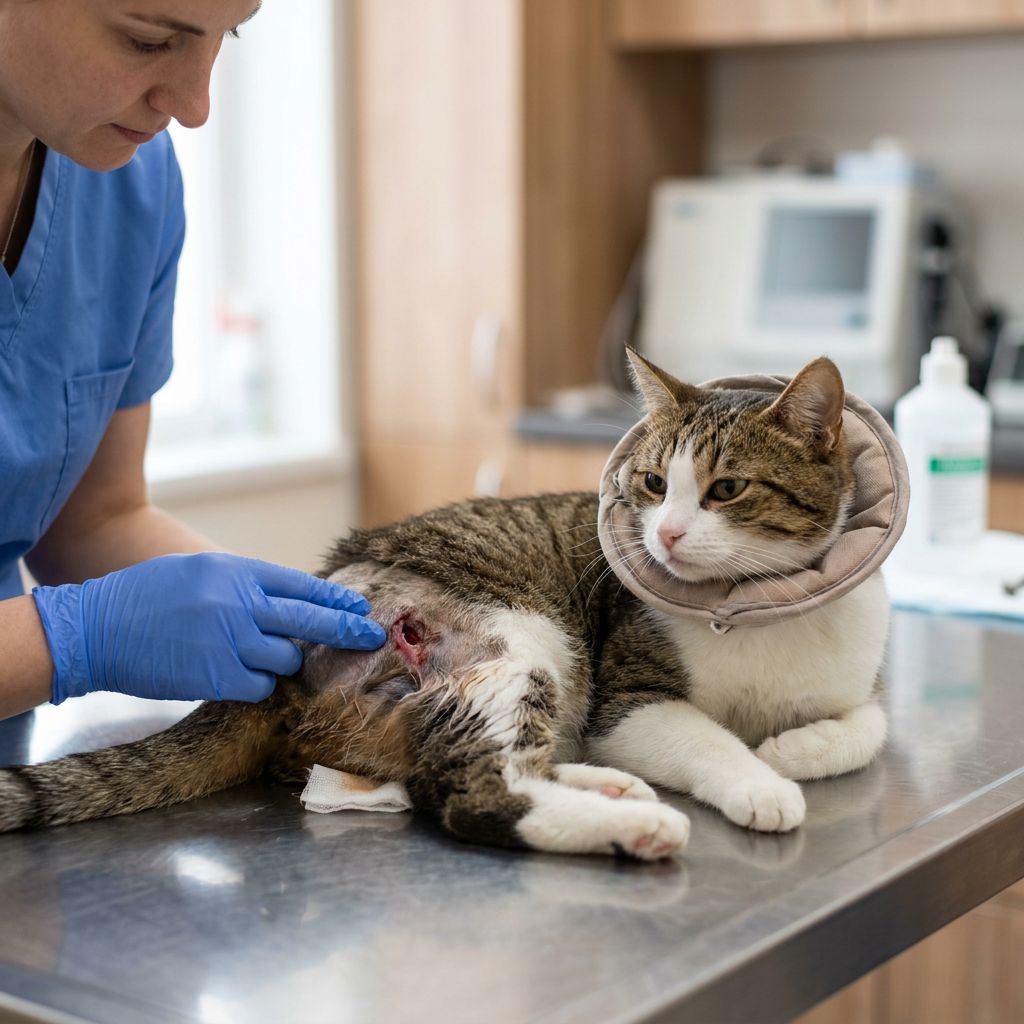
A spayed 4-year-old cat was bitten by another cat on the thigh. The wound would not heal despite routine care and antibiotics. Three months later, a lump appeared near the mammary gland, and surgery was done, but it did not solve the problem: the surgical wound reopened with discharge. Because of these two wounds that never healed, the cat was referred to a specialized veterinary hospital.
What did the vet find?
The vet found a chronic wound with swelling under the skin, several draining tracts, and pus in the groin area, plus two more wounds on the thigh. Tests showed inflammation with many immune cells, which at first looked like a tumor. But bacterial culture revealed a very rare bacteria, Mycobacterium farcinogenes, never before reported in a cat in Asia.
What did the vet do?
ℹ️ Treatment given to THIS animal, decided by its veterinarian. It is not a prescription: never apply it without veterinary advice.
After testing the bacteria's sensitivity to antibiotics, the vet prescribed an oral antibiotic along with an antibiotic gel applied directly to the wounds. A third antibiotic was added despite tests showing the bacteria was resistant to it, because it may help the immune system. Treatment lasted several months.
What happened next?
The wounds gradually improved. The amikacin gel was stopped after 3 weeks once the groin wound had healed. Complete recovery was achieved after 24 weeks of treatment, with no side effects, and the cat remained healthy throughout follow-up.
Advice for the farmer
When a bite wound or injury never heals despite the usual antibiotics, rare bacteria should be suspected, and samples should be repeated before concluding too quickly that it is a tumor.
Source
- Source
- PubMed Central
- Title
- Feline Cutaneous Mycobacteriosis Caused by Mycobacterium farcinogenes: The First Case Report from Asia.
- Authors
- Chuenngam T, Promsatit W, Khamduang C, Vilaiwan K, Kanjanasri K.
- Year
- 2026
- DOI
- 10.3390/ani16172734
- Licence
- CC BY