Photo: Figure 1 — Ryu H, Kang M, Cho KW, Jung DI, Bae H. (PubMed Central, 2026)
⚠️ This information is provided for awareness only and does not replace an examination by a veterinarian.
🤖 Summary produced automatically from the scientific publication cited at the bottom of the page.
A dog had a large, firm black mass on its face too extensive to remove surgically: here is how the vet managed it.
What happened?
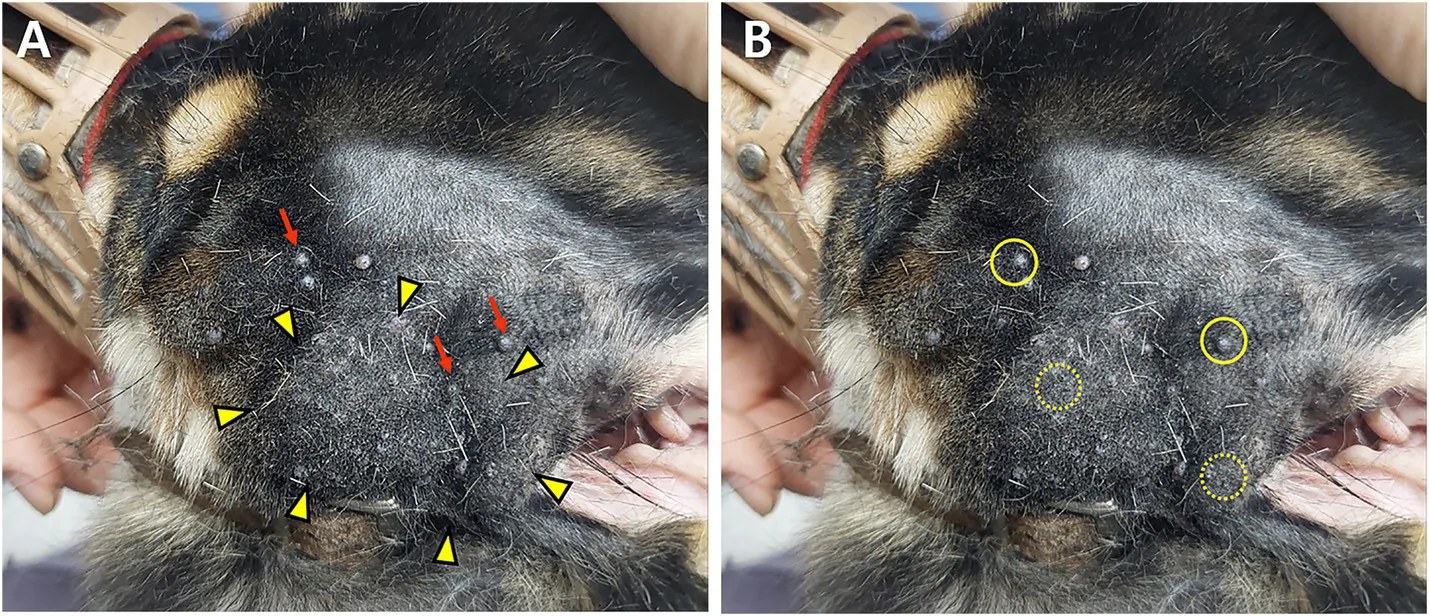
A 5-year-old neutered male Shiba Inu was brought to the vet for a firm, well-defined black mass on the left side of the face, measuring about 4 x 3.8 cm. Small pigmented papules were visible around the mass. The tumor was too widespread on the face to be completely removed surgically without risking poor cosmetic or functional results.
🔎 What did the vet find?
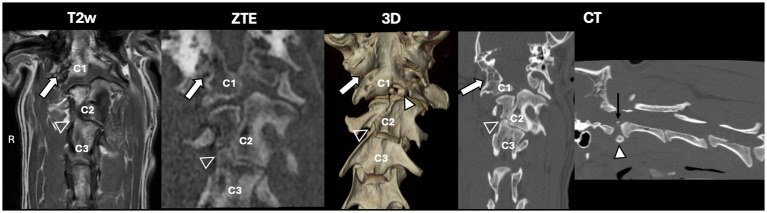
Needle samples and biopsies showed this was a cutaneous melanocytoma, a tumor of pigmented skin cells, with mild extension into the tissue beneath the skin in two samples. X-rays and a CT scan showed the bone was not affected, but some lymph nodes were mildly swollen, with no sign of spread to the lungs or internal organs. Blood and urine tests were normal. The microscopic features were fairly reassuring, although the superficial extension under the skin was a sign requiring monitoring.
Publicité
Publicité
🩺 What did the vet do?
ℹ️ Treatment given to THIS animal, decided by its veterinarian. It is not a prescription: never apply it without veterinary advice.
The owner declined surgery under general anesthesia and preferred a less invasive option. The vet therefore applied a cream containing imiquimod, a topical treatment that stimulates the immune system against the tumor, three times a week on the clipped area, for 5 months. The dog wore a protective collar to prevent it from licking off or removing the cream.
🖼️ The case in pictures
①Before treatment
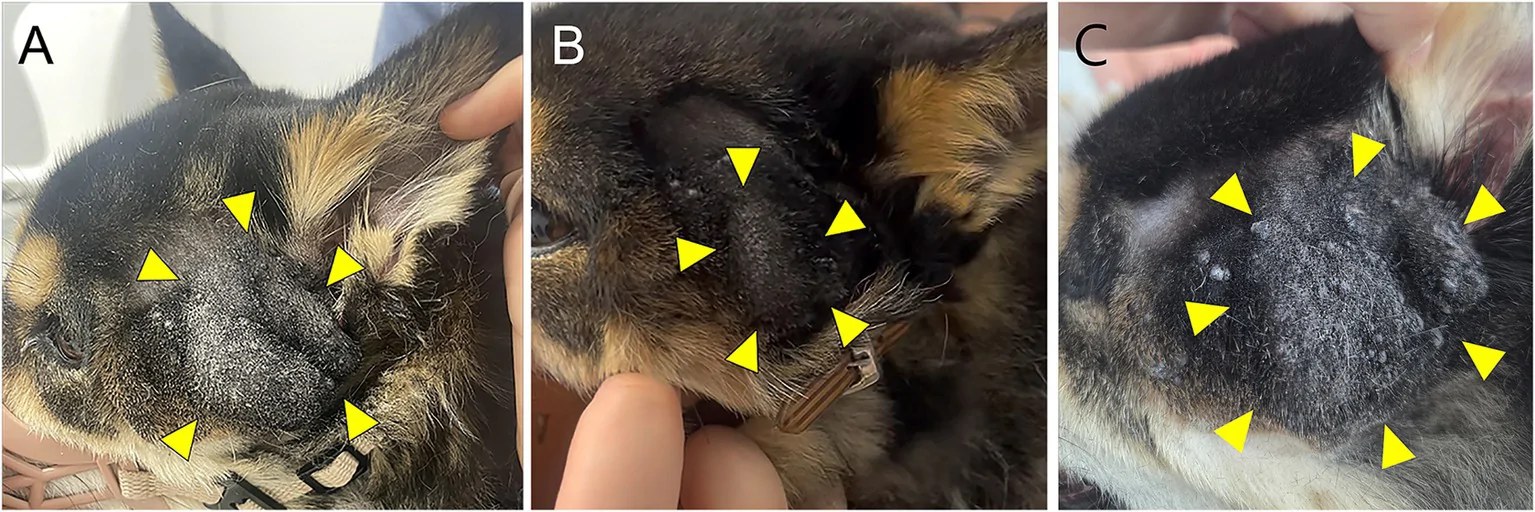
②After treatment
✅ What happened next?
After 5 months of treatment, the mass had shrunk, become softer, and the surrounding small papules decreased, with no side effects. But when treatment was stopped for 3 months before a new biopsy, the mass grew again and the papules reappeared. The biopsy confirmed the tumor was unchanged from before. Given this regrowth, the owner chose to resume imiquimod treatment, which is still ongoing without problems.
⚠️ Advice for the farmer
If you notice a persistent mass or black spot on your dog's skin, have it checked early: the smaller a skin tumor is, the easier and more effective treatment options, including surgery, will be.
Publicité
📚 Source
Source
PubMed Central
Title
Case Report: Topical imiquimod (Aldara®) as a palliative option for extensive canine facial cutaneous melanocytoma.