Veterinary case
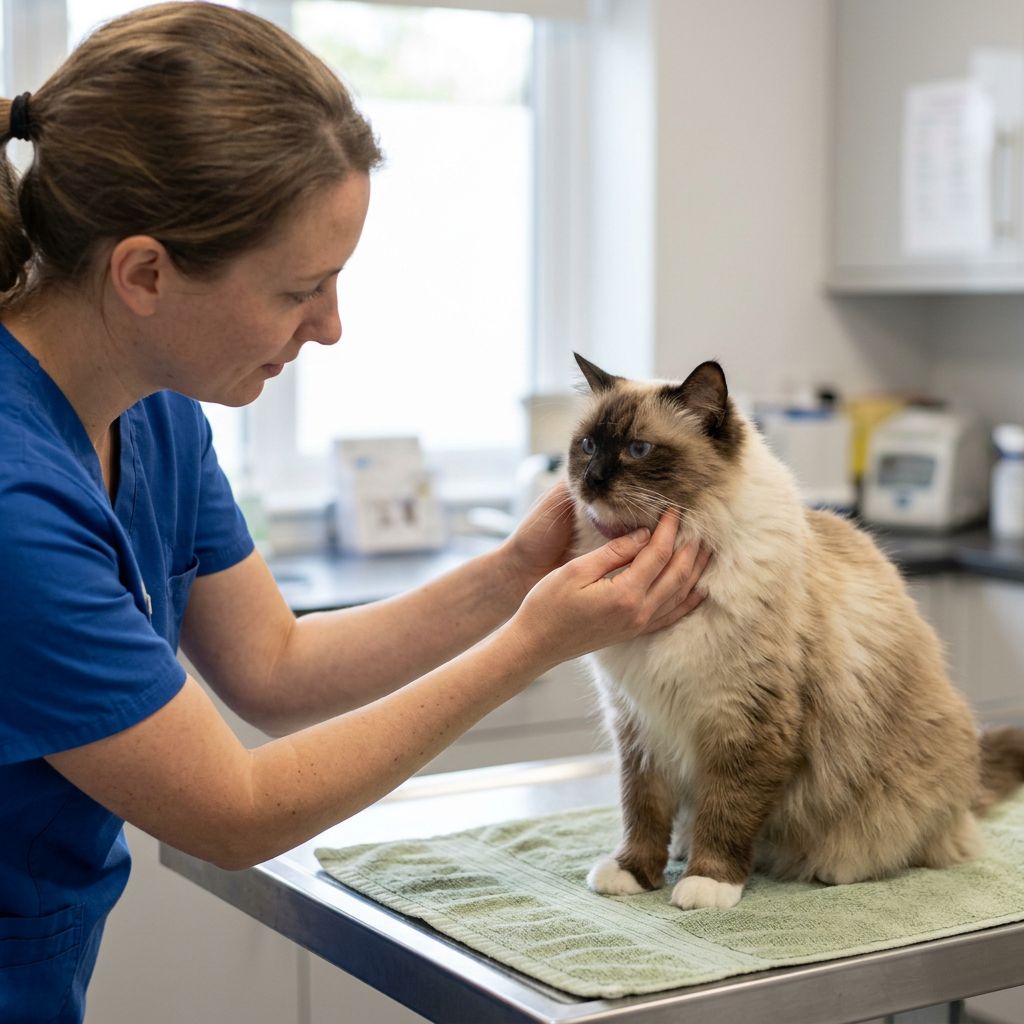
A rare jaw tumor in a Ragdoll cat
⚠️ This information is provided for awareness only and does not replace an examination by a veterinarian.
🤖 Summary produced automatically from the scientific publication cited at the bottom of the page.
A 6-year-old cat had a jaw swelling eating away the bone: delicate surgery achieved local control of the tumor.
What happened?
The 6-year-old Ragdoll cat presented with swelling on the left side of the lower jaw. Imaging showed a poorly defined mass destroying a large portion of the jawbone. Nearby neck lymph nodes were also enlarged, which concerned the veterinarian.
What did the vet find?
The CT scan revealed a roughly 2 cm mass eating away the jawbone on both sides with no clear border from surrounding tissue. Small suspicious spots were also seen in one lung, raising concern for early spread of disease. Microscopic analysis and special tests confirmed an aggressive cancer of histiocyte-type cells, forming clusters of highly active cells, some with multiple abnormal nuclei.
What did the vet do?
ℹ️ Treatment given to THIS animal, decided by its veterinarian. It is not a prescription: never apply it without veterinary advice.
With the owner's consent, the veterinarian performed surgery to remove the front part of the lower jaw on both sides, taking out the tumor with a margin of healthy tissue around it. The sharp bone edges were smoothed, the muscles and skin were carefully closed, and a temporary feeding tube was placed to help the cat eat during recovery. The removed tumor piece was sent for a chemotherapy sensitivity test rather than margin checking, and no chemotherapy was ultimately given due to the owner's financial constraints.
What happened next?
The cat recovered well from surgery and regained its appetite, with the feeding tube removed after 11 days. For 7 months, no recurrence appeared at the surgical site. But the cat then returned lethargic and without appetite, with suspicious masses found in the lungs, liver, and kidneys, likely spread already present before surgery; the owner chose euthanasia.
Advice for the farmer
When a growing lump appears on a cat's jaw, even in a young animal, don't wait: early consultation allows assessment of whether early surgery can still offer a chance at local disease control.
Source
- Source
- PubMed Central
- Title
- Case Report: Surgical management of mandibular oral histiocytic sarcoma in a ragdoll cat with favorable outcome.
- Authors
- Seung BJ, Cho J, Lee B, Chon J, Kim K.
- Year
- 2026
- DOI
- 10.3389/fvets.2026.1880267
- Licence
- CC BY