📍 India — India🐄 Cows🎂 4 years old🦠 Diseases66 Views
Share :
Photo: Figure 2 — R R, K U. (PubMed Central, 2024)
⚠️ This information is provided for awareness only and does not replace an examination by a veterinarian.
🤖 Summary produced automatically from the scientific publication cited at the bottom of the page.
A cow left to die in the rain finally walked again after 19 days of intensive care.
What happened?
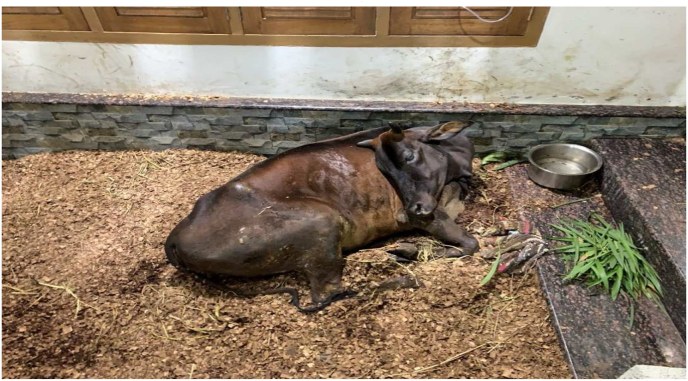
This four-year-old cow calved normally and seemed fine right after giving birth. But ten hours later she refused to eat and lay down, unable to get back up. The local vet diagnosed milk fever and treated her with intravenous calcium, but her condition kept worsening. By day six she was brought in lying on her side, with heavy nasal discharge, labored breathing, no appetite and signs of dehydration, having been left unprotected in the rain since euthanasia was not an option.
🔎 What did the vet find?
On arrival the cow was weak and depressed, with low body temperature, a cold dry muzzle, fast noisy breathing, a slow heart rate and sunken eyes showing severe dehydration. Her rumen had almost stopped moving and she drank very little water. On day six the vet diagnosed downer cow syndrome, with total rumen shutdown, abnormal rumen acidity and fever.
Publicité
Publicité
🩺 What did the vet do?
ℹ️ Treatment given to THIS animal, decided by its veterinarian. It is not a prescription: never apply it without veterinary advice.
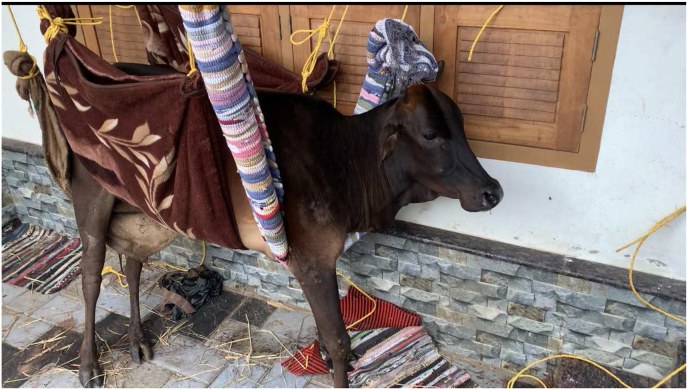
The vet first used a traditional Ayurvedic method, nasal drops made of sesame oil and herbs, to stimulate the cow and prevent death from shock. She also received bitter tonic herbs to stimulate her appetite and digestion, palm jaggery with aloe vera pulp, and warm massages on her legs. In parallel, from day six, standard veterinary treatment was added: antibiotics, IV fluids to correct dehydration, calcium, vitamins and ointment care for pressure sores. She was also given rumen fluid taken from other cattle to restart her digestion, and she was repositioned regularly with pillows to prevent pressure-related muscle damage.
🖼️ The case in pictures
①Before treatment
②Treatment
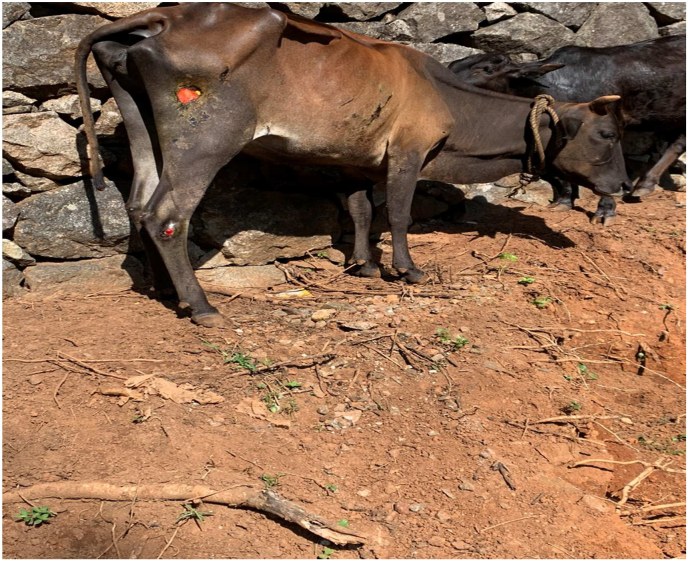
③After treatment
✅ What happened next?
The cow showed clear improvement from day four of treatment, managing to sit upright on her chest and showing interest in the herbs again. Rumination returned around day thirteen, she stood on her feet by day nineteen, and her pressure sores were fully healed by around day forty. She became healthy again but never produced milk anymore.
⚠️ Advice for the farmer
After calving, watch closely any cow that refuses to eat or stays down too long: the faster she is treated, the better her chances of recovery.
Publicité
📚 Source
Source
PubMed Central
Title
Ayurveda in the integrative management of bovine secondary recumbency-a case report.