
Tunisia Raises Cattle Artificial Insemination Fees: New Tariffs Face Significantly Higher Real-World Costs

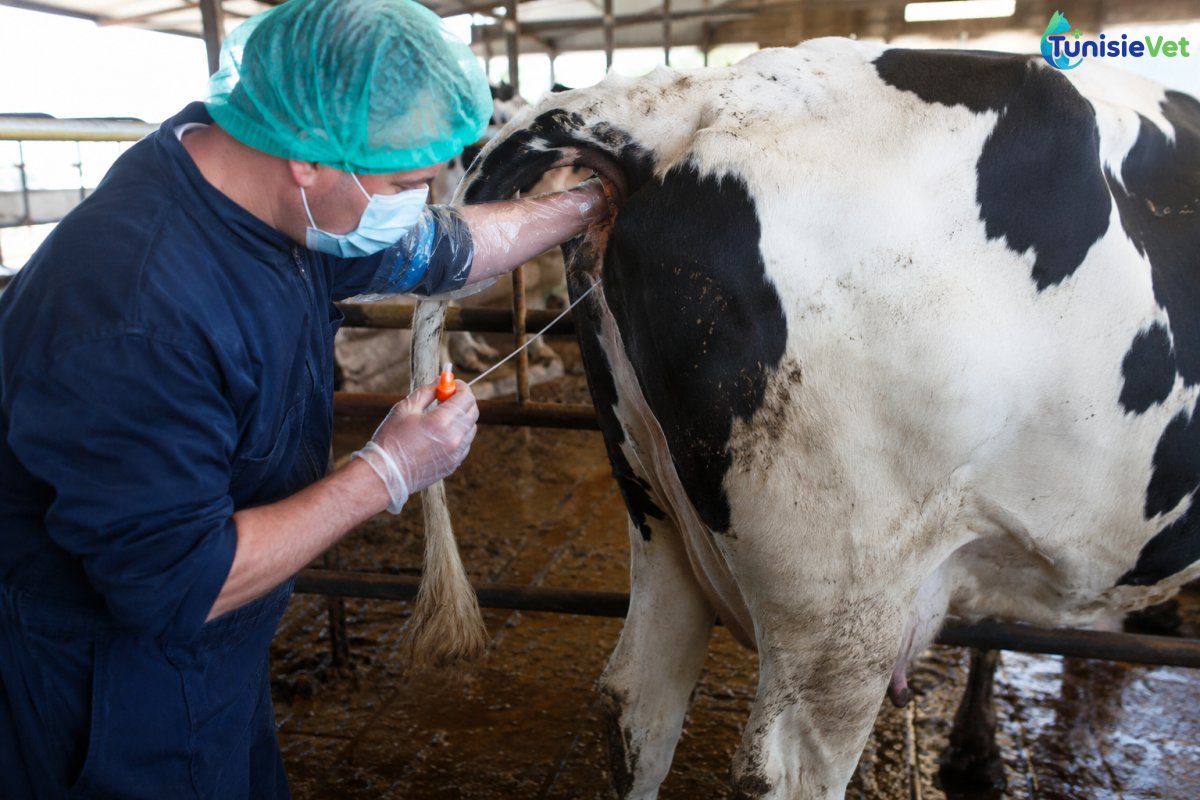
Tunisia’s Ministry of Agriculture, Water Resources and Fisheries has announced new fees for artificial insemination services for cattle.
The new rates were set through a ministerial circular dated 20 August 2026, addressed to the regional agricultural development authorities.
Under the new pricing structure, the fees are:
- First insemination: 25 Tunisian dinars
- Second insemination: 22 Tunisian dinars
- Third insemination: 20 Tunisian dinars
The new rates take effect from the date the circular was signed, 20 August 2026, according to reports published following the ministry's decision.
Why were the fees increased?
The revision is intended to address the financial impact of higher operating and management costs recorded over recent years and to help ensure the continuity of artificial insemination services.
Artificial insemination is an important component of cattle breeding and genetic improvement. Tunisia's Office of Livestock and Pasture (OEP) states that its artificial insemination programme for cattle includes the production of animal semen, the import of identified semen, the supply of artificial insemination networks, the training of artificial inseminators and the monitoring and evaluation of insemination activities.
New cattle artificial insemination fees
| Insemination | New fee |
|---|---|
| First insemination | 25 TND |
| Second insemination | 22 TND |
| Third insemination | 20 TND |
The new pricing structure therefore establishes a declining fee for successive insemination attempts.
The measure comes as Tunisia continues to use artificial insemination as part of its cattle breeding and genetic improvement system. The OEP identifies both public and private participants in the artificial insemination network, including private inseminators.
When do the new rates apply?
According to reports citing the ministerial circular, the new fees became applicable on 20 August 2026, the date on which the circular was signed.
For cattle breeders, this means that artificial insemination services are now charged at 25 TND for the first attempt, 22 TND for the second and 20 TND for the third.
Another cost increase for farmers already under pressure
The revision of artificial insemination fees comes at a time when Tunisian cattle farmers are already facing significant pressure from rising production costs. Feed, forage, energy and other operating expenses have increased considerably in recent years, while the price paid to farmers for milk has not kept pace with these rising costs. In January 2026, La Presse reported that the price paid for milk remained around 1.140 Tunisian dinars per litre, while the price of concentrated feed had reached 1.6 dinars per kilogram.
In this context, even a limited increase in artificial insemination costs represents an additional financial burden for farmers, particularly when several attempts are required to achieve a successful pregnancy. This raises broader concerns about the economic sustainability of cattle farming: how can farmers improve productivity and renew their herds while facing continuously rising costs and relatively limited income from milk production?
The issue is particularly important because artificial insemination is an essential tool for improving the genetic quality of Tunisia’s cattle herd. The Office of Livestock and Pasture states that it is involved in supplying bovine semen, training inseminators, and monitoring and evaluating artificial insemination operations.
An official fee that does not necessarily reflect the real cost
Although the new official tariff sets artificial insemination at 25 TND for the first intervention, 22 TND for the second and 20 TND for the third, these amounts do not necessarily represent the actual cost paid by cattle farmers. In practice, the final expense can be considerably higher once the inseminator’s fee, travel costs and other expenses related to the intervention are taken into account. Depending on the circumstances and services provided, some farmers may therefore pay between 30 and 60 TND for an insemination operation. The issue is consequently not only the official tariff, but the actual cost borne by farmers, at a time when livestock production costs remain high and dairy farmers’ incomes are under pressure. Tunisia’s Office of Livestock and Pasture also confirms that the artificial insemination system involves several operators, including private inseminators, which can contribute to differences in the actual costs paid by farmers.
Sources
Information on the new fees was reported by Tunisian media on 21 August 2026, based on the ministerial circular and information published by the livestock authorities.
Information on Tunisia's artificial insemination programme and the role of the Office of Livestock and Pasture is available through the OEP's official website.
Leave a comment
Be the first to comment on this article.
