
Presentation
The Guinea pig, also called the guinea pig, is a small domestic rodent native to the Andes of South America. It descends from wild Guinea pigs domesticated several millennia ago by pre-Columbian populations, initially for its meat. Today, it is mainly raised as a pet appreciated for its docile character and its small size. Herbivorous and diurnal, it lives in social groups and requires a diet rich in vitamin C, which it does not synthesize itself. It is widely distributed in homes around the world, including in Tunisia where it is among the most popular NACs.
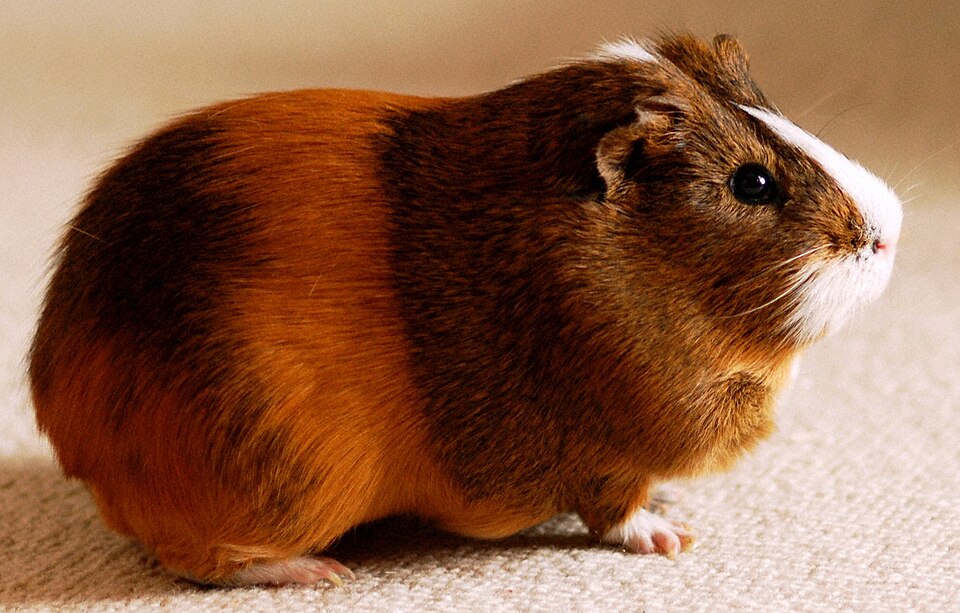
The Guinea pig is a stocky rodent with an elongated body, no apparent tail, short legs and small rounded ears. Its coat varies considerably depending on the breed: short, long, curly or in rosettes, with a great diversity of colors and patterns. Its incisors grow continuously, as in all rodents. It weighs on average between 700 g and 1.2 kg as an adult.
Characteristics
Indicative values: they vary by subspecies, sex and region.
Habitat and distribution
In the ancestral wild, its close relatives lived in the high-altitude meadows and rocky areas of the Andes. As a domestic animal, the Guinea pig is raised exclusively in captivity, in indoor cages or enclosures. It does not survive in the wild in temperate or warm climates like that of Tunisia.
CURRENT RANGE
The ancestral wild species originates from the Andean regions of South America, including Peru, Bolivia and Ecuador. The domestic form spread throughout the world via trade and domestic breeding. In Tunisia, the Guinea pig is present only as a captive-bred pet.
Behaviour
The Guinea pig is a sociable and gregarious animal, naturally living in small groups. It communicates through a wide variety of vocalizations (whistles, chirps, squeaks) expressing hunger, excitement or stress. Active especially at dawn and dusk, it remains generally fearful of sudden movements and loud noises. It enjoys the company of peers and is easily tamed through regular and gentle handling.
Reproduction
The Guinea pig female has a short gestation of approximately 59 to 72 days, typically producing 2 to 4 pups per litter. The young are born early, already covered in hair, with open eyes and capable of moving quickly. Sexual maturity is reached very early, from 4 to 6 weeks in females. Breeding can occur several times per year in captivity.
Peculiarities
Guinea pig cannot synthesize its own vitamin C, like humans, which requires an appropriate dietary intake. It emits distinct and recognizable vocalizations depending on its emotions, including a characteristic whistle when it anticipates food. Its original wild species no longer really exists in the natural state, domestication dating back more than 3000 years.
Threats and conservation
As a domestic species, the Guinea pig is not threatened and is not the subject of any conservation concerns. The main risks concern individual well-being, linked to inadequate diet, lack of social companionship or inappropriate housing conditions.
Numbers and trends vary across sources and regions. See the IUCN assessment for the latest reference data.
Gallery
1 documented photographs.
References
Profile updated 23 August 2026 · Reviewed by the TunisieVet editorial team.
Comments (0)
No comments yet.
CONSERVATION STATUS
Least concern (LC)
IUCN source, latest published assessment.
Species health
Documented diseases for this species.
This information is provided for educational purposes only and is not a substitute for a veterinary consultation. If you have any concerns about your animal's health, consult a veterinarian.

TunisieVet in your pocket 📱🐾 Access your veterinary services wherever you are. [ Download the app ]
Learn more