
Presentation
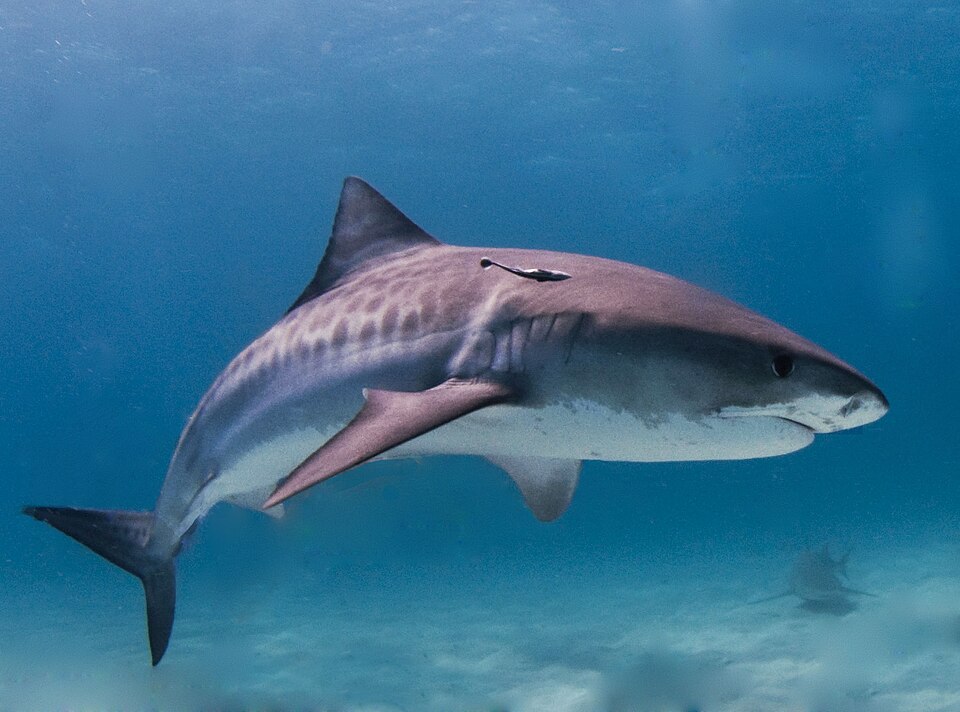
The Tiger shark (Galeocerdo cuvier) is a large carnivorous shark recognizable by the dark vertical stripes that mark its back, especially visible in juveniles. It is among the largest predatory sharks in tropical and subtropical seas. Renowned for its extremely varied diet, it is sometimes nicknamed "trash of the seas". This solitary, nomadic species travels vast ocean distances during its life. It plays an important role in the regulation of coastal marine ecosystems.
The body is massive and fusiform, with a broad head and a short, rounded muzzle. The gray to brownish skin has dark vertical stripes that fade with age in adults. The jaws are armed with hook-shaped, serrated and asymmetrical teeth, capable of slicing through bones and shells. The caudal fin is heterocercal, with an elongated upper lobe adapted for powerful swimming.
Characteristics
Indicative values: they vary by subspecies, sex and region.
Habitat and distribution
The species frequents tropical and warm temperate waters, from shallow coastal areas to the open ocean. It is particularly fond of lagoons, coral reefs and river mouths rich in prey. It can also be observed near ports and coastal urban areas where organic waste is abundant. Its tolerance of varied habitats makes it a cosmopolitan species in warm seas.
CURRENT RANGE
Tiger shark is present in most tropical and subtropical seas around the world. It is found in the Atlantic Ocean, the Indian Ocean and the Pacific Ocean. It also frequents certain areas of the eastern Mediterranean occasionally. Its presence in the western Mediterranean, including the Tunisian coasts, remains rare and not regularly confirmed.
Behaviour
This shark leads a generally solitary life, except in occasional groupings around an abundant food source. It is active mainly at night, often hunting near shore after sunset. Its movements can cover very long distances, including seasonal migrations. It shows great curiosity towards floating objects, which partly explains its varied diet.
Reproduction
The Tiger shark is ovoviviparous, with the eggs developing inside the female's body until hatching. A litter can number from ten to more than eighty young depending on the individual. Gestation lasts about a year. Juveniles are independent from birth and receive no parental care.
Peculiarities
The Tiger shark owes its name to the dark stripes on its body, reminiscent of the coat of the land tiger. Its extremely varied diet has earned it a particular reputation among scientists studying shark behavior. It is capable of detecting minute vibrations and electric fields using specialized sensory organs. It is one of the few sharks known to occasionally attack adult sea turtles using the power of its jaw.
Threats and conservation
The species is threatened by overfishing, particularly for its fins intended for international trade. It is also accidentally caught in industrial fishing nets. Degradation of coastal habitats and marine pollution pose additional threats. Its relatively slow reproduction rate limits its ability to compensate for these pressures.
Numbers and trends vary across sources and regions. See the IUCN assessment for the latest reference data.
Gallery
1 documented photographs.
References
Profile updated 27 August 2026 · Reviewed by the TunisieVet editorial team.
Comments (0)
No comments yet.
CONSERVATION STATUS
Near threatened (NT)
IUCN source, latest published assessment.
Species health
Documented diseases for this species.
This information is provided for educational purposes only and is not a substitute for a veterinary consultation. If you have any concerns about your animal's health, consult a veterinarian.
To discover around: Tiger shark
Videos, facts, stories and records linked to this species.

TunisieVet in your pocket 📱🐾 Access your veterinary services wherever you are. [ Download the app ]
Learn more