
Presentation
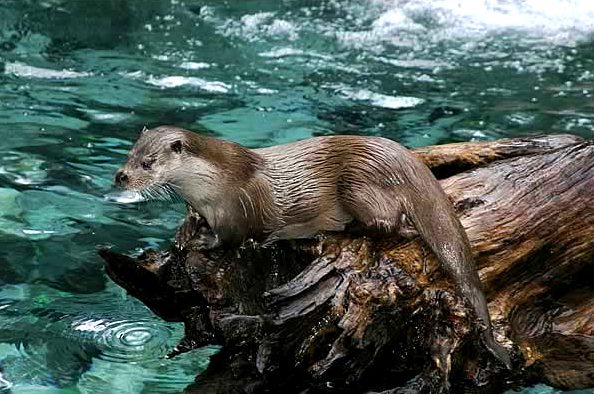
The European Otter (Lutra lutra) is a carnivorous semi-aquatic mammal belonging to the Mustelidae family. Its elongated, streamlined body, webbed feet and waterproof fur make it an accomplished swimmer and diver. Discreet and mainly nocturnal, it frequents rivers, lakes and wetlands rich in fish. In Tunisia, it persists in a few wetlands in the north of the country where it benefits from protected species status. Its presence is considered a good indicator of the quality of aquatic ecosystems.
The body is elongated and muscular, the thick and tapered tail serves as a rudder when swimming. The fur is made up of two layers, a dense waterproof undercoat and longer jar hairs, providing effective thermal insulation in water. The short, webbed feet, as well as the ears and nostrils that close underwater, are adaptations to aquatic life.
Characteristics
Indicative values: they vary by subspecies, sex and region.
Habitat and distribution
The Otter frequents rivers, lakes, marshes and wetlands with clear water and fish, as well as certain marine coastlines in some regions. It needs vegetated banks offering hiding places and resting sites. The quality of the water and the abundance of prey strongly influence its presence.
CURRENT RANGE
The species is widely distributed across Europe, Asia and northern Africa. In North Africa, it is present in a fragmented manner, notably in certain Tunisian and Algerian wetlands. Its populations declined sharply in the 20th century due to pollution and habitat destruction.
Behaviour
A solitary and territorial animal, the Otter marks its territory using odorous droppings called imprints deposited on fixed points. An excellent swimmer and diver, she can stay in apnea for several minutes. It is mainly active at dawn and dusk, resting during the day in a burrow called catiche, dug in the bank.
Reproduction
Breeding can occur all year round, with no breeding period strictly defined depending on the region. After a gestation of about two months, the female gives birth to one to four young in a burrow set up near water. The young remain dependent on their mother for several months, while they learn to swim and hunt.
Peculiarities
The Otter has some of the densest fur in the animal kingdom, sometimes having over 50,000 hairs per square centimeter, allowing it to stay warm without a thick layer of fat. It uses collective marking sites shared by several individuals to communicate without direct contact.
Threats and conservation
The main threats are the degradation of wetlands, water pollution and the scarcity of fish prey. Road collisions near watercourses and accidental entrapment are also causes of mortality. In Tunisia, the drying up of certain wetlands and water withdrawals are aggravating the fragility of local populations.
Numbers and trends vary across sources and regions. See the IUCN assessment for the latest reference data.
Gallery
1 documented photographs.
References
Profile updated 23 August 2026 · Reviewed by the TunisieVet editorial team.
Comments (0)
No comments yet.
CONSERVATION STATUS
Near threatened (NT)
IUCN source, latest published assessment.
Species health
Documented diseases for this species.
See the 7 diseases of this species Find a veterinarianThis information is provided for educational purposes only and is not a substitute for a veterinary consultation. If you have any concerns about your animal's health, consult a veterinarian.
To discover around: Otter
Videos, facts, stories and records linked to this species.
Similar animals
Other species documented in Animalpedia.

TunisieVet in your pocket 📱🐾 Access your veterinary services wherever you are. [ Download the app ]
Learn more