
Presentation
The stick insect is an insect belonging to the order Phasmatodea, known for its exceptional camouflage with plant life. There are thousands of species found around the world, mainly in tropical and temperate climates. Its elongated body shape and ability to mimic a twig or leaf allow it to escape predators very effectively. A quiet herbivore, it feeds mainly on foliage at night. The stick insect is increasingly popular as a terrarium pet because of how easy it is to breed and its unusual appearance. In Tunisia, certain local species exist in the wild, particularly in wooded and scrubby areas.
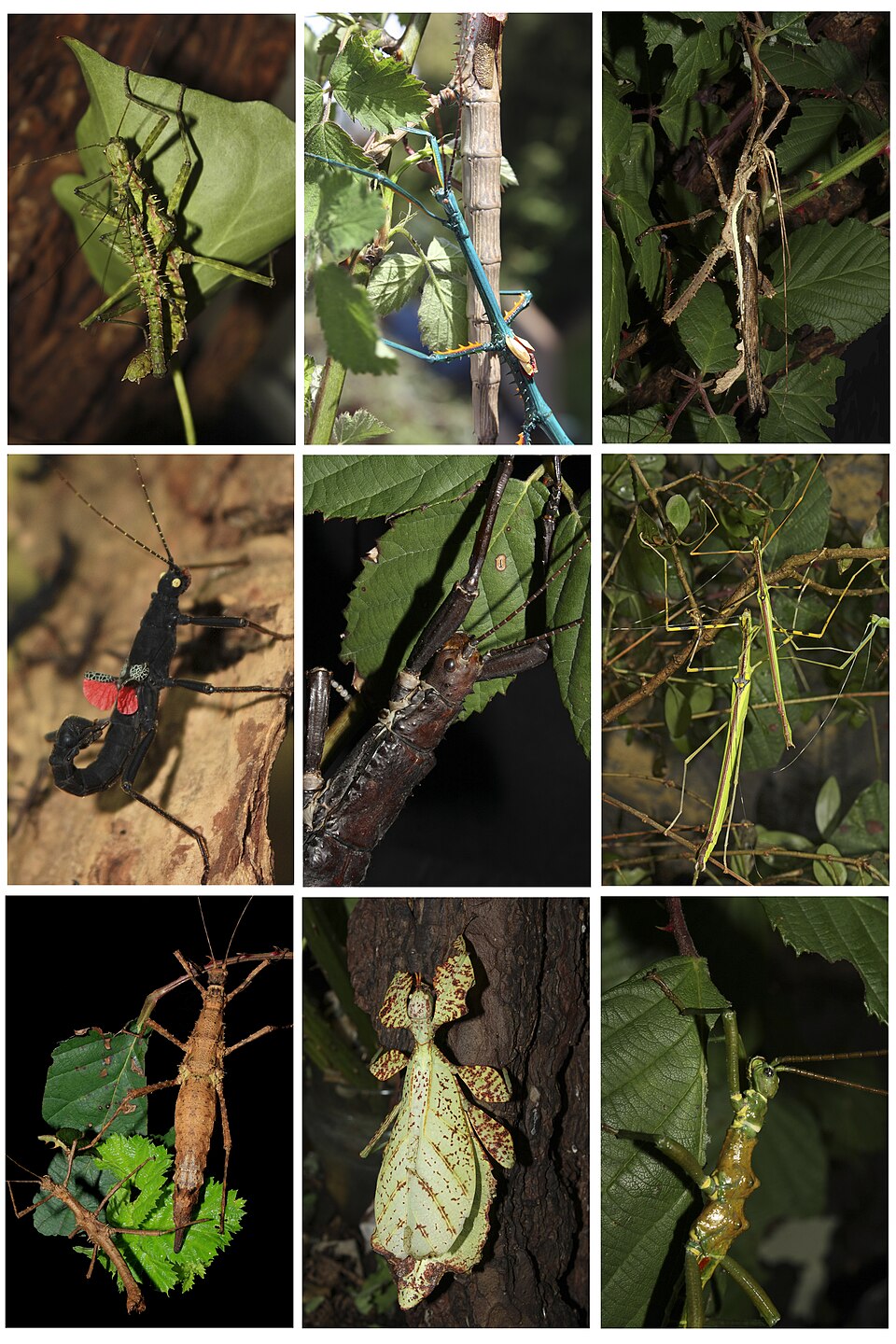
The stick insect has an elongated body that is either cylindrical or flattened, perfectly imitating a twig or leaf depending on the species. Its colour ranges from brown to green, sometimes with patterns that strengthen its camouflage. It has six thin legs and long antennae, and some species have functional wings while others do not. It grows through successive moults until adulthood.
Characteristics
Indicative values: they vary by subspecies, sex and region.
Habitat and distribution
Stick insects inhabit wooded areas, shrublands, and zones with dense vegetation where they find both food and camouflage. They live on trees, shrubs, and low plants, depending on the species. Humid tropical environments host the greatest diversity of species, though some populations adapt to more temperate or semi-arid zones.
CURRENT RANGE
Stick insects are found on all continents except Antarctica, with maximum diversity in the tropics of Southeast Asia, Oceania, and South America. Some species also exist in Mediterranean Europe and North Africa. In Tunisia, several species are recorded in forested regions and areas with dense vegetation.
Behaviour
The stick insect is a nocturnal insect that remains still during the day to avoid predators, imitating a twig or leaf. It moves slowly and can sway gently like a branch blown by wind, a behaviour called thigmokinesis. Certain species can spray irritating secretions or shed a limb to escape a predator; the limb can regrow during subsequent moults. It generally lives a solitary life.
Reproduction
Stick insects reproduce by laying eggs, often placed on the ground or attached to vegetation, which sometimes resemble seeds to deceive predators. In several species, females can reproduce by parthenogenesis in the absence of males. Egg incubation may last several months before nymphs hatch, which resemble miniature adults.
Peculiarities
The stick insect is capable of parthenogenesis in several species, with females able to reproduce without fertilization by a male. It can also regenerate a lost limb during successive molts. Its mimicry is considered among the most sophisticated in the animal kingdom, with some species even imitating leaf veins and marks of damaged leaves.
Threats and conservation
Stick insects are generally not threatened globally, with most species being poorly studied and not formally evaluated. However, certain island species or those with highly restricted ranges are vulnerable to habitat loss and invasive species. The pet trade has little negative impact because captive breeding is common and straightforward.
Numbers and trends vary across sources and regions. See the IUCN assessment for the latest reference data.
Gallery
1 documented photographs.
References
Profile updated 09 September 2026 · Reviewed by the TunisieVet editorial team.
Comments (0)
No comments yet.
CONSERVATION STATUS
Data deficient (DD)
IUCN source, latest published assessment.
To discover around: Stick Insect
Videos, facts, stories and records linked to this species.

TunisieVet in your pocket 📱🐾 Access your veterinary services wherever you are. [ Download the app ]
Learn more