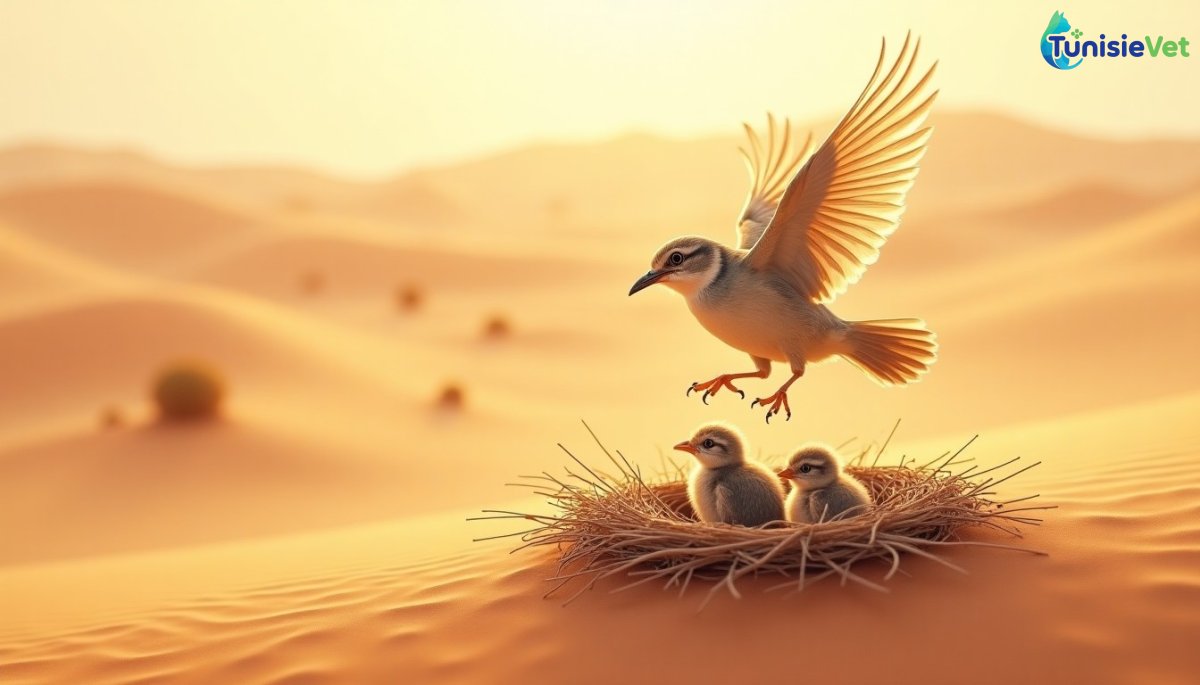
A companion of the Prophet ﷺ compassionately takes a chick from its nest. The distressed mother circles overhead, fluttering frantically. What the Prophet ﷺ did then teaches a lesson of gentleness toward all creatures.
Abdullah ibn Mas'ud, may Allah be pleased with him, recounts that one day while traveling with the Prophet ﷺ, the Prophet left the group briefly for a need. During his absence, the companions spotted a bird with two chicks. One of them took the chicks, and the mother, distressed, began to flutter above them in desperation, beating her wings to protect her young.
The Prophet's Response
When the Prophet ﷺ returned and saw what had happened, he asked, deeply moved: "Who has caused this mother to suffer by taking her chicks? Return them to her!" This narration is recorded by Imam Abu Dawud in his collection of Sunan, and it illustrates with striking clarity the Prophet's sensitivity to the suffering of animals, even the smallest and most overlooked among them.
This same incident from the journey is associated, according to certain narrators, with another notable event: the destruction of an ant nest by fire, after an ant had bitten the Prophet ﷺ. Upon learning that an entire ant colony had been burned in retaliation, he firmly disapproved of this excess, reminding that a single offending creature does not justify the destruction of an entire community. These two stories, recorded in the hadith collections, complement each other and outline an ethic of care toward all living beings, whether birds, insects, or other creatures of the earth.
A Universal Lesson
The image of this mother bird fluttering anxiously above her captured chicks has endured through the centuries as one of the strongest symbols of the tenderness recommended toward animals in the prophetic tradition. The Prophet's gesture was not a solemn command delivered from a pulpit, but a spontaneous, immediate reaction to perceived animal distress taken seriously. He could have walked on; instead, he chose to stop, to question, and to demand redress.
Exegetes and hadith commentators have often emphasized that this episode illustrates a broader principle: mercy (rahma) is not limited to relations between human beings. In prophetic teaching, it extends to all creation. Separating a young animal from its mother, whether among birds, mammals, or any other creature, is perceived as a violation of a natural and sacred bond—the maternal protection found in virtually all living species.
Thus, this simple story, seemingly anecdotal in appearance, carries within it a message of profound depth: respect for animal life does not end with grand, spectacular gestures; it dwells also in attention to detail, to a disturbed nest, to a mother separated from her young, to a suffering that one chooses not to ignore.
This tradition invites us, even today, to observe nature with the same attentive compassion: do not needlessly disturb nests, allow animal families to live in peace, and recognize in the cry of a distressed bird a real suffering that deserves our respect and compassion.