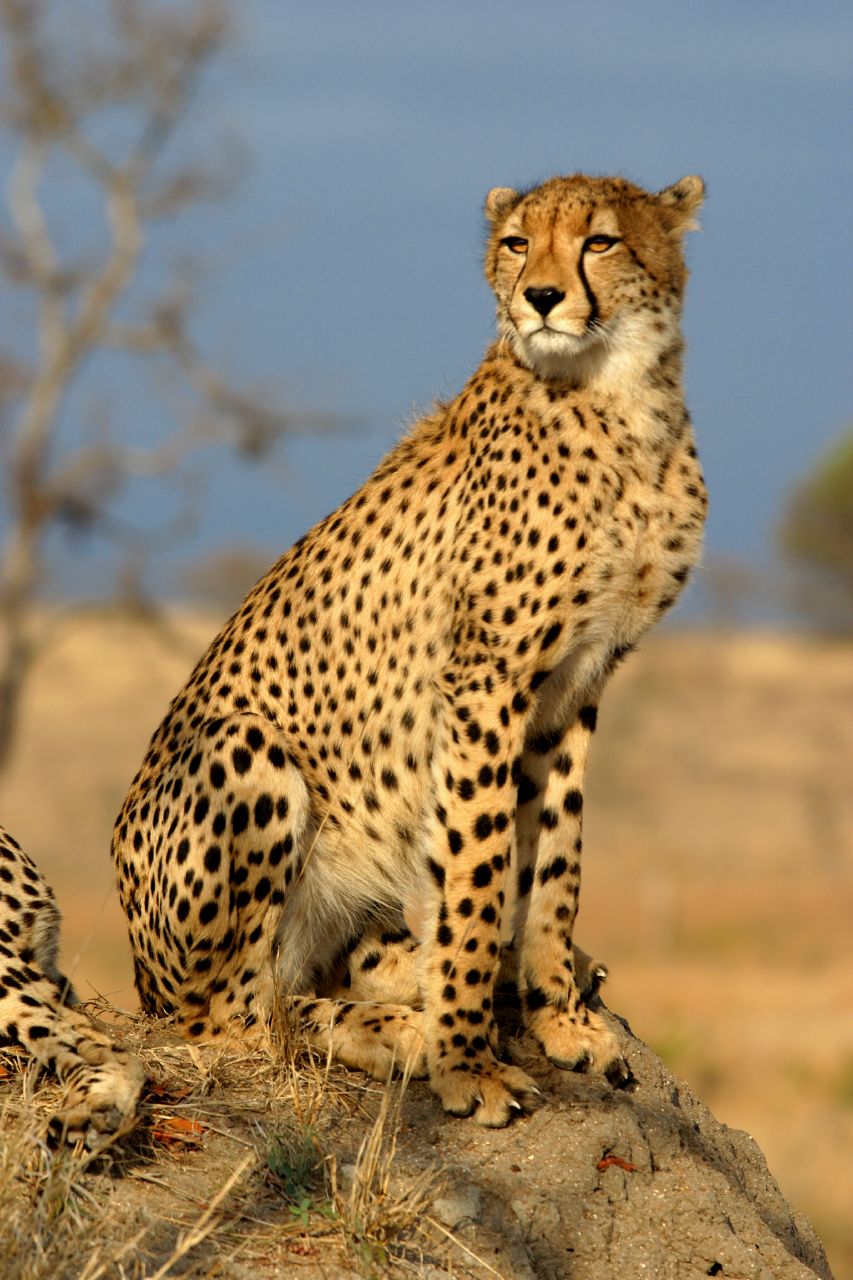
Why can't the cheetah run for more than thirty seconds?
93 views · 1 month ago
The cheetah must stop after a few hundred meters because its extreme sprint – up to around 100 km/h – generates body heat and an oxygen debt that its body cannot withstand any longer without risking fatal heat stroke. After 20 to 30 seconds of maximum effort, he is forced to recover, whether he has succeeded in his hunt or not.
A powerful engine but limited by overheating
To reach its top speed, the cheetah mobilizes lightning acceleration thanks to a flexible spine, long strides and richly vascularized motor muscles. This intense anaerobic metabolism produces a lot of heat: body temperature can rise several degrees in just a few tens of seconds of running. According to studies reported by the Smithsonian's National Zoo, this warming, combined with an oxygen deficit, forces the animal to cease all effort even before reaching complete muscular exhaustion — it is the brain and the thermal system, more than the muscles, which impose the limit.
After the race, the cheetah pants for a long time, sometimes for 20 to 30 minutes, to release the accumulated heat and repay its oxygen debt before being able to consume its prey. This physiological constraint partly explains the high failure rate of its hunts: according to data compiled by the Animal Diversity Web, approximately one in two attempts ends in failure, with the prey often escaping when it extends the pursuit beyond this critical window.
A window of vulnerability exploited by other predators
This forced recovery period constitutes the Achilles heel of the cheetah when faced with lions, hyenas and even vultures, which are slower but capable of spotting a fresh carcass. Too weakened to immediately defend its capture, the cheetah thus loses a significant part of its prey to scavengers and dominant predators, a phenomenon of kleptoparasitism well documented by the IUCN in the analysis of the pressures weighing on the species, alongside the loss of habitat and the decline of prey populations.