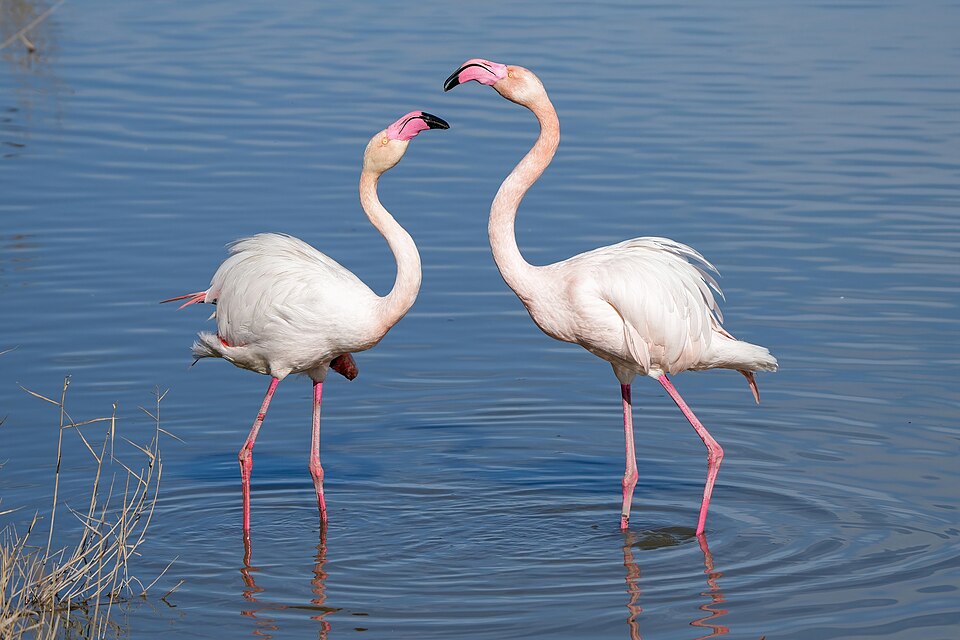
The pink flamingo is born gray. Its color comes from its diet: the small crustaceans and microscopic algae that it filters from brackish waters contain carotenoids, pigments that its body transforms and deposits in its feathers, its beak and its legs.
Assimilated pigments, not manufactured
Carotenoids belong to the same families of pigments that color carrots or tomatoes. The flamingo does not know how to produce them: it extracts them from its prey - notably artemia, a tiny crustacean from very salty water -, transforms them, then stores them in its tissues. The richer its diet, the more intense its pink.
The intensity of the color thus becomes an honest signal of physical condition: a well-colored individual is an individual who feeds well — a criterion that weighs when choosing a partner.
The flamingos of Tunisia
Tunisia is a major stopover for Mediterranean flamingos: Lake Ichkeul, the sebkhas, the salt flats and the Gulf of Gabès welcome thousands of birds every winter, who find these brackish waters rich in brine shrimp there.