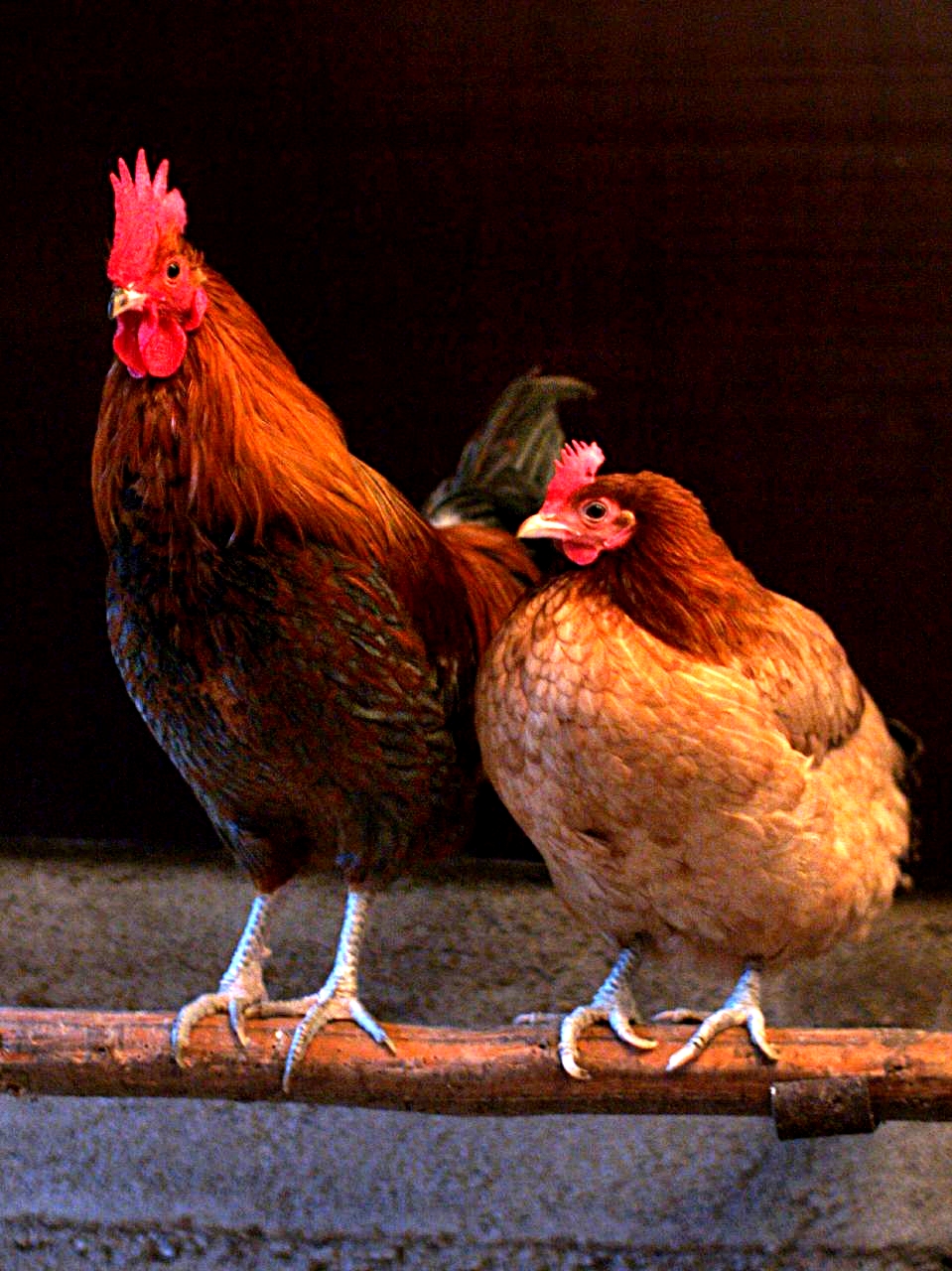
Chickens swallow small stones, called grit, because they do not have teeth to chew their food. These gastroliths accumulate in the gizzard, a muscular organ which uses them to mechanically grind ingested seeds and plants, thus replacing chewing.
Publicité
Publicité
A muscular mill instead of teeth
In chickens, as in all current birds, the absence of teeth results from the evolution towards a light beak favoring flight; domestic chickens have inherited this anatomy even though they hardly fly. The food, swallowed almost whole, first passes through the crop where it is moistened and stored, then passes into the proventriculus which secretes digestive enzymes, before reaching the gizzard.
The gizzard has thick muscular walls capable of contracting with significant force. The small gravels swallowed play the role of millstones: stuck between the cereal grains, they fragment them under the pressure of repeated contractions of the organ, then facilitating the action of digestive enzymes on the particles reduced to fine particles.
These stones gradually wear out and are partially eliminated with the droppings, which forces the animal to regularly ingest new ones to maintain the effectiveness of the grinding.
A supervised practice in breeding
In farms, particularly when chickens are fed with already ground or pelleted feed, the intake of insoluble grit (silica, granite) remains recommended for animals with access to whole seeds or roughage, because a deficiency in gastroliths reduces digestive efficiency and can affect the assimilation of nutrients. This grit differs from calcareous grit (oyster shells), which primarily serves as a calcium supply for the egg shells rather than for grinding.