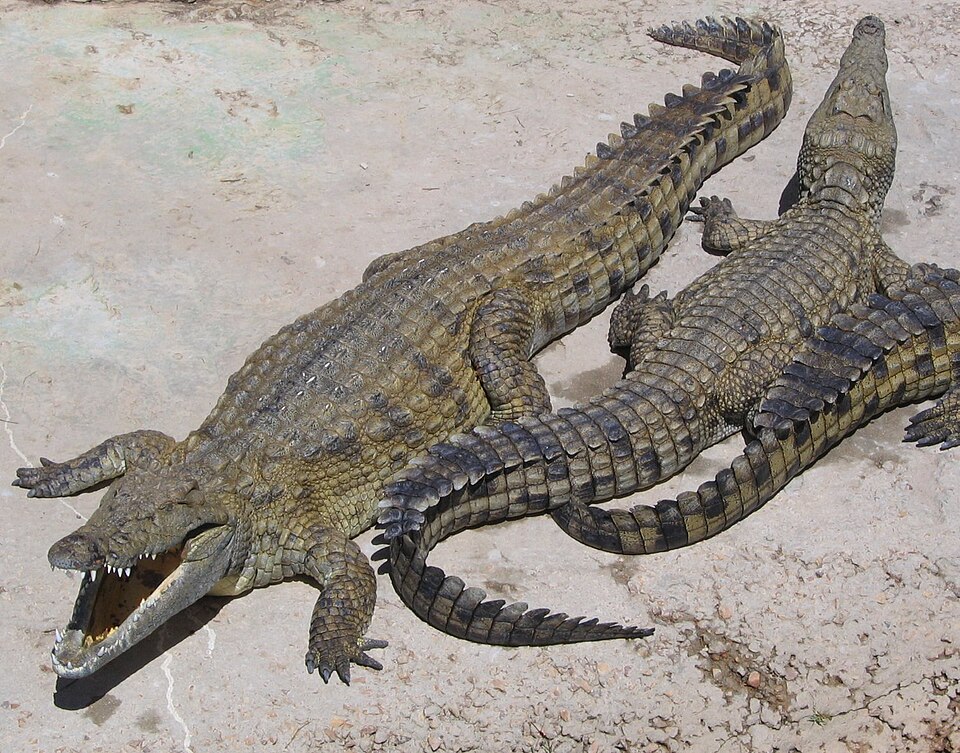
The Nile crocodile can go without eating for several months, and up to about a year in particular conditions of low activity and cool temperatures. This endurance is based on a very economical ectothermal metabolism, radically different from that of mammals.
Publicité
Publicité
An extremely slow metabolism
Unlike mammals which produce their own heat by continually burning energy, the Nile crocodile depends on the ambient temperature to regulate its bodily activity. Its daily energy requirements are therefore around ten to twenty times lower than those of a mammal of comparable mass. After a large meal, often a large prey such as a wildebeest or a zebra, the animal can digest slowly and live for several weeks, even several months, on the reserves accumulated in its liver and adipose tissues.
This capacity for prolonged fasting is particularly observed in the dry season, when prey becomes scarce around residual water points. Adult individuals, having larger reserves than juveniles, tolerate these periods of scarcity better. The slowing down of the metabolism is also accompanied by a reduction in hunting activity, the animal saving its energy by remaining immobile for long hours, exposed to the sun or submerged.
Comparison with the wintering of the bear
The wintering bear illustrates a different strategy: although endothermic, it lowers its body temperature by only a few degrees and slows its heart rate, while continuing to consume the fats accumulated in fall, for a typical period of four to six months. The crocodile does not need to maintain a constant internal temperature or energy expenditure for thermoregulation, which explains why its fasting can, in certain cases documented in captivity or in a very constrained natural environment, exceed the duration of ursine wintering. However, this is not a general rule: the exact duration depends greatly on the size of the animal, the temperature of its environment and its body condition before fasting.