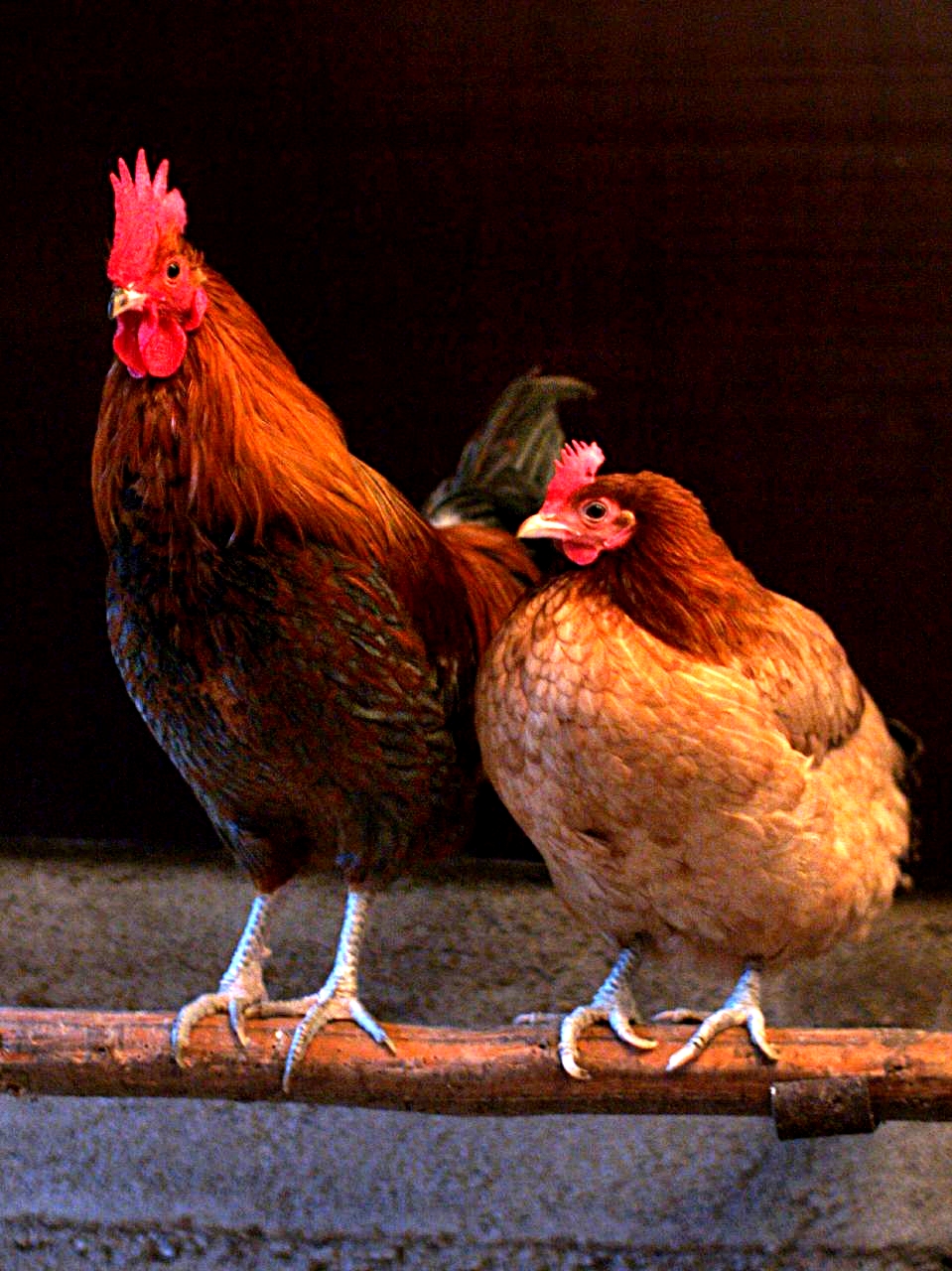
Hens peck at the ground because it is where they satisfy, all at once, their hunger and a deep behavioural need: to actively forage for their food. Descendants of the wild Red Junglefowl, they can spend 60 to 90 per cent of their waking time exploring, scratching and pecking, even when a full feeder awaits them nearby.
Exploration that nourishes body and mind
The scratching with the feet followed by precise pecks is not a minor reflex: it is the most predictable behaviour of the species, guided by sight and by memory of areas rich in small prey. In a grassy enclosure, the hen catches insects, larvae and worms, and supplements with seeds, young plants or plant matter—a naturally varied diet that provides animal protein and fresh greens, in addition to the commercial feed distributed by the keeper.
This need to forage is independent of satiety: a full hen continues to peck out of pure exploratory activity. Denied a substrate to work through—bare ground, cage without bedding—she redirects this drive elsewhere: feathers of other birds, which fuels aggressive pecking, or repetitive stereotyped behaviours, both recognised signs of distress in poultry.
Publicité
Publicité
The health cost of ground pecking
The very ground that enriches the diet can also contaminate it. Accumulated droppings harbour parasite eggs (roundworms, tapeworms) and coccidia, which the hen re-ingests when pecking in soiled areas. Feed that falls and sits moist on soil quickly becomes mouldy, exposing her to dangerous mycotoxins. Animal density and ground moisture directly affect this risk, a point documented by animal health authorities.
To balance both needs, part of the ration can be hidden in thick bedding (straw, wood shavings) that encourages scratching without fouling the feed, and the outdoor area can be rotated to allow soil to recover and reduce parasite build-up. Any sign of excessive pecking or feather damage warrants veterinary advice.