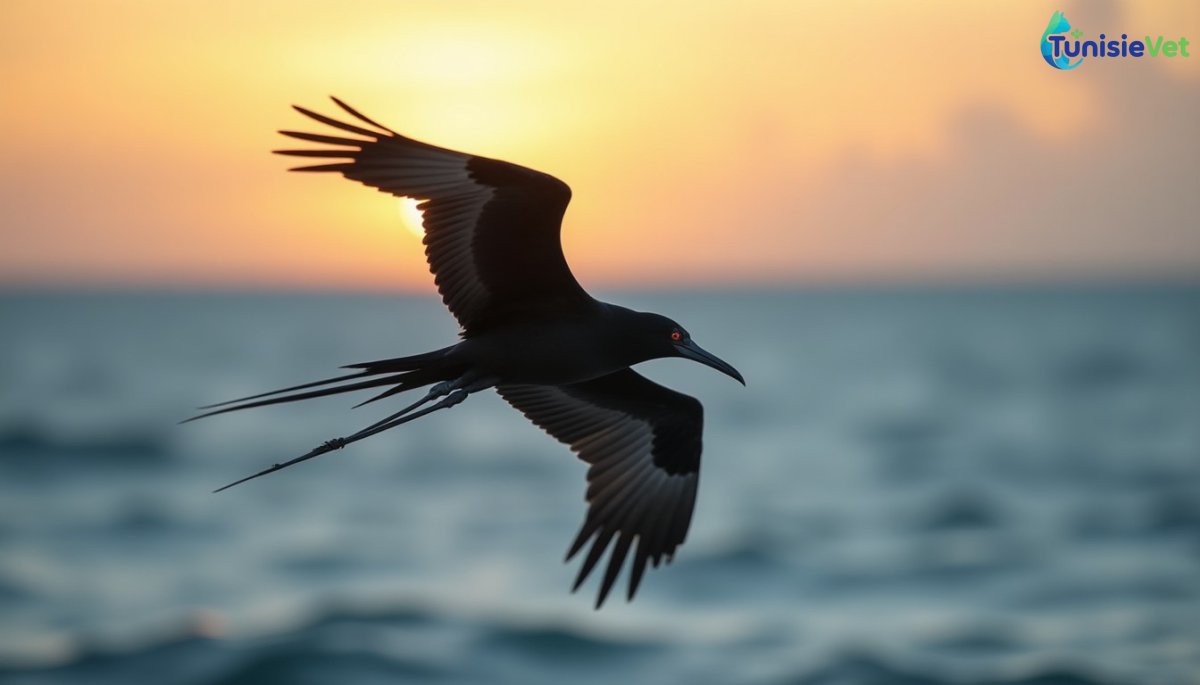
A frigatebird can sleep in mid-flight, closing one eye while the other stays open. How does a bird gliding hundreds of metres above the ocean rest without ever falling?
Publicité
Publicité
The answer lies in how sleep is shared across the brain. In some birds, one half of the brain sleeps while the other stays awake, and the eye linked to the awake half remains open.
In frigatebirds, researchers have observed that this sleep is more lopsided in flight than on the ground. When the right hemisphere is the sleepier one, the bird turns to the right, and when the left is sleepier, it turns left. One hypothesis suggests that the open eye helps the bird keep track of its course.
Sleep during flight stays short, broken and lighter than on the ground, so frigatebirds recover their rest once they land. Pigeons, by contrast, show an asymmetry so slight it may be invisible, a sign that the pattern varies widely from one species to another.