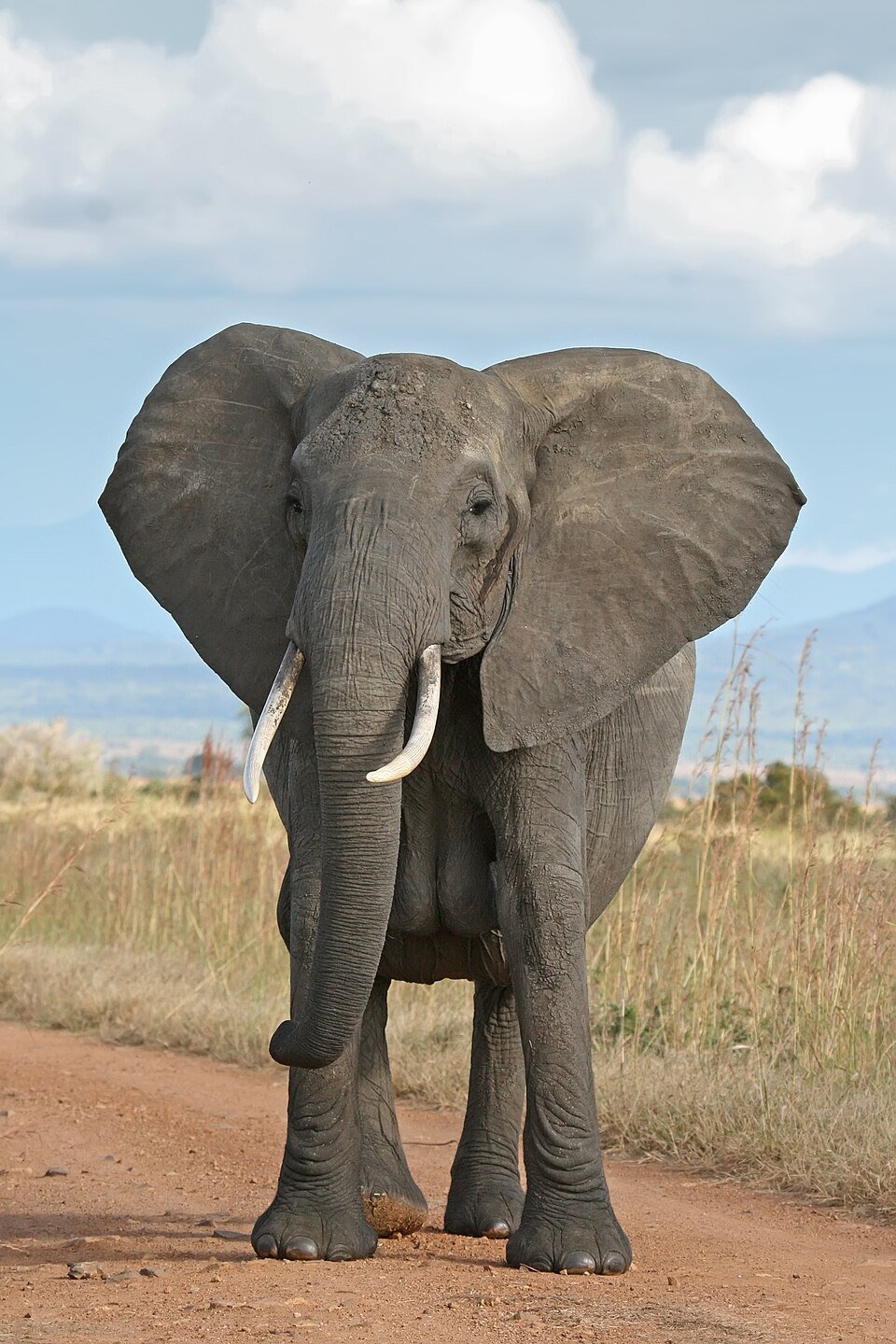
Savannah elephants do not “cry” in the human sense, but they demonstrate observable and documented behaviors around dead conspecifics: prolonged attention paid to bones, manipulation with the trunk and repeated returns to the scene of death, sometimes several years later.
What researchers observed in the field
Field studies carried out particularly in Kenya and Zambia describe family groups which slow down, or even stop, in the presence of an elephant carcass or bones. Individuals touch the bones, particularly the skull and tusks, with the end of their trunk and sometimes with their feet, in slow and repeated gestures. This tactile exploration behavior is not systematic towards other dead species: elephants show a significantly greater interest in the remains of their own species, which has been verified experimentally by presenting elephant, rhino and buffalo skulls side by side to wild groups – the elephant skull retaining attention the longest.
Observations also report prolonged vigils around a dying or recently dead individual, with related females remaining nearby for several hours, and sometimes attempts to lift the body with the proboscis or tusks. Some groups return several times to the same site where a member has died, over periods spanning several years, a fact established by long-term individual monitoring of populations in East African reserves.
Caution necessary in interpretation
While these behaviors are solidly documented, their meaning remains debated among animal behavior specialists. Describing increased attention, repeated handling or returning to the scene involves direct observation; speaking of “mourning” or “sadness” presupposes an internal emotional state that is not measurable with current methods. The scientific community therefore prefers to speak of specific behavioral reactions to the death of a conspecific, without deciding on the nature of the animal's internal experience.