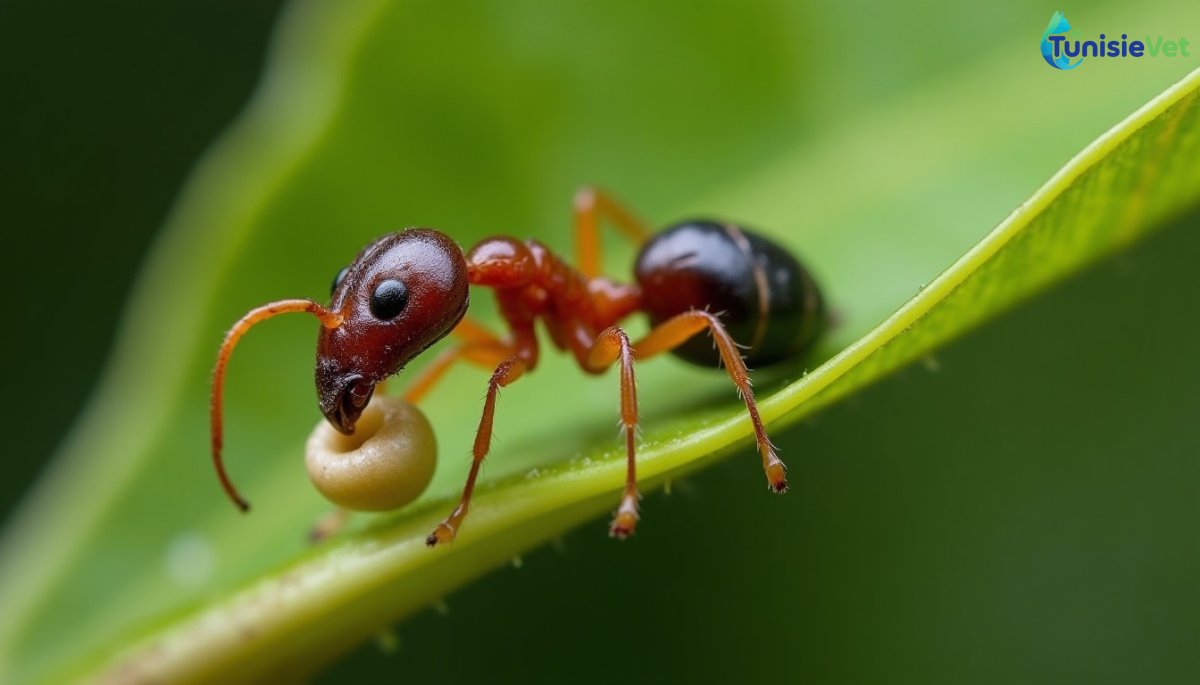
An ant that dies clamped to a leaf, at just the right height
20 views · 4 hours ago
One morning in the forest, a carpenter ant leaves its trail and climbs a plant on its own. It bites into a leaf vein, clamps on, and dies. Why does this bite always land at just the right spot?
Publicité
Publicité
The culprit is a fungus of the genus Ophiocordyceps. Before the end, it disrupts the ant: it becomes hyperactive, veers off its foraging trail, then adopts a behaviour known as "summiting". In several of these interactions, the final bite is timed to the time of day.
For the authors of a 2024 review, this high position seems to benefit the fungus, which grows its reproductive structure out of the insect's body. This remains an interpretation, not a proven fact. The timing could come from the host's biological clock or the fungus's, but that is an untested hypothesis.
In the systems studied, each fungus manipulates only one ant species successfully. These observations mostly concern Camponotus ants and cannot be extended to other insects.